Matouk Review
About Matouk
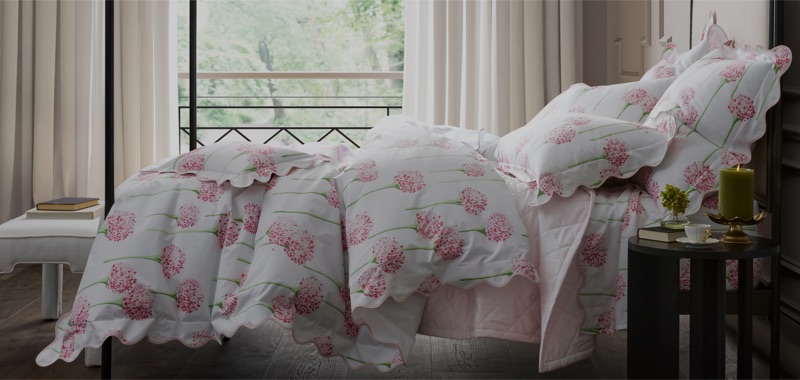
If you’ve ever stayed at a really nice boutique hotel and thought “okay, these sheets are different,” there’s a decent chance you were sleeping on Matouk. The company was founded in 1929 by John Matouk, a Lebanese immigrant who set up shop in Fall River, Massachusetts. Nearly a century later, it’s still family-owned (now in its fourth generation) and still making linens in that same Massachusetts town.
What makes Matouk unusual in 2026 is that they actually manufacture in the US. Not “designed in the US” or “headquartered in the US,” but genuinely cutting and sewing products in their Fall River facility. The fabrics themselves are woven in Italian mills, then shipped to Massachusetts for finishing. It’s an increasingly rare production model, and it shows in both the quality and the price tag.
Their product range covers bed linens, bath towels, table linens, and sleepwear, but sheets are really where Matouk built its reputation. They source specific Egyptian cotton varieties (not just generic “Egyptian cotton”) and offer everything from an entry-level percale to some of the most luxurious sheets money can buy.
The Egyptian Cotton Question
Matouk doesn’t just say “Egyptian cotton” and leave it at that. They specify the exact varieties they use, and that’s a good sign. Their premium collections feature Giza 87 and Giza 92 cotton, both grown in Egypt’s Nile River Valley. Giza 87 is known for its strength and silky hand feel, while Giza 92 is prized for its extra-long staple length and softness.
Their Fall River facility holds STeP by OEKO-TEX certification, which is a big deal. STeP (Sustainable Textile Production) covers environmental performance, chemical management, quality systems, and workplace safety. Matouk is one of only a handful of production facilities in the entire United States to earn this. All their fabrics also carry OEKO-TEX Standard 100 certification, meaning they’ve been tested for harmful substances.
What they don’t have is the Cotton Egypt Association Pyramid Mark, which uses DNA testing to verify cotton origin. This is the same gap you’ll find with SFERRA and most other luxury brands. The Pyramid Mark is still relatively new, and many established brands haven’t pursued it. Given Matouk’s specificity about cotton varieties and their nearly century-long track record, the absence isn’t a red flag. But it’s something to know.
What You Actually Get
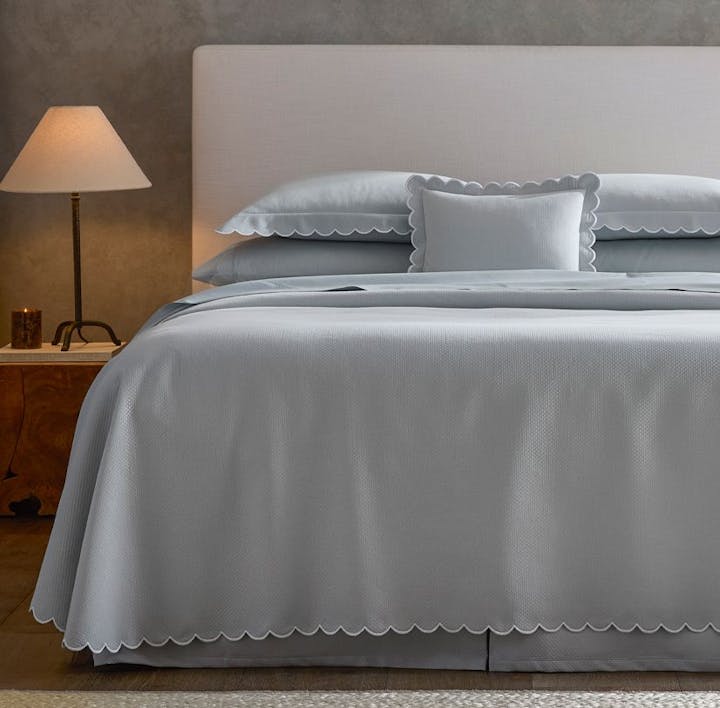
Matouk’s sheet lineup is unusually deep, which is part of what makes them interesting (and a little overwhelming to navigate). Here’s how the collections break down:
Sierra is the entry point. It’s a 350 thread count percale made from long-staple Indian cotton (not Egyptian), sewn in the US. Queen fitted sheets run about $125 to $165. This is where you start if you want to try Matouk without the full luxury commitment.
Luca is probably their most popular collection. It’s a 500 thread count Egyptian cotton percale, with fabric woven in Italy. Think crisp, cool, breathable. Queen sheets land in the $225 to $315 range for individual pieces.
Lowell steps things up to 600 thread count Egyptian cotton percale with a sateen trim. A queen sheet set runs roughly $975 to $1,267. This is where you start getting into serious luxury territory.
Gatsby is the showpiece. 1000 thread count Giza 87 Egyptian cotton percale. A queen fitted sheet alone costs $925 to $1,050. These are for people who want the absolute best and have the budget to match.
Nocturne and Talita are sateen options for those who prefer that silky, luminous feel over percale crispness. Nocturne uses 600TC Egyptian cotton, while Talita blends Giza 87 and Giza 92 at 615TC.
What Buyers Say
Matouk doesn’t have the massive consumer review footprint that direct-to-consumer brands have. You won’t find thousands of Trustpilot reviews or a huge Amazon presence. They sell primarily through their own site, luxury retailers like Bloomingdale’s, and specialty linen shops.
Where you do find feedback is on those specialty retailer sites and interior design forums. The consensus is remarkably consistent: buyers describe Matouk sheets as having exceptional hand feel, getting softer with each wash, and lasting for years. The Luca collection in particular gets praised for its crisp percale texture and durability. Professional reviewers at outlets like PureWow, Robb Report, and Apartment Therapy regularly include Matouk in their top luxury bedding picks.
The complaints center almost entirely on price. At these numbers, every tiny imperfection feels magnified, and a few buyers have noted inconsistencies in embroidery or finishing on decorated styles. The factory store in Fall River gets strong Yelp reviews (4+ stars from 40 reviews) for both product quality and helpful staff.
Their sustainability story is also genuinely impressive. Solar panels generate 30% of their facility’s power, they’ve reduced landfill waste by 55% over three years, and they recycle over 65 tons of cardboard annually. For a manufacturing facility, that’s meaningful.
How Matouk Compares
| Feature | Matouk (Luca) | SFERRA (Giza 45) | Peacock Alley (Emily) | Pure Parima |
|---|---|---|---|---|
| Cotton Type | Egyptian (500TC) | Giza 45 Egyptian | Egyptian (500TC) | Egyptian (Giza region) |
| Pyramid Mark | No | No | Yes (Gold Seal) | Yes |
| OEKO-TEX | Yes (STeP + Std 100) | Yes (select lines) | Yes (select lines) | Yes |
| Woven In | Italy | Italy | India | Egypt |
| Sewn In | USA (Massachusetts) | USA | India/USA | Egypt |
| Queen Set Price | ~$500-$600 | $2,000+ | ~$249 | ~$180 |
| Return Window | 30 days | 30 days (unwashed) | 30 days | 30 days |
Who Should Buy Matouk?
This brand is for you if:
- You value American-made products with a documented, multi-generational heritage
- You want sheets that use specific Egyptian cotton varieties, not generic claims
- OEKO-TEX certified manufacturing and genuine sustainability practices matter to you
- You’re willing to invest in bedding that should last for years and improve with washing
- You appreciate having multiple collections at different price points
Skip this if:
- Your budget for a queen sheet set is under $350 (look at Pure Parima or Peacock Alley instead)
- You need Pyramid Mark certification as proof of Egyptian cotton authenticity
- You rely heavily on consumer review platforms to make purchasing decisions
- You want bold colors and trendy patterns (Matouk’s aesthetic runs classic and tailored)
Is Matouk Legit?
LegitMatouk's Egyptian cotton claims are highly credible. They specify exact cotton varieties (Giza 87, Giza 92) rather than generic 'Egyptian cotton' labeling. Their Fall River facility holds STeP by OEKO-TEX certification, covering environmental practices, chemical management, and workplace conditions. Fabrics are woven at Italian mills with a documented supply chain. However, we could not confirm Cotton Egypt Association Pyramid Mark certification. The specificity of their sourcing claims and nearly a century of family ownership make this one of the most trustworthy luxury linen brands we've researched.
- Founded
- 1929
- Certifications
- STeP by OEKO-TEX (production facility), OEKO-TEX Standard 100 (fabrics)
What We Liked
- Family-owned and manufacturing in Fall River, MA since 1929, now in their fourth generation
- Uses specific Egyptian cotton varieties (Giza 87, Giza 92) with fabrics woven in Italy
- STeP by OEKO-TEX certified facility, one of only a handful in the US
- Broad range of collections from 350TC Sierra to 1000TC Gatsby
- Solar-powered facility generating 30% of its own energy, strong sustainability record
What We Didn't Like
- Premium pricing puts most collections out of reach for average budgets (queen sets start around $350)
- No Cotton Egypt Association Pyramid Mark certification that we could verify
- Limited direct consumer reviews on platforms like Trustpilot
- Gatsby and Talita collections push well past $1,000 for a single fitted sheet
Frequently Asked Questions
Is Matouk Egyptian cotton real?
Matouk specifies the exact varieties of Egyptian cotton they use, including Giza 87 and Giza 92, which are grown in Egypt's Nile River Valley. Their fabrics are woven in Italian mills, and the finished products are sewn in their Fall River, MA facility. They don't carry the Cotton Egypt Association Pyramid Mark, but the specificity of their sourcing and their 95-year track record make the claims highly credible.
Why are Matouk sheets so expensive?
Three reasons. First, they use premium Egyptian cotton varieties (Giza 87 and 92) that cost significantly more than standard cotton. Second, their fabrics are woven in Italy, which adds to production costs. Third, the sheets are cut and sewn in Massachusetts, not outsourced to lower-cost countries. A family-run US manufacturing operation with Italian-woven Egyptian cotton is going to cost more than imports.
What is the best Matouk sheet collection for beginners?
The Sierra collection is the most accessible starting point. It's a 350 thread count percale made from long-staple Indian cotton (not Egyptian) at around $125 to $165 for a queen fitted sheet. If you specifically want Egyptian cotton, the Luca collection at 500TC is the sweet spot for quality and value, with queen sets running around $500 to $600.
How do Matouk sheets compare to SFERRA?
Both are heritage luxury brands with Italian-woven fabrics and US operations. SFERRA offers Giza 45 cotton (the rarest variety), while Matouk uses Giza 87 and 92. Pricing is comparable at the high end, though Matouk's Sierra line offers a more affordable entry point. Both lack Pyramid Mark certification. The choice often comes down to whether you prefer Matouk's broader range of collections or SFERRA's focus on the absolute rarest cotton.
What is Matouk's return policy?
Matouk offers a 30-day return and exchange window from the date of delivery. Items must be unused and in original packaging. Personalized and monogrammed items are final sale. They offer free US shipping on qualifying orders, and return processing typically takes 3 to 7 business days after inspection.