What Is Egyptian Cotton? Giza Varieties, Grades, and How to Spot the Fakes
Egyptian cotton is the most famous fibre in home textiles and the most misused phrase on a product label. This guide covers what the term properly means, which Giza varieties are grown and what they’re used for, how Egyptian cotton compares to Pima, Supima and ordinary upland cotton, and how to check whether the sheets or towels in your basket are the real thing. Most labelled products aren’t, and we’ll show you why.
What Is Egyptian Cotton?
Egyptian cotton is cotton grown in Egypt, primarily in the fertile Nile Delta region. It belongs to the Gossypium barbadense species, the same species as Pima and Sea Island cotton, and is characterized by its long and extra-long staple (ELS) fibers.
The specific combination of Egypt’s climate, soil, and geography produces cotton with fiber lengths that can exceed 1.4 inches (36 mm) in the finest varieties. These long fibers are the source of every quality advantage associated with Egyptian cotton.
One point of definition matters here. The term describes origin, not grade. Egypt grows several cotton varieties across a range of staple lengths, and “Egyptian cotton” on a label, even when true, tells you only where the plant grew. Which variety it was, and whether it was blended with anything else, is a separate question.
Why the Nile Delta Produces Superior Cotton
The Nile Delta’s growing conditions are difficult to reproduce elsewhere:
- Alluvial silt soil: Millennia of Nile flooding deposited some of the world’s most fertile agricultural soil, rich in minerals that nourish cotton plants
- Climate: Hot days and cool nights with low humidity during the growing season produce stress-free fiber development
- Water: Irrigation from the Nile provides consistent water supply without the salinity problems found in other cotton-growing regions
- Tradition: Egyptian cotton cultivation dates to the 1820s, with accumulated agricultural knowledge and a state breeding programme that has refined the Giza varieties for over a century
The result is cotton fibers that are naturally longer, finer, and stronger than those produced in other regions, even from the same plant species. Much of the crop is still hand-picked, which keeps immature fibers and plant debris out of the harvest in a way mechanical picking can’t.
Giza cotton varieties
Every Egyptian cotton variety carries a Giza number, assigned by Egypt’s Cotton Research Institute when the variety is released. The number is a name, not a grade, so a higher number doesn’t mean better cotton. What matters is the staple class each variety falls into and how much of it exists. Staple lengths below are approximate, drawn from published breeder and trade data, and individual crops vary by season.
| Variety | Staple class | Approx. staple length | Typically used for | Rarity |
|---|---|---|---|---|
| Giza 45 | Extra-long staple | 36 mm and above | The finest sateen sheets, ultra-luxury bedding | Extremely rare; well under 1% of Egypt’s crop |
| Giza 87 | Extra-long staple | 35 to 36 mm | Luxury sheets, fine shirting | Rare; small acreage in the northern Delta |
| Giza 88 | Extra-long staple | 34 to 35 mm | Luxury sheets, premium towels | Limited; being replaced by Giza 92 and 96 |
| Giza 92 | Extra-long staple | 34 to 36 mm | Luxury sheets, high-end towels | Limited but growing |
| Giza 96 | Extra-long staple | 34 to 35 mm | Luxury sheets, fine yarns | Newer; limited acreage |
| Giza 86 | Long staple | 31 to 33 mm | Quality towels, mid-luxury sheets, robes | The most widely grown Egyptian export variety |
| Giza 94 | Long staple | 31 to 33 mm | Quality towels, everyday luxury bedding | Widely grown; replacing Giza 86 in parts of the Delta |
Two things stand out from the table. First, the extra-long staple varieties (Giza 45, 87, 88, 92, 96) are a small fraction of Egyptian production, and the amount of Giza 45 grown each year could not supply more than a handful of luxury mills. A brand claiming Giza 45 at a mainstream price is almost certainly not using it. Second, the long-staple varieties (Giza 86 and 94) are excellent cotton and are the honest backbone of most genuine Egyptian cotton towels. A brand that names Giza 86 or 94 is being more truthful than one that vaguely claims “extra-long staple Egyptian cotton” without a variety.
Egypt also grows shorter long-staple varieties in Upper Egypt (Giza 90 and Giza 95 among them) that go mostly into domestic spinning. You’re unlikely to see them named on an export product.
Why Extra-Long Staple Fibers Matter
The length of cotton fibers determines almost everything about the finished fabric:
Longer fibers spin into finer yarn. ELS fibers can be spun into thinner, smoother yarn without sacrificing strength. This produces a finer weave with a smoother surface.
Longer fibers spin into stronger yarn. The length means more points of contact between fibers in the yarn, creating greater tensile strength. Egyptian cotton sheets resist tearing and pilling longer than standard cotton.
Longer fibers give a softer surface. Fewer fiber ends per unit of fabric surface means fewer rough points. This is why Egyptian cotton feels smooth rather than scratchy, and why it becomes softer with washing as any remaining rough ends are smoothed away.
Longer fibers absorb better. In towels, long-fibre loops can be spun with less twist, which opens the loop and presents more surface to water. This is why Egyptian cotton towels feel more absorbent and plush than standard cotton towels at the same weight. Our towel GSM guide explains why a 600 GSM towel in long-staple cotton typically outperforms a heavier one in short-staple.
Egyptian vs Pima vs Supima vs upland cotton
These four terms cover most of what you’ll see on a label. They’re not interchangeable, and two of them have verification schemes behind them while two don’t.
| Egyptian (Giza) | Pima | Supima | Upland | |
|---|---|---|---|---|
| Species | Gossypium barbadense | Gossypium barbadense | Gossypium barbadense (US-grown Pima) | Gossypium hirsutum |
| Staple length (approx.) | 31 to 36+ mm depending on variety | 34 to 36 mm | 35 mm and above | 25 to 30 mm |
| Origin | Egypt, Nile Delta | USA, Peru, Australia, small amounts elsewhere | USA only (Arizona, California, New Mexico, Texas) | Worldwide; over 90% of global cotton |
| Share of world crop | Well under 1% | Around 1 to 2% (all ELS combined) | Under 1% | The overwhelming majority |
| Typical queen sheet set price | $150 to $500+ when genuine | $100 to $250 | $130 to $300 | $30 to $120 |
| Typical bath towel price | $25 to $60+ when genuine | $20 to $45 | $25 to $50 | $5 to $20 |
| Label protection | Not legally protected; CEA Pyramid Mark is voluntary | Not protected; any barbadense can be called Pima | Registered trademark; licensed brands only | None needed |
| How to verify | Pyramid Mark, named Giza variety, DNA-tested programmes | Named origin (e.g. Peruvian Pima); no central registry | Supima licence; brand listed on supima.com | Usually just labelled “100% cotton” |
The practical reading: Supima has the strongest verification of the four, because the trademark is licensed and enforced. Egyptian cotton has the strongest reputation and, in its ELS varieties, the longest fibres, but its label is the least protected and the most abused. Pima sits in between, and “Pima” on its own without an origin is a weak claim. Upland cotton is perfectly good everyday cotton, and there’s nothing wrong with buying it as long as you’re paying upland prices for it. Our Egyptian cotton vs Supima and Pima guide goes deeper on the sheets side of that comparison.
The Authenticity Problem
Here is the critical caveat: “Egyptian cotton” is not a legally protected term in most countries. Any brand can print it on a product label. A sheet set can be labeled “Egyptian cotton” if it contains even a small percentage of Egyptian fibers blended with cheaper cotton, or in some cases, with no verified Egyptian cotton at all.
The scale of the problem is documented. In 2016 the Cotton Egypt Association, working with the DNA testing firm Applied DNA Sciences, estimated that roughly 90% of products sold worldwide as Egyptian cotton were not genuine. The same year, Target dropped Welspun, one of the largest textile manufacturers in the world, after finding that sheets sold under an Egyptian cotton label for two years contained other cotton. Walmart, Bed Bath & Beyond and others pulled Welspun product on the same basis. That was a major supplier caught at major retailers. The long tail of smaller brands has never been audited at all.
How to verify Egyptian cotton before you buy
Work through these in order. Most fakes fail at step one or step four, and you rarely need to go past step five.
-
Look for the Cotton Egypt Association Pyramid Mark. The Cotton Egypt Association (CEA) licenses a gold pyramid logo to brands whose supply chain has been audited, from Egyptian farm to finished product. Licensed brands are listed on the CEA site, so check the list rather than trusting a logo on packaging, which can be copied. If a product holds the mark, you’re done. If it doesn’t, keep going.
-
Check for a DNA testing programme. Since 2016 the CEA has used forensic DNA tagging and testing (through Applied DNA Sciences) to confirm that fibre in finished goods is Egyptian barbadense. Some licensed brands, Pure Parima among them, state that their products are DNA-tested. A brand that says its cotton has been DNA-verified is making a checkable claim; ask them for the certificate if it’s not published.
-
Look for mill and variety disclosure. Genuine Egyptian cotton supply chains have specifics: a Giza variety number, a named growing region, often a named spinning mill. Brands with nothing to hide tend to volunteer them. “100% Egyptian cotton” with no variety, no region and no mill is the weakest possible claim. Kemet Cotton, for example, names the variety (Giza) and region (Nile Delta), which isn’t proof but does put a specific claim on record. Vague language usually means the brand doesn’t know, or doesn’t want you to.
-
Run a price sanity check. Extra-long staple cotton is scarce and expensive to spin. A genuine Egyptian cotton queen sheet set almost never retails under $120, and most sit between $150 and $400. A genuine Egyptian cotton bath towel is rarely under $20 and usually $25 to $60. A “1000 thread count Egyptian cotton” queen set for $40 on Amazon is not what it says it is. The raw cotton alone would cost more than that.
-
Treat thread count as a red flag, not a feature. Thread counts above 800 are almost always achieved by counting multi-ply yarn strands separately, a trick our thread count guide explains. Genuine ELS cotton is prized precisely because it spins into fine single-ply yarn, so honest Egyptian cotton sheets typically sit at 300 to 600 thread count. A sky-high thread count paired with an Egyptian claim is two warning signs in one line.
-
Check the country of manufacture against the certification. Egyptian cotton is legitimately woven in India, Pakistan, Portugal, Italy and elsewhere. Those countries don’t grow it. “Made in India” is not a red flag on its own, but “Made in India, 100% Egyptian cotton, no certification” means the only link to Egypt is a word on the label.
-
Be suspicious of a silky feel straight out of the packet. Genuine ELS cotton is smooth but reaches its softness over the first several washes. An overly slick, almost slippery feel on a new sheet usually comes from silicone softeners or a synthetic blend, and it washes out.
Why most Egyptian cotton on Amazon isn’t
Amazon is where the phrase does the most damage, and the mechanism is simple. Search “Egyptian cotton sheets” on Amazon and the first page is dominated by queen sets priced from $25 to $60, many claiming 800, 1000 or 1500 thread count. Run those through the checklist above and they fail steps one, three, four and five simultaneously: no Pyramid Mark, no variety or mill, a price below the cost of the raw fibre, and an impossible thread count.
There’s a structural reason for it. Amazon doesn’t verify fibre-content claims, the term isn’t legally protected, and the sellers behind many of these listings are trading companies that change names faster than any regulator can act. The CEA has pursued some of them, but a takedown removes one listing and the same product returns under another brand name within weeks. Amazon’s own “Egyptian cotton” search results are effectively an unaudited marketplace for the word.
It’s not that nothing genuine is sold on Amazon. A few CEA-licensed brands list there, and if you find one, the price and the Pyramid Mark will both be present. But the default assumption for any Amazon listing using the phrase should be that the claim is unverified until the seller proves otherwise. Our guides on fake Egyptian cotton sheets and fake Egyptian cotton towels name the patterns and the brands.
Where verified brands fit
Not every legitimate brand holds the Pyramid Mark, particularly newer ones, since the CEA licensing process takes time and money. Pure Parima holds the mark and is the safest buy if certification is your priority. Beyond that, the next best signal is sourcing specificity from a brand willing to stand behind it.
Kemet Cotton is the clearest current example on the towel side. The brand launched in 2025, sells Giza Egyptian cotton towels sourced from the Nile Delta in two weights (Signature at 600 GSM and Reserve at 800 GSM, both zero-twist), carries OEKO-TEX Standard 100 certification, and offers a 30-day money-back guarantee. Sets work out to roughly $20 to $30 per towel, which passes the price sanity check comfortably. The honest caveat, and it’s an important one for a guide about verification: Kemet does not hold the Cotton Egypt Association Pyramid Mark. Its Giza claim is specific and consistent across its product pages, and zero-twist construction only works with long-staple fibre, but the origin has not been independently certified. Buy it on the strength of the disclosure and the guarantee, not on the strength of a mark it doesn’t have.
🏆 For verified Egyptian cotton, see: Best Egyptian Cotton Towels of 2026 → and Best Egyptian Cotton Sheets of 2026 →
Egyptian Cotton vs Other Premium Cottons at a Glance
| Egyptian Cotton | Pima/Supima | Standard Long Staple | Standard Cotton | |
|---|---|---|---|---|
| Staple length | Long to extra-long (31 to 36+ mm) | Extra-long (35 mm+) | Long (28 to 34 mm) | Short (20 to 27 mm) |
| Origin | Egypt | USA / Peru | Various | Global |
| Certification | Pyramid Mark | Supima trademark | None standard | None standard |
| Durability | Excellent | Excellent | Good | Moderate |
| Softness (washed) | Exceptional | Excellent | Good | Average |
| Price | Premium | Premium | Moderate | Low |
Both Egyptian cotton and Pima/Supima are legitimate luxury cotton options. The choice between them often comes down to certification availability and personal preference. Turkish cotton, a long-staple barbadense grown in the Aegean region, belongs in the “standard long staple” column and is the honest alternative for towels; our Turkish vs Egyptian cotton guide compares the two.
The Bottom Line
Genuine Egyptian cotton, verified by the Pyramid Mark or backed by specific and checkable sourcing, is worth the premium. It is measurably softer, more durable, and more breathable than standard cotton, and it improves with age and washing in a way standard cotton does not.
However, the vast majority of “Egyptian cotton” products on the market are not verified, and the industry’s own association puts the fake rate around nine in ten. If you are spending a premium expecting the real product, run the checklist before you buy. Ten minutes of checking beats years of sleeping on ordinary cotton you paid triple for.
See our brand reviews to see which brands are certified and which are not. For towels specifically, our best Egyptian cotton towels guide ranks the brands whose sourcing claims held up under scrutiny, and our Egyptian cotton sheets buying guide does the same for bedding.
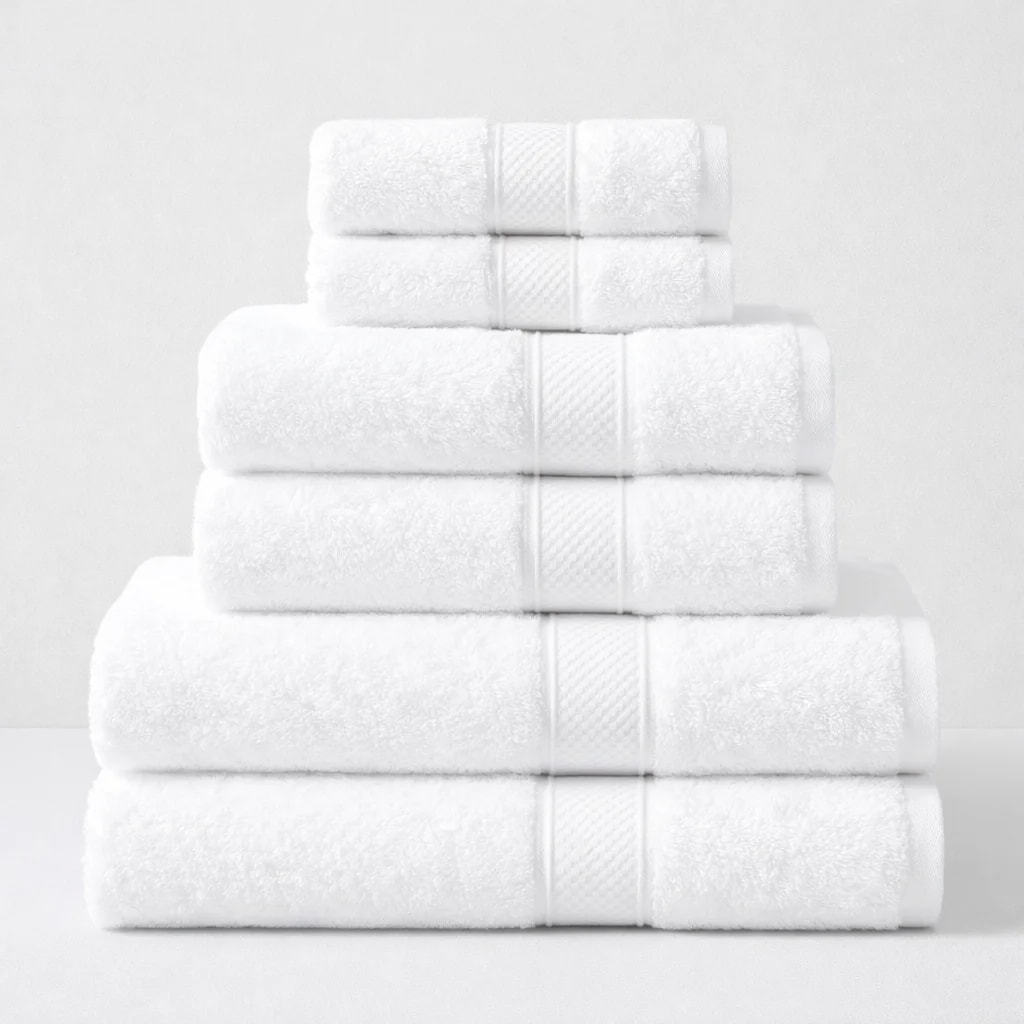
Kemet Cotton Egyptian Cotton Towels
Named variety (Giza), named region (Nile Delta): the sourcing specificity this guide recommends looking for. No Pyramid Mark yet.
- 600 & 800 GSM weights
- OEKO-TEX certified
- Free worldwide shipping
- 30-day money-back guarantee
Sets from $79.95
Shop the Kemet Sale →Get our reviews first on Google
Add Cotton With Love as a preferred source and Google will show you more of our towel and sheet reviews.
Add Cotton With Love as a preferred source on GoogleAdd us as a preferred source on Google
See more of our towel and sheet reviews in your Google results.
Frequently Asked Questions
What makes Egyptian cotton special?
Egyptian cotton is grown exclusively in Egypt's Nile Delta, where the climate and soil produce extra-long staple (ELS) fibers. These fibers are longer, stronger, and smoother than standard cotton, producing fabrics that are softer, more durable, and more breathable. The same cotton grown elsewhere would not have the same fiber properties.
Is Egyptian cotton really better than regular cotton?
Genuine Egyptian cotton is measurably better than standard cotton for bedding: it is softer, more breathable, more durable, and improves with washing. However, most products sold as Egyptian cotton are blends or unverified claims. If you are paying a premium for Egyptian cotton, verify the Cotton Egypt Association Pyramid Mark certification.
How can I tell if Egyptian cotton is real?
The only reliable way is the Cotton Egypt Association Pyramid Mark, which requires independent verification of the cotton's origin. Without this mark, treat Egyptian cotton claims skeptically. Thread count above 800 using multi-ply yarns, extremely low prices, and vague country-of-origin labeling are all red flags.
What is extra-long staple cotton?
Extra-long staple (ELS) cotton has fibers longer than 1.4 inches (36mm). Egyptian cotton is naturally ELS. Longer fibers can be spun into finer, stronger yarn, which produces smoother, more durable fabric. Standard cotton has shorter fibers that produce coarser yarn.
Is Egyptian cotton the same as Pima cotton?
No. Both are extra-long staple cotton varieties, but they are grown in different regions. Egyptian cotton is grown in Egypt's Nile Delta. Pima cotton (also called Supima when US-grown) is grown primarily in the US Southwest and Peru. Both are high quality. Egyptian cotton is generally considered the premium standard, but certified Pima/Supima is also a legitimate luxury option.
Is Egyptian cotton better than Turkish cotton?
For sheets, usually yes: Egyptian Giza varieties have longer fibers, which spin into finer yarn for a smoother, more durable weave. For towels it's closer. Turkish cotton is long-staple rather than extra-long, and it makes a fluffier, faster-drying towel. Honest Turkish cotton also tends to be cheaper and far less often faked, which matters when an Egyptian label can't be verified.
What is Giza cotton?
Giza is the naming system for Egypt's cotton varieties, each bred by the Cotton Research Institute and numbered (Giza 45, 86, 87, 88, 92, 94, 96 and others). Giza 45 and Giza 87 are the rarest extra-long staple varieties and go into the most expensive sheets. Giza 86 and Giza 94 are long-staple workhorses used in most quality Egyptian cotton towels.
Why is Egyptian cotton so expensive?
Supply. Egypt grows a tiny fraction of the world's cotton, the extra-long staple varieties yield less per acre than upland cotton, and much of the crop is hand-picked. Add the cost of spinning fine yarn from long fibers and certified traceability, and a genuine queen sheet set rarely comes in under $150. Anything far below that is almost certainly not what the label says.