Egyptian Cotton vs Supima vs Pima: What's the Difference?
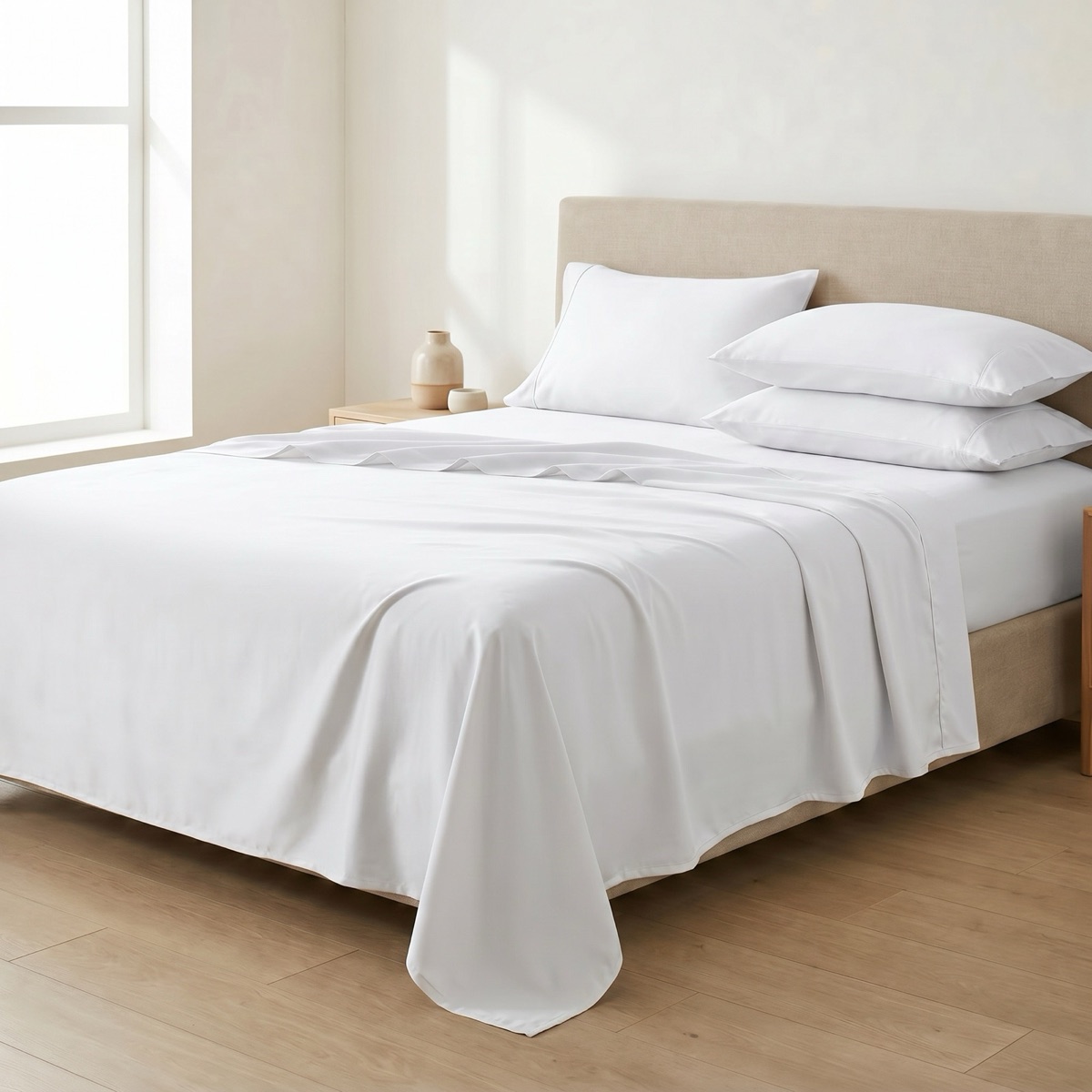
Kemet Cotton Egyptian Sateen Sheet Set
100% extra-long staple Giza cotton from Egypt's Nile Delta, woven into a smooth 600 thread count sateen. Ten colors, all standard sizes.
- 600 thread count sateen weave
- Extra-long staple Giza cotton
- Deep 16-inch pockets
- 30-day money-back guarantee
Sets from $149.95
Shop Kemet Sheets →The Same Species, Different Postcodes
Here’s something the marketing rarely makes clear: Egyptian cotton, Pima cotton, and Supima cotton all come from the same botanical species. They’re all Gossypium barbadense, the extra-long staple cotton plant that produces the finest fibers in commercial cotton production.
The difference is where they’re grown. That’s it. The species is the same. The fiber characteristics are similar. What changes is the terroir, the combination of soil, climate, water, and agricultural tradition that affects how the fibers develop.
This matters because it reframes the entire comparison. You’re not choosing between fundamentally different materials. You’re choosing between growing regions, certifications, and price points.
Egyptian Cotton
Egyptian cotton is Gossypium barbadense grown in Egypt, primarily in the Nile Delta. The combination of alluvial soil from millennia of Nile flooding, consistent irrigation, hot days, cool nights, and low humidity produces fibers that are generally considered the longest and finest in commercial cotton production.
Key facts:
- Fiber length: 36mm+ (extra-long staple)
- Certification: Cotton Egypt Association (CEA) Pyramid Mark
- Major varieties: Giza 45 (rarest, finest), Giza 87, Giza 92, Giza 96
- Global production: Less than 0.5% of world cotton output
- Price range for queen sheets: $120 to $400+
The problem with Egyptian cotton, as we’ve documented extensively, is that up to 90% of products carrying the label are unverified. The CEA Pyramid Mark is essential.
Brands with verified Egyptian cotton include Pure Parima, California Design Den, and Threadmill.
Pima Cotton
Pima cotton is the same Gossypium barbadense species grown outside Egypt, primarily in Peru and the American Southwest (Arizona, California, New Mexico, Texas). The name “Pima” comes from the Pima people of the American Southwest who helped cultivate the crop in the early 1900s.
Key facts:
- Fiber length: 35mm+ (extra-long staple)
- Certification: None standardised for non-US Pima
- Growing regions: Peru, US Southwest, Australia, Israel
- Price range for queen sheets: $80 to $250
Peruvian Pima has a particularly strong reputation. Peru’s coastal desert climate and long growing season produce fibers that rival Egyptian cotton in length and fineness. The issue is verification. There’s no single international body certifying Peruvian Pima the way the CEA certifies Egyptian cotton.
Supima Cotton
Supima is not a different type of cotton. It’s a trademark. The Supima Association (Superior Pima) licenses the Supima name exclusively to products made from American-grown Pima cotton. Think of it as a regional certification, rather like how Champagne is just sparkling wine from a specific French region.
Key facts:
- Fiber length: 35mm+ (extra-long staple)
- Certification: Supima Association trademark licence
- Growing region: US only (primarily Arizona, California, Texas)
- US production: About 3% of total US cotton crop
- Price range for queen sheets: $100 to $300
The advantage of Supima is traceability. The Supima Association tracks its cotton from farm to finished product, much like the CEA does for Egyptian cotton. When you see the Supima label, the origin claim has been verified.
L.L. Bean is a useful comparison point here. They sell both Egyptian cotton and Pima/Supima lines, which lets you compare the two fiber types from the same manufacturer at similar quality levels.
Head-to-Head Comparison
| Egyptian Cotton | Supima | Pima (non-US) | |
|---|---|---|---|
| Species | Gossypium barbadense | Gossypium barbadense | Gossypium barbadense |
| Avg. fiber length | 36mm+ | 35mm+ | 35mm+ |
| Growing region | Egypt (Nile Delta) | USA (Southwest) | Peru, Australia, others |
| Certification body | Cotton Egypt Association | Supima Association | None standardised |
| Typical queen set price | $120 to $400 | $100 to $300 | $80 to $250 |
| Supply risk (fakes) | Very high (up to 90%) | Lower (trademark enforced) | Moderate |
| Softness after washing | Exceptional | Excellent | Excellent |
| Durability | Excellent | Excellent | Excellent |
What Actually Differs Between Them
Fiber Length (Slight Egyptian Advantage)
Egyptian cotton has a marginal edge in average fiber length. Giza 45, the rarest variety, produces fibers over 40mm. Most Egyptian cotton used in consumer bedding ranges from 36 to 38mm. Supima typically falls between 35 and 37mm.
This difference is real but small. In a blind comparison between 400 TC Egyptian cotton sateen and 400 TC Supima sateen, most people would struggle to tell them apart.
Certification and Traceability
This is where the comparison gets practical. Both Egyptian cotton (via the CEA) and Supima (via the Supima Association) have functioning certification programmes. Generic “Pima cotton” from Peru or elsewhere often does not.
If you value knowing exactly what you’re buying, the choice is between certified Egyptian cotton and certified Supima. Uncertified Pima is a gamble.
Price
Egyptian cotton commands a 20% to 50% premium over Supima at comparable quality levels. Some of this reflects genuine scarcity. Egypt produces far less ELS cotton than the US. Some of it reflects brand perception and the historical prestige of the “Egyptian cotton” name.
Whether the premium is justified depends on the specific products. A certified Supima sheet set at $150 from a reputable brand will likely outperform a $150 “Egyptian cotton” set with no certification.
Terroir
Wine enthusiasts will understand this concept immediately. The same grape variety produces different wines depending on where it’s grown. Cotton works similarly. The Nile Delta’s unique soil composition, irrigation patterns, and microclimate produce fibers with characteristics that are difficult (arguably impossible) to replicate elsewhere.
Whether you can perceive this difference in a finished sheet set is debatable. At the raw fiber level, experienced textile professionals can tell the difference. At the consumer level, the gap narrows considerably once the cotton has been spun, woven, and finished.
Which Should You Buy?
Buy certified Egyptian cotton if: You want the traditional premium standard, you’re willing to pay for it, and you can verify the CEA Pyramid Mark. Brands like Pure Parima and Peacock Alley are solid choices.
Buy Supima if: You want verified extra-long staple cotton at a slightly lower price point with strong traceability. The Supima trademark is well-enforced, making fakes less common than with Egyptian cotton.
Buy Pima with caution if: You’re on a tighter budget and accept that verification is limited. Peruvian Pima from established brands can be excellent, but do your research on the specific brand.
Avoid in all categories: Unverified claims at suspiciously low prices. Whether the label says Egyptian, Pima, or Supima, certification is what separates a legitimate product from a marketing claim.
The Bottom Line
The differences between these three are smaller than the marketing suggests. All are extra-long staple cotton from the same species. All produce exceptional bedding when genuine. The real question isn’t which type of ELS cotton is best. It’s whether the cotton in your sheets is actually what the label claims.
Certification answers that question. Everything else is terroir and preference.
Get our reviews first on Google
Add Cotton With Love as a preferred source and Google will show you more of our towel and sheet reviews.
Add Cotton With Love as a preferred source on GoogleAdd us as a preferred source on Google
See more of our towel and sheet reviews in your Google results.
Frequently Asked Questions
Is Egyptian cotton better than Supima?
Not necessarily. Both are extra-long staple cotton from the same species, Gossypium barbadense. Egyptian cotton is grown in Egypt's Nile Delta, Supima in the American Southwest. Egyptian cotton has a slight edge in average fiber length and is traditionally considered the premium standard, but certified Supima is excellent quality. The biggest difference is terroir, not species.
What does Supima actually mean?
Supima is a trademarked brand name for American-grown Pima cotton. Only cotton grown in the United States and verified by the Supima Association can use the Supima label. It functions as a certification of origin, similar to how Champagne must come from the Champagne region of France.
Is Pima cotton the same as Supima cotton?
Pima is the broader category. Supima is a specific subset. All Supima cotton is Pima, but not all Pima is Supima. Pima cotton can come from the US, Peru, Australia, or other regions. Supima must be American-grown and verified by the Supima Association.
Why are Egyptian cotton sheets more expensive than Supima?
Egyptian cotton commands a premium for several reasons. Global supply is limited and declining. The Nile Delta growing conditions are considered optimal for extra-long staple development. Brand perception also plays a role. Whether the quality difference justifies a 30% to 50% price premium depends on the specific products being compared.
Which should I buy for everyday sheets?
If budget is a factor, certified Supima sheets from a reputable brand offer excellent quality at a lower price point than Egyptian cotton. If you want the traditional premium standard and can verify CEA certification, Egyptian cotton is the gold standard. In both cases, certification matters more than the label.