Wamsutta Towels Review: Does Wamsutta Still Exist in 2026?
Quick Verdict
Wamsutta survived the Bed Bath & Beyond collapse, but barely. The brand is a licensed name now, sold through Amazon, Belk, Macy’s, and the relaunched bedbathandbeyond.com. The towels are decent mid-range product with a heritage brand name slapped on them.
If you find them on sale, they’re fine. At full price, they’re overpriced for what you’re getting. And the Egyptian cotton claim on the premium line isn’t independently verified.
Our Top Picks Instead of Wamsutta
| Pick | Why | Where to Buy |
|---|---|---|
| Pure Parima (Best Certified) | Cotton Egypt Association Pyramid Mark, verified Egyptian cotton | Check Price → |
| 🏆 Kemet Cotton (Best Value) | 700 GSM Giza cotton, Gold Seal certified, roughly 30% less than Wamsutta Hygro at list | Check Price → |
| Wamsutta (If You Want the Name) | Best on sale only | Shop on Amazon → |
| Hammam Linen (Best Budget) | ~$10 per towel, 600 GSM Turkish cotton | Shop on Amazon → |
🏆 For verified Egyptian cotton, see our pillar guide: Best Egyptian Cotton Towels of 2026 →
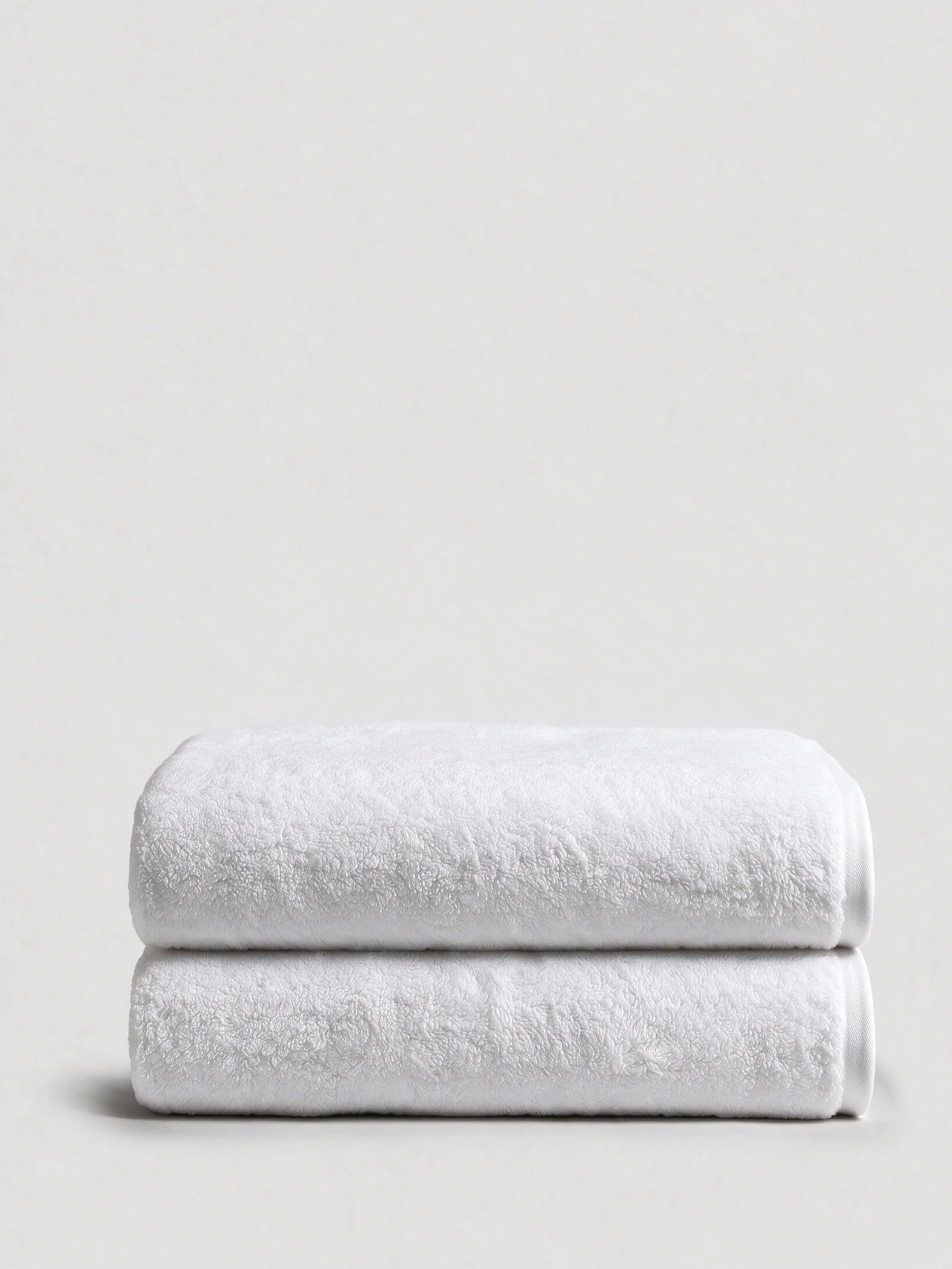
Kemet Cotton Reserve Bath Towels (700 GSM)
Wamsutta's Egyptian cotton line asks you to trust a licensed name. Kemet puts the Cotton Egypt Association's Gold Seal on the product page, names the variety and the region, and sells a 700 GSM pair for $149.95, which is still under Wamsutta Hygro at full retail.
- 100% Giza Egyptian cotton, Cotton Egypt Association Gold Seal licence 1624
- Zero-twist weave, 600 GSM Signature or 700 GSM Reserve, 28 x 55 in bath towel
- Also sold as a bath sheet, hand towel and washcloth so you can rebuild a matched set
- Free US shipping over $99, 30-day returns on unused towels
$149.95 set of 2 · $299.95 set of 4 · $599.95 set of 8
Shop Kemet Reserve →Made in Egypt · sold direct only · colour stock rotates
What Happened to Wamsutta
Here’s the short version.
Wamsutta started in 1846 in Massachusetts. For a century, it was one of the great American textile names, with mills in New Bedford producing some of the highest quality cotton bedding in the country. The brand survived several ownership changes through the 20th century and ended up under Springs Global, then Pillowtex, then WestPoint Stevens, then WestPoint Home. Standard heritage brand trajectory.
In 2003, Bed Bath & Beyond acquired exclusive US retail rights to Wamsutta. For nearly two decades, Wamsutta was Bed Bath & Beyond’s flagship private-label bedding and bath brand. If you bought Wamsutta in the 2010s, you almost certainly bought it at Bed Bath & Beyond.
Then Bed Bath & Beyond filed for bankruptcy in April 2023. Overstock.com bought the intellectual property (including the Bed Bath & Beyond name) for $21.5 million and rebranded itself as Beyond, Inc. The Wamsutta trademark went with that deal.
So today, Wamsutta exists as a brand asset held by Beyond Inc., licensed to manufacturers and sold across a fragmented retail network. The physical Bed Bath & Beyond stores that anchored the brand for two decades are gone in the US (the Canadian stores closed too).
That’s the context you need before you decide whether to buy a Wamsutta towel.
Where You Can Actually Buy Wamsutta Today
This is where it gets confusing.
Amazon. The most reliable channel. Multiple sellers list Wamsutta sheets and towels, including some products with the “official” Wamsutta storefront. Quality varies because the brand is contract-manufactured by different operations.
Belk. The Southeastern US department store carries Wamsutta sheets and some bath linens. Their selection is narrower than what Bed Bath & Beyond used to stock, but the products are genuine licensed Wamsutta.
Macy’s. Limited Wamsutta presence, mostly sheets. Occasional sales make these a better buy than Amazon.
Bedbathandbeyond.com (relaunched). The website Beyond Inc. now operates under the Bed Bath & Beyond name carries Wamsutta as one of the featured brands. Inventory is inconsistent.
Outlet stores. A handful of remaining Wamsutta outlet locations exist, mostly in the Northeast. These move clearance inventory and are worth a visit if you’re nearby.
You will not find Wamsutta at a Bed Bath & Beyond physical store, because those don’t exist anymore in any meaningful form.
What You’re Actually Getting
Wamsutta currently sells three rough tiers of bath linens, and the differences matter.
Wamsutta Hygro. The flagship premium line. Uses Hygro yarn construction, which creates a hollow cotton fiber that absorbs more water than standard cotton. Around 600 GSM. Decent quality. Priced at premium retail of $30 to $50 per bath towel.
Wamsutta Egyptian Cotton. Labelled 100% Egyptian cotton. No Cotton Egypt Association Pyramid Mark certification. Around 600 GSM. Sold as a premium tier, priced similar to Hygro.
Wamsutta Ultra Soft / Fine Cotton / coordinating sets. Mid-tier. Cotton blends or generic long-staple cotton. Often sold as guest towels or coordinated bath sets in seasonal colors. Around 500 GSM.
If you’re buying Wamsutta because you remember it as a premium brand, you want the Hygro or Egyptian Cotton lines specifically. The mid-tier products are decent but they’re not what built the Wamsutta reputation.
The Egyptian Cotton Claim, Verified
Here’s where I get more critical.
Wamsutta’s Egyptian Cotton line claims 100% Egyptian cotton on the product label. The brand does not provide:
- The Cotton Egypt Association Pyramid Mark (the only internationally recognized verification for genuine Egyptian cotton)
- The specific cotton variety (Giza 86, Giza 87, Giza 88, etc.)
- The country of manufacture beyond the back-of-package care label
- A traceable supply chain audit
Why does this matter? Because Egyptian cotton fraud is widespread. Studies by the Cotton Egypt Association have repeatedly found that products labelled “Egyptian cotton” at retail often contain little to none of the actual fiber. The Pyramid Mark requires DNA testing and supply chain documentation, which is why it exists.
A premium-priced Wamsutta Egyptian Cotton towel without Pyramid Mark certification is asking you to trust the brand. Given the ownership turbulence Wamsutta has been through, that trust requires a leap.
For comparison, Pure Parima carries the Pyramid Mark, and we verified the certification directly with the Cotton Egypt Association. Same price tier, much stronger paper trail.
How They Actually Feel
I’ve used a few Wamsutta bath towels over the past year, mostly from the Hygro line picked up on Belk sales.
Out of the package, they feel substantial. The Hygro construction gives the towels a noticeable absorbency advantage in the first few weeks. Good water pickup, dries skin efficiently, doesn’t feel papery the way some 500 GSM towels do.
After 20 to 30 washes, the towels develop a slight pilling at the hems. Not aggressive, but visible. The hand feel softens but doesn’t get the “improves with washing” quality that genuine long-staple Egyptian cotton has. By a year in, the towels are still functional but starting to look mid-range rather than premium.
Compared to Kemet Cotton at 700 GSM (which costs roughly 30% less than Hygro at list), the Kemet towels feel denser, more plush, and have held up better in my use. Compared to Pure Parima, Pure Parima has the verified Egyptian cotton certification Wamsutta lacks.
So Wamsutta sits in an awkward middle ground. Decent towels, premium pricing, brand name doing more work than the product warrants.
Where Wamsutta Still Makes Sense
I’m not saying don’t buy Wamsutta. Specific scenarios where it works:
On deep sale at Belk or Macy’s. When the Hygro line drops to 40% off in a department store sale, the value math changes. At that price, you’re getting decent mid-premium towels and you’re saving meaningful money.
If you specifically want a particular color or coordinated set. Wamsutta still does seasonal color releases, and if you’ve already got coordinating bath accessories from Bed Bath & Beyond’s old runs, matching new towels can be worth the brand premium.
For guest bathrooms. Wamsutta’s mid-tier products are fine for low-frequency use. They look presentable, they’re substantial enough to feel hotel-like, and you don’t need long-term durability for towels that get used twice a year.
What I would not do is pay full retail for the Wamsutta Egyptian Cotton line. That’s where the price-to-verification math falls apart.
What to Buy Instead
If you came to Wamsutta looking for premium Egyptian cotton bath towels, here are the better-value alternatives:
Pure Parima. Cotton Egypt Association Pyramid Mark, verified Egyptian cotton, 800 GSM. Similar premium price point to Wamsutta but with the certification that backs the claim.
Kemet Cotton. Giza cotton from the Nile Delta, 600 or 700 GSM, Cotton Egypt Association Gold Seal (licence 1624) plus OEKO-TEX. Around 30% less than Wamsutta Hygro at full retail ($93.95 for two Signature, $149.95 for two Reserve), and the towels feel denser and better-constructed.
Hammam Linen. If you’re shopping primarily on price and don’t need the Egyptian cotton label, Turkish cotton at $10 a towel from Hammam Linen genuinely outperforms Wamsutta’s mid-tier products in everyday use.
Hudson Park. Bloomingdale’s house brand. Similar pricing and similar lack of certification, but with more consistent quality control than Wamsutta’s licensed manufacturing produces.
The Honest Take
Wamsutta is a heritage brand selling on nostalgia. The towels are okay. The Egyptian cotton claim is unverified. The retail experience is fragmented because the brand lost its anchor channel when Bed Bath & Beyond collapsed.
If you grew up buying Wamsutta and you want to keep buying Wamsutta, watch for Belk sales and stick to the Hygro line. If you’re new to the brand and you’re looking for premium bath towels, there are better options at the same price. Kemet Cotton’s Reserve set at $149.95 for two is the one I’d point you to first.
The label is older than the product. Buy accordingly.
More Brand Reviews
Get our reviews first on Google
Add Cotton With Love as a preferred source and Google will show you more of our towel and sheet reviews.
Add Cotton With Love as a preferred source on GoogleAdd us as a preferred source on Google
See more of our towel and sheet reviews in your Google results.
Frequently Asked Questions
Does Wamsutta still exist after Bed Bath & Beyond closed?
Yes. Wamsutta is now owned by Beyond Inc. (the company that bought the Bed Bath & Beyond name out of bankruptcy in 2023) and the trademarks were licensed to other manufacturers and retailers. You'll still see Wamsutta towels and sheets, but the brand is being sold through different channels: Amazon, Belk, Macy's, and the relaunched Bed Bath & Beyond website. It's not the same operation that existed before 2023.
Where can I buy Wamsutta towels in 2026?
Amazon is the most reliable channel today. Belk and Macy's carry select Wamsutta lines. The relaunched bedbathandbeyond.com sells Wamsutta-branded bath linens. You won't find them in a physical Bed Bath & Beyond store because those stores no longer exist in the US.
Are Wamsutta towels still 100% Egyptian cotton?
Only some lines. The premium Wamsutta Hygro and Wamsutta Egyptian Cotton ranges still carry an Egyptian cotton label. Mid-tier Wamsutta towels use generic cotton blends. None of the current Wamsutta lines carry the Cotton Egypt Association Pyramid Mark, so the Egyptian cotton claim is unverified.
Are Wamsutta towels worth buying today?
On sale, they're decent. At full retail, no. The brand name carries more weight than the current product justifies, and you're paying for nostalgia rather than verified quality. For certified Egyptian cotton at a similar price point, [Pure Parima](/brands/pure-parima/) is a more transparent choice.
What's the difference between Wamsutta Hygro and Wamsutta Egyptian Cotton?
Hygro is a specific cotton fiber processing technique that creates a hollow yarn structure for better absorbency. The Wamsutta Hygro line uses that yarn construction (it's a finishing method, not a cotton variety). The Egyptian Cotton line uses what the label calls 100% Egyptian cotton but does not specify the variety (Giza 86, 87, etc.) or carry independent certification.
Who actually makes Wamsutta towels now?
Most current Wamsutta-branded towels are manufactured in Pakistan, India, or China by licensed producers. The brand name is owned, the products are contract-manufactured. The 'Made in USA' Wamsutta towels of decades past are no longer in production.