Why Are My Towels Rough and Scratchy? (And How to Fix Them)
You’re Not Imagining It. They Used to Be Softer.
That stack of towels that felt so plush when you bought them? The ones that are now more exfoliating than your loofah? You’re not crazy, and you didn’t buy bad towels (probably). Something happened to them over time, and the good news is that most of the common causes are fixable.
I went through this exact situation about three years ago. A set of towels I genuinely loved turned scratchy within a few months. I assumed they were just cheap and started shopping for replacements. Then I figured out it was my washing routine, not the towels. Fixed my approach, and they bounced right back. Could have saved myself the frustration if I’d known what to look for earlier.
Let’s go through the reasons your towels might be rough and what you can actually do about it.
The Main Culprits
1. Fabric Softener Buildup (The Most Common Cause)
This is going to sound backwards, but fabric softener is the number one reason towels get stiff and scratchy over time. I know. The irony is painful.
Here’s what happens: fabric softener works by depositing a thin layer of lubricating chemicals (usually silicone-based) onto fabric fibers. On clothes, this makes them feel smooth and reduces static. On towels, it’s a disaster.
Towels are designed to absorb water through their terry loops. Fabric softener coats those loops with a waxy film. Over weeks and months of use, the coating builds up. Your towels stop absorbing water effectively, and the coated fibers start feeling stiff and slick in a way that people describe as “rough” or “scratchy.”
The worst part is that most people respond to rough towels by adding more fabric softener, which makes the problem worse. It’s a vicious cycle.
The fix: Stop using fabric softener immediately. Run your towels through a vinegar strip wash (instructions below) to remove the existing buildup.
2. Hard Water Mineral Deposits
If you have hard water (and roughly 85% of homes in the US do), calcium and magnesium minerals are depositing onto your towel fibers every single wash. Over time, these mineral deposits make cotton feel stiff and crunchy.
You can tell if hard water is your issue by looking at your faucets and showerhead. If you see white, chalky buildup around them, your water is hard, and your towels are getting the same treatment.
The fix: Add half a cup of white vinegar to every towel wash (or at least every other wash). The acidity dissolves mineral deposits. For a long-term solution, a whole-house water softener makes a noticeable difference in laundry quality. If that’s not in the budget, vinegar is your best friend.
3. Too Much Detergent
Using too much detergent is surprisingly common (those measuring lines on the cap are hard to read on purpose, in my opinion). Excess detergent doesn’t rinse out completely. It builds up in the fabric, making towels stiff and sometimes giving them a slightly slimy feel when wet.
If your towels feel kind of crunchy when dry but weirdly slippery when wet, detergent buildup is likely the issue.
The fix: Cut your detergent amount in half. Seriously. Most people use far more than necessary, and towels get perfectly clean with less. The agitation cycle does most of the cleaning work, not the detergent. Run a vinegar strip wash to clear out the existing buildup.
4. Over-Drying
Leaving towels in the dryer too long (past the point where they’re actually dry) bakes the moisture out of the cotton fibers and makes them stiff and brittle. If your towels come out of the dryer feeling hot, stiff, and almost crunchy, you’re over-drying them.
The fix: Use your dryer’s moisture sensor setting if it has one. If not, check towels periodically and pull them out when they’re just dry, not scorching hot. They should feel warm and fluffy, not crispy.
5. Low-Quality Fiber (The One You Can’t Fix)
This is the answer nobody wants to hear, but it’s real. Towels made from short-staple, low-quality cotton have a limited lifespan of softness. The short fibers break down faster, pill more easily, and don’t recover well from wear.
If your towels were cheap to begin with and they’ve gotten rough after six months to a year of use, the fiber quality may have reached its ceiling. No amount of vinegar washing will make a $10 towel perform like a $40 one long-term.
This is where investing in Egyptian cotton or Turkish cotton towels pays off. The longer fibers resist breakdown, maintain softness longer, and actually improve with proper washing. Our Egyptian cotton towels guide and best bath towels guide go deeper on what to look for.
How to Fix Rough Towels: The Strip Wash
If your towels are rough from buildup (fabric softener, detergent, minerals), a strip wash can restore them. This is my go-to rescue method, and it works remarkably well.
Step 1: Hot Vinegar Wash
- Load towels into the washer (don’t overload, they need room to agitate)
- Add one cup of white vinegar directly to the drum
- No detergent. No fabric softener. Nothing else.
- Wash on the hottest setting your towels can handle
- Run the full cycle
Step 2: Baking Soda Wash
- Leave the towels in the washer
- Add half a cup of baking soda directly to the drum
- Again, no detergent
- Wash on the hottest setting again
- Run the full cycle
Step 3: Dry Properly
- Tumble dry on medium heat
- Toss in 3 to 4 dryer balls (wool or rubber)
- Remove when just dry, not over-dried
After this treatment, most towels feel dramatically different. The vinegar dissolves mineral deposits and fabric softener residue. The baking soda neutralizes odors and helps further break down buildup. Together, they reset your towels to something much closer to their original state.
For severely gunked-up towels (years of fabric softener use), you might need to repeat this process two or three times. Each round strips more buildup.
Ongoing Prevention
Once your towels are soft again, keep them that way with these habits.
Ditch the fabric softener permanently. Use half a cup of white vinegar in the rinse cycle every 3 to 4 washes instead. It softens without coating. For more on the right way to wash towels, see our Egyptian cotton towel washing guide.
Use less detergent. About three-quarters of the recommended amount is plenty for towels. More detergent doesn’t mean cleaner towels. It means more residue.
Don’t over-dry. Medium heat, dryer balls, remove when dry. Simple.
Shake towels before drying. Give each towel a good snap-shake before tossing it in the dryer. This loosens the terry loops and helps them fluff up during drying.
Hang towels properly between uses. Spread them out on a towel bar so air circulates through the fabric. A towel bunched up on a hook stays damp longer, which encourages bacterial growth (hello, musty smell) and fiber breakdown.
When It’s Time to Replace Instead of Rescue
Sometimes towels are past the point of saving. Here’s how to tell.
The terry loops are flat. Run your hand over the towel. If the loops that should stand up are crushed flat against the base fabric, the structural integrity of the towel is gone. No washing treatment will stand them back up.
Visible bald spots. Areas where the terry loops have worn away entirely, leaving just the base weave exposed. These towels are done.
The towel is thin. Hold it up to a light. If you can see light through it easily, the fiber density has deteriorated too much. It won’t absorb well regardless of how clean you get it.
Persistent smell that won’t wash out. If you’ve done the strip wash and the towel still smells musty or sour, bacteria has gotten deep into the fiber structure. Time to let it go.
No absorbency after strip washing. If you’ve done two or three strip washes and the towel still pushes water around instead of soaking it up, the fiber is either too coated (from years of softener) or too degraded to function properly.
Upgrading to Better Towels
If your towels are beyond rescue and you’re ready to invest in something that’ll last, consider Egyptian cotton or Turkish cotton towels. The difference in how they age compared to standard cotton towels is significant.
Egyptian cotton towels use extra-long staple fibers that resist pilling and breakdown. They get softer with washing (when cared for properly) and maintain absorbency for years. They tend to be denser and more plush. Check our Egyptian cotton towels guide for specific recommendations.
One construction detail worth knowing if rough towels have burned you before: zero-twist towels are soft from the very first use, no breaking-in period and no temptation to reach for the fabric softener. Kemet Cotton makes theirs this way with Giza Egyptian cotton, and it’s exactly the kind of towel that stays soft as long as you keep softener away from it. Our zero-twist towels guide covers the trade-offs.
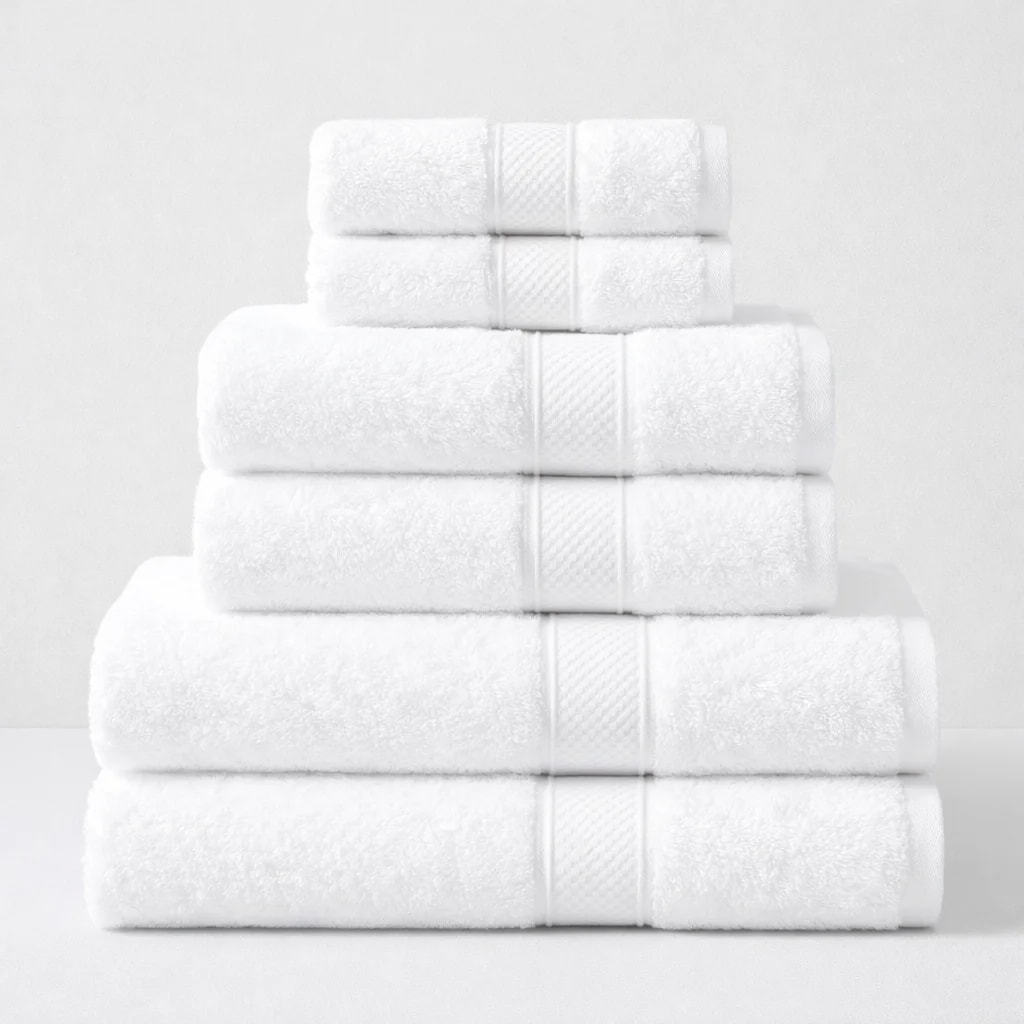
Kemet Cotton Egyptian Cotton Towels
100% Giza cotton from the Nile Delta with zero-twist weaving. Soft from the first use, no break-in period.
- 600 & 800 GSM weights
- OEKO-TEX certified
- Free worldwide shipping
- 30-day money-back guarantee
Sets of two from $93.95
Shop the Kemet Sale →Turkish cotton towels are also long-staple but tend to be lighter and faster-drying than Egyptian cotton. If you live in a humid climate where towels stay damp forever, Turkish cotton might be the better choice.
Brands worth considering include Kemet Cotton, Pure Parima, Brooklinen, Parachute, and The Company Store. Our best bath towels guide has detailed comparisons.
The Short Version
Your towels probably aren’t defective. They’re probably coated in fabric softener residue, mineral deposits, or excess detergent. Do a strip wash (vinegar first, baking soda second, no detergent in either), stop using fabric softener, and reduce your detergent amount. If the terry loops are physically crushed and the towel is thin, it’s replacement time.
And when you do buy new towels, treat them right from day one. No fabric softener. Vinegar in the rinse every few washes. Medium heat in the dryer. Your future self will appreciate it.
Get our reviews first on Google
Add Cotton With Love as a preferred source and Google will show you more of our towel and sheet reviews.
Add Cotton With Love as a preferred source on GoogleAdd us as a preferred source on Google
See more of our towel and sheet reviews in your Google results.
Frequently Asked Questions
Why did my towels get rough after washing?
The most common cause is fabric softener or dryer sheet buildup, which coats cotton fibers and makes them feel waxy and stiff over time. Hard water mineral deposits and using too much detergent are the other main culprits. All three reduce the natural softness of cotton fibers.
How do I make my rough towels soft again?
Run a vinegar strip wash: wash towels with one cup of white vinegar and no detergent on warm water. Then wash again with half a cup of baking soda and no detergent. Dry on medium heat with dryer balls. This removes buildup and restores softness in most cases.
Does vinegar really soften towels?
Yes. White vinegar dissolves mineral deposits from hard water and breaks down detergent and fabric softener residue that coats cotton fibers. It's a natural softener that works by removing buildup rather than adding a coating. Your towels won't smell like vinegar once they're dry.
Should I stop using fabric softener on towels?
Absolutely. Fabric softener is the number one cause of rough, non-absorbent towels over time. It coats cotton fibers with a waxy layer that builds up with each wash. This coating makes towels feel smooth initially but causes stiffness and kills absorbency long-term. Use white vinegar instead.
Can hard water make towels rough?
Yes. Hard water contains calcium and magnesium minerals that deposit onto cotton fibers over time, making them stiff and crunchy. If you have hard water, adding half a cup of white vinegar to every towel wash helps dissolve these mineral deposits. A water softener is the long-term fix.
When should I replace rough towels instead of trying to fix them?
If the terry loops are flattened, crushed, or visibly worn thin, no amount of washing will bring them back. Same if the towel has become noticeably thinner or developed permanent bald spots. At that point, the fiber structure is broken down and it's time for new towels.