Zero Twist Towels Explained: Why They Feel Softer, and Which Ones Are Worth Buying, and Which Ones Are Worth Buying
A plain-language look at what zero twist actually means, how it stacks up against low-twist and standard twist construction, and which brands are worth trying if you want to feel the difference yourself.
James Whitfield · Verification & Standards Editor · Updated September 2026
You've probably felt the difference before you ever heard the term. A towel that's plush and soft right out of the packaging, no stiff break-in period, no towel that feels scratchy for the first month. That's usually zero twist construction, and it's worth understanding before you pay a premium for it.
This is a construction method, not a marketing word, and it comes with real tradeoffs. Here's what it actually is, how it compares to the alternatives, and where it falls apart.
What zero twist means
Standard towels are woven from cotton yarn, and yarn is made by twisting raw cotton fibers together. A tighter twist makes a stronger, more durable thread. A looser twist makes a softer one. That trade-off, twist for strength versus loosen for softness, is the basic decision every towel manufacturer makes before a single loop gets woven.
Zero twist removes the twist from the equation entirely. During spinning, the cotton fibers are laid alongside a water-soluble PVA yarn (polyvinyl alcohol), which acts as a temporary scaffold so the loose fibers can survive the weaving process. Once the finished towel goes through its first wash, that PVA yarn dissolves completely, leaving behind cotton loops that were never twisted in the first place.
The physics of this matter more than the marketing copy usually lets on. Untwisted fibers stay lofty and open, which means more surface area is exposed both to your skin and to water. More exposed surface is what makes a zero twist towel feel plush immediately and absorb faster than a comparable twisted towel. It's also why a zero twist towel often feels heavier and softer than its GSM number would suggest.
Zero twist vs low twist vs standard twist
Most towels on the market fall into one of three construction categories. Here's how they actually compare, not just on softness but on the things that determine whether a towel is still good two years from now.
| Factor | Zero twist | Low twist | Standard twist |
| Softness | Excellent from first use | Very good, slightly firmer | Improves over 5 to 10 washes |
| Absorbency | Fastest, most surface area exposed | Good, close to zero twist | Good, improves with washing |
| Durability | 3 to 5 years typical | 5 to 8 years typical | 8 to 10 years typical |
| Dry time | Faster, more airflow in loops | Moderate | Slower at the same GSM |
| Lint shedding | High for the first 3 to 5 washes | Low to moderate | Low |
The catch
Every zero twist towel sheds noticeably in its first several washes. The loose fiber structure means short fibers work themselves free easily, and you should expect to clean your lint trap more often for the first month of ownership. This settles down, but it's real, and it's the single most common complaint we found across zero twist brands.
The twist that gives a standard towel its strength doesn't disappear for free. Remove it and you remove some structural reinforcement, which means zero twist towels pill and snag more easily than a tightly twisted towel, especially against Velcro, zippers, or rough surfaces. Some people also notice that zero twist towels lack the crisp, structured hand-feel of a traditional towel. They're softer, but softer isn't the same as sturdier, and if you like a towel that feels taut and substantial rather than cloud-like, standard twist or low twist will suit you better.
Bottom line: zero twist genuinely delivers on softness and early absorbency. It genuinely costs you some durability and a lint-heavy first month. Both of those things are true at once.
The 4 zero twist towels we compared
We looked at published construction claims, verified GSM where the brand disclosed it, and weighed those against real buyer feedback for four brands that specifically market zero twist or low-twist lines.
#1 Winner 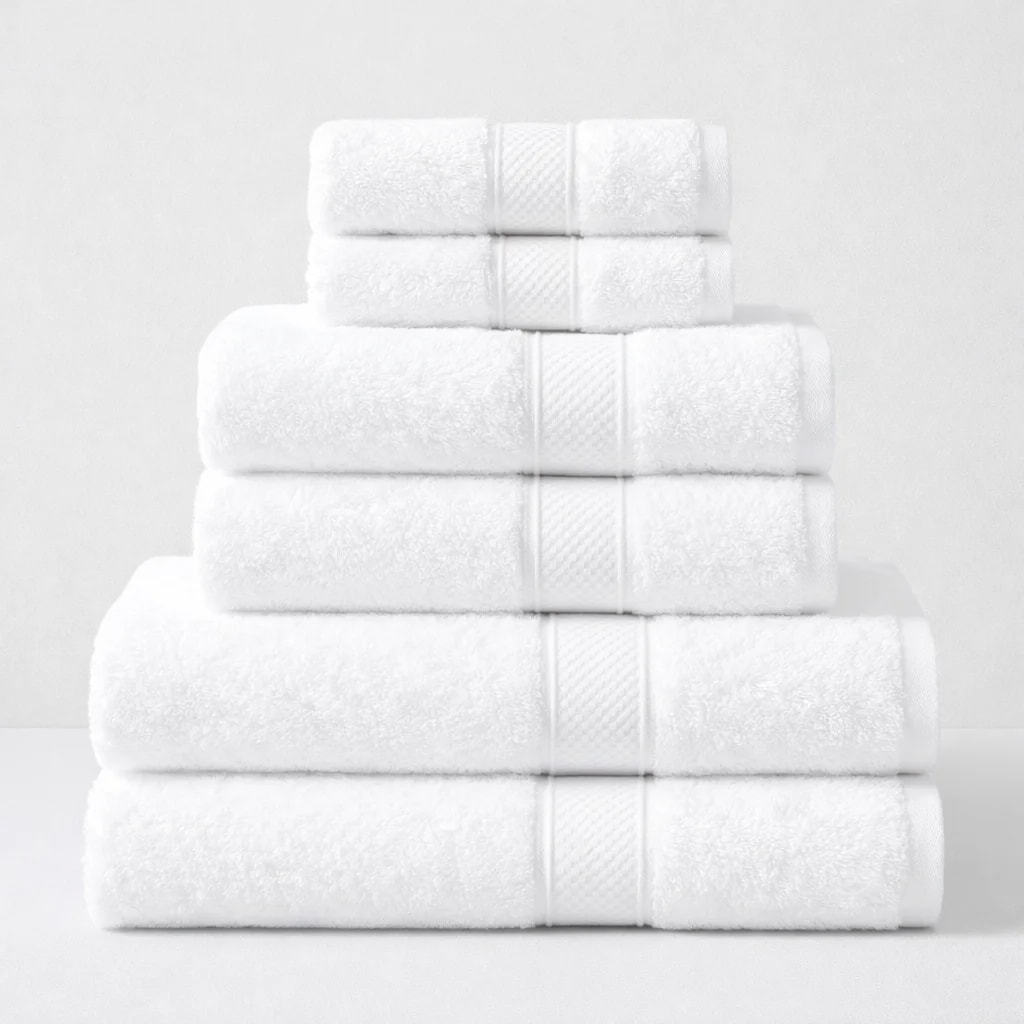
Kemet Cotton Signature Series 9/10
600 GSM · 100% Egyptian, Nile Delta · zero twist woven, made in Egypt
Kemet's own product listing describes the construction as zero twist woven, and it's paired with 100% Egyptian cotton from the Nile Delta rather than a short-staple filler fiber, which is exactly the combination that makes zero twist worth its durability tradeoff. A set of two Signature towels runs about $69, frequently discounted up to 60% off from $138, with a 30-day guarantee attached.
Read our full Kemet Cotton review →
Brooklinen Super-Plush 6/10
~500-600 GSM · Turkish cotton, zero twist · OEKO-TEX certified
Brooklinen's Super-Plush line is zero twist Turkish cotton, and the zero twist construction genuinely helps, since it sits at standard hotel weight yet still feels plusher than the GSM number alone would suggest. The catch is price. At roughly $55 per towel, you're paying a direct-to-consumer premium for a mid-weight towel, not a heavyweight one.
Read our full Brooklinen review →
Riley Home Plush Collection 5/10
Zero twist Egyptian cotton · made in Portugal · $18-60 per piece
Riley's Plush Collection uses genuine zero twist Egyptian cotton, and by feel alone it's excellent, softer and lighter than the brand's heavier Spa line. The real risk here isn't the towel, it's the company behind it. Riley has a 2.8 out of 5 on Trustpilot with recurring complaints about unshipped orders and unanswered support requests, so budget for the possibility that a return or a problem takes real effort to resolve.
Read our full Riley Home review →
Onuia 4/10
Zero twist cotton (not Egyptian) · ~$45-60 for a 4-piece set
Onuia is a useful, honest example of the zero twist catch in practice. The construction is genuinely zero twist, and the towels feel soft when new. But the shedding is heavier than the other three brands here, buyers report noticeable lint through the first five or six washes, and the "Egyptian cotton" label on the product isn't accurate. The cotton is regular cotton sourced from China, not Egypt, with no Pyramid Mark or supply chain documentation to back the claim.
Read our full Onuia review → Frequently asked questions
What is a zero twist towel? +
A zero twist towel is woven from cotton fibers that are not twisted into yarn the traditional way. During manufacturing, the fibers are held in place by a water-soluble PVA yarn that dissolves in the first wash, leaving soft, untwisted cotton loops behind. The result is a towel that feels plush and lofty from the very first use instead of after a break-in period.
Are zero twist towels better? +
Better for softness and initial absorbency, yes. Better for long-term durability, no. Zero twist towels feel softer sooner and soak up water faster because more fiber surface is exposed, but the untwisted loops pill and snag more easily than a traditional twisted towel. Whether that tradeoff is worth it depends on whether you value day-one softness or years of hard use more.
Do zero twist towels last? +
They last, just not as long as a well-made traditional twisted towel. A good zero twist towel typically shows its age within 3 to 5 years, while a quality twisted cotton towel can go 8 to 10 years. Zero twist towels made from long-staple cotton, such as Egyptian or Supima, hold up noticeably better than short-staple versions, since the twist normally provides the structural strength that longer fibers can partly supply on their own.
Why are zero twist towels softer? +
Traditional towels twist cotton fibers into yarn for strength, and that twisting compresses the fibers together, which is part of what makes a new twisted towel feel stiffer before it is broken in. Zero twist skips that step entirely, so the loops stay open and lofty. More fiber surface is exposed to your skin and to water, which is also why zero twist towels tend to absorb faster in addition to feeling softer.
What GSM do zero twist towels come in? +
Most zero twist towels run between 500 and 800 GSM. Kemet's zero twist Signature Series sits at 600 GSM, a common everyday weight, with an 800 GSM Reserve option for a heavier feel. Because zero twist construction creates extra loft, a zero twist towel often feels plusher than a traditional twisted towel at the same GSM number.