Best Sheets for Hot Sleepers (2026): Cooling Sheets That Actually Work
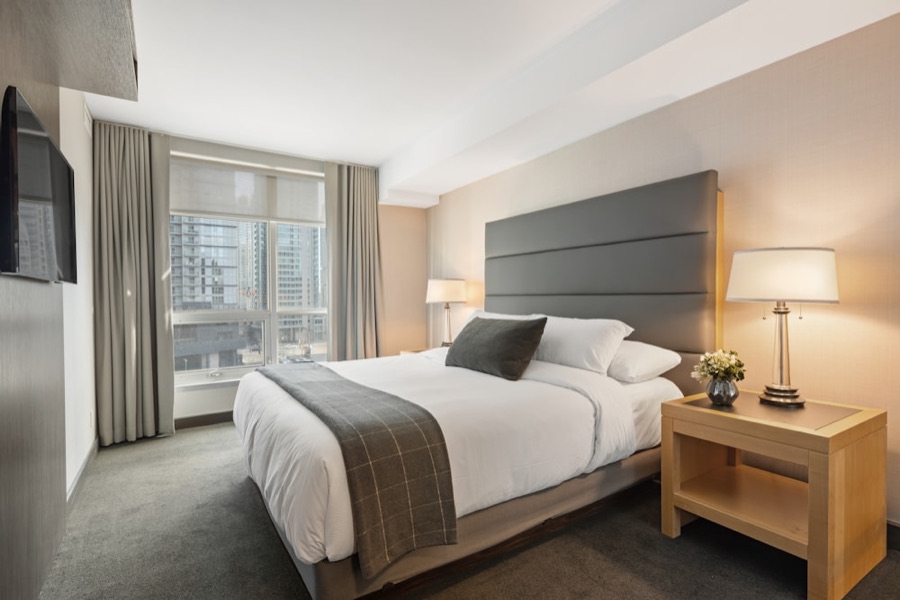
If you wake up hot at 2 AM, the fix is usually not a gadget. It’s the sheet on top of you. I run warm every night of the year (Texas summers, two kids who climb into bed, a golden retriever who thinks she’s a lap dog), and after a lot of trial and error I’ve landed on a short list of sheets that actually stay cool.
Here are the picks, then the reasoning.
Quick Picks: Best Cooling Sheets for Hot Sleepers
| Pick | Fabric and Weave | Thread Count | Price (Queen) | Where to Buy |
|---|---|---|---|---|
| Silk & Snow Egyptian Cotton Percale (best overall) | Egyptian cotton, percale | 400 | $159 to $199 | Check Price → |
| California Design Den Percale (best budget) | Egyptian cotton, percale | 400 | $60 to $90 | Check Price → |
| Brooklinen Classic Percale | Long-staple cotton, percale | 270 | $159 to $199 | Check Price → |
| Quince European Linen (best for night sweats) | Linen, plain weave | n/a | $90 to $120 | Check Price → |
| The Company Store Company Cotton Percale | Cotton, percale | 300 | $79 to $129 | Check Price → |
| L.L. Bean Pima Cotton Percale | Supima cotton, percale | 280 | $109 to $159 | Check Price → |
| SFERRA Celeste (best luxury) | Egyptian cotton, percale | 500ish, single-ply | $350+ | Check Price → |
| Kemet Cotton 600TC Sateen (if you want sateen anyway) | Egyptian cotton, single-ply sateen | 600 | $179.95 | Check Price → |
🏆 Want the full Egyptian cotton sheet rankings, not just the cool ones? See: Best Egyptian Cotton Sheets of 2026 →
Why You’re Waking Up Hot (It Might Be Your Sheets)
If you sleep hot, you’ve probably tried everything. Lighter pajamas, turning the AC down, flipping the pillow to the cool side at 2 AM. But here’s something a lot of people overlook: your sheets might be the problem.
The wrong sheet fabric can trap body heat like a greenhouse. And “wrong” doesn’t mean cheap. I’ve seen $300 sheet sets that sleep hotter than a $60 set, simply because of the weave and fiber choices. Plenty of luxury sheets prioritize smoothness and drape over breathability, which is great for cool sleepers but miserable for the rest of us.
The Two Things That Actually Matter
Forget “cooling technology” and “temperature-regulating” marketing labels for a minute. Sheet temperature comes down to two factors.
1. Airflow (Weave)
How much air can pass through the fabric? This is primarily determined by weave type.
Percale weave uses a simple one-over, one-under pattern that creates an open, breathable structure. Air moves through it easily. This is the single most impactful choice you can make for sleeping cool.
Sateen weave uses a three-over, one-under pattern that creates a denser, smoother surface. Less air gets through. It feels silky but holds more heat.
If you sleep hot, percale is the answer. Full stop. For a deeper comparison, see our percale vs sateen guide.
2. Moisture Wicking (Fiber)
How well does the fabric pull sweat away from your skin and release it into the air?
Natural fibers (cotton, linen) absorb moisture and release it through evaporation. They actively help regulate your temperature.
Synthetic fibers (polyester, microfiber) don’t absorb moisture. Sweat sits on the surface, creating that clammy, sticky feeling that wakes you up.
This is why those $25 microfiber sheet sets that claim to be “cooling” are almost always a disappointment. The fabric physically cannot wick moisture.
Cooling Sheets vs Breathable Sheets (What the Labels Mean)
These two phrases get used interchangeably on packaging, and they shouldn’t be.
“Cooling sheets” almost always means one of two things: a synthetic yarn that feels cold when you first touch it (nylon, polyethylene blends, and most “ice silk” fabrics), or a phase-change coating applied to a regular fabric. Both give you a genuine cool-to-the-touch sensation for the first ten or fifteen minutes. Then the material reaches your body temperature and it’s just a sheet again, usually one that doesn’t breathe well.
“Breathable sheets” describes a fabric structure that lets air and water vapor pass through all night. Nobody can coat their way to breathability. It comes from an open weave (percale, plain-weave linen) and a fiber that absorbs and releases moisture (cotton, linen, lyocell).
If a listing leads with “cooling” and doesn’t tell you the weave and the fiber, that’s your answer.
Where Tencel and bamboo fit. Tencel (the brand name for lyocell, made from wood pulp) and bamboo viscose are the two fabrics people ask me about most. Both are smooth, drape beautifully, and feel cool on contact. Both wick moisture reasonably well, which is why they get recommended for night sweats. The honest downsides: they’re usually woven in a dense sateen-style construction that doesn’t move as much air as percale, they pill and thin out faster than long-staple cotton, and they don’t love hot washes (which is exactly what sweaty sheets need). I keep a Tencel set for the guest room and I like it. I wouldn’t put it on my own bed in July.
Best Fabrics for Hot Sleepers, Ranked
1. Linen
Linen is the gold standard for sleeping cool. It’s made from flax fibers that are naturally hollow, which means exceptional airflow and moisture wicking. Linen can absorb up to 20% of its weight in moisture before it feels damp (cotton manages about 7%).
The downsides: linen has a textured, slightly rough feel that not everyone loves, it wrinkles dramatically, and quality linen isn’t cheap ($150 to $350 for a queen set from most brands).
Worth trying: Quince European Linen ($90 to $120, the value pick), Brooklinen Linen ($249 to $299). Our Egyptian cotton vs linen guide covers the trade-offs in detail.
2. Egyptian Cotton Percale
This is my personal favorite for hot sleeping (and what’s on my bed from May through September). Egyptian cotton’s extra-long staple fibers produce a smoother yarn that creates a finer, more breathable percale. It’s crisp, cool to the touch, and gets softer with every wash without losing that airflow.
The sweet spot is 300 to 400 thread count in single-ply percale. Go higher than 500TC and you start losing the breathability advantage.
Top picks:
- Silk & Snow Egyptian Cotton Percale, 400TC ($159 to $199). CEA certified, genuinely crisp and cool.
- California Design Den Egyptian Cotton Percale, 400TC ($60 to $90). CEA certified and surprisingly good for the price.
- Brooklinen Classic Percale, 270TC ($159 to $199). Not Egyptian cotton, but excellent percale construction.
- The Company Store Company Cotton Percale, 300TC ($79 to $129). Affordable and consistent.
3. Supima Cotton Percale
If you want great cotton percale but don’t need to specifically buy Egyptian cotton, Supima (American-grown Pima cotton) is an excellent alternative. It’s also extra-long staple, breathes well, and typically costs 10 to 20% less than comparable Egyptian cotton sheets.
Worth looking at: L.L. Bean Pima Cotton Percale ($109 to $159).
4. Cotton-Linen Blend
These combine linen’s breathability with cotton’s softness. Usually 50/50 or 60/40 cotton to linen. You get better airflow than pure cotton with less of linen’s rough texture. A genuinely good compromise if you find linen too scratchy but cotton too warm.
5. Tencel and Bamboo (With Caveats)
Cool on contact, decent wicking, less breathable over a full night than the four above, and shorter-lived. Fine as a second set. Not my first pick for someone who wakes up sweating every night.
If You Still Want Sateen (Read This First)
Some people just don’t like percale. It’s crisp rather than silky, it can feel a bit like a hotel bed, and if you’re used to sateen it takes a week to adjust. If that’s you, or if you only run hot in summer and want one set of sheets year-round, here’s the honest version of the sateen question.
Not all sateen is equally warm. What makes a sateen sheet hot is density: multi-ply yarns packed in to hit a “1000 thread count” label, or a polyester blend that can’t wick. A single-ply sateen woven from long-staple Egyptian cotton at a true 600 thread count is a different animal. The yarns are fine, the fabric is thinner than the number suggests, and cotton still absorbs moisture. It will never breathe like a 300TC percale, but it sleeps noticeably cooler than the multi-ply sateen sets dominating Amazon and miles cooler than microfiber.
That’s the slot Kemet Cotton fills for me. It’s the one sateen I’d suggest to a warm sleeper, with the caveat that percale is still the cooler weave.
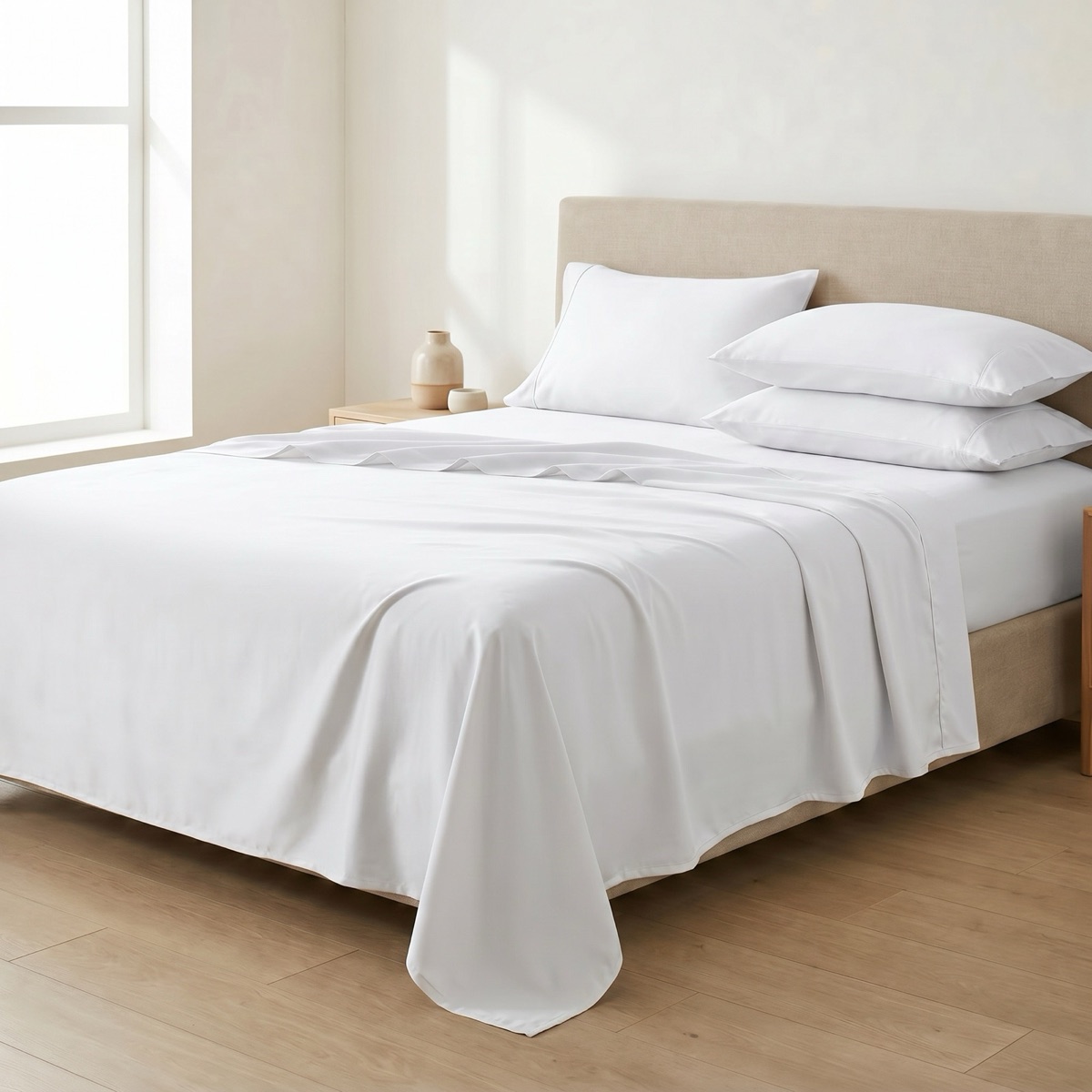
Kemet Cotton 600TC Egyptian Sateen Sheet Set
Single-ply 80s yarns woven at the brand's own Nile Delta mill to an honest 600 thread count. Smoother than percale, cooler than any multi-ply sateen or microfiber set, and the sateen I'd pick if you run warm but can't stand crisp sheets.
- 100% long-staple Egyptian cotton, single-ply, true 600 thread count
- Sateen weave that stays breathable (no polyester, no multi-ply padding)
- Deep 16-inch fully elasticized pockets, envelope pillowcases
- Nine colours, 30-day money-back guarantee, free shipping
Queen $179.95, sets from $149.95
Shop Kemet Sheets →Read the fine print on that recommendation: it’s for warm sleepers who want sateen. If you’re drenched by midnight, skip to linen or percale and don’t look back.
What to Avoid If You Sleep Hot
Dense Sateen (Especially Multi-Ply)
Even Egyptian cotton sateen will sleep warmer than standard cotton percale. The weave structure is the bottleneck. And once a brand pads the count with two-ply or three-ply yarns to print “1000” on the box, you’ve got a heavy, airless fabric. I learned this the hard way with a beautiful (and expensive) Pure Parima 700TC sateen set that I love in winter but can’t use past April.
Microfiber and Polyester
These are synthetic fabrics made from petroleum-based fibers. They don’t absorb moisture, don’t breathe, and will make you sweat more. The “silky” feel is misleading because that smoothness comes with zero airflow. Any product labeled “cooling microfiber” is marketing contradicting physics.
High Thread Count Anything (800+ TC)
The denser the weave, the less air gets through. An 800 or 1000TC sheet is essentially a heat blanket for people who sleep warm, and the number is almost always multi-ply math anyway. Our 1000 thread count guide explains the accounting trick.
”Cooling Technology” Sheets
Sheets marketed with phase-change materials, cooling gels, or temperature-regulating technology sound appealing. In practice, these technologies provide a brief cool-to-the-touch sensation that fades within 10 to 15 minutes as the material equilibrates with your body heat. After that, you’re left with whatever the base fabric delivers. Natural breathability from the right weave and fiber outperforms technology claims every time.
Best Sheets for Night Sweats and Menopause
Night sweats are a slightly different problem from simply running warm. When you’re sweating through the sheet, moisture handling matters more than airflow. You want a fabric that pulls sweat off your skin fast, spreads it out so it can evaporate, and survives being washed in hot water every three or four days.
That points to linen first, then cotton percale. Linen holds the most moisture before it feels wet, and it dries fast on the bed. A 300 to 400TC Egyptian cotton percale is the softer alternative and handles hot washes without complaint. Tencel is a reasonable third option for the wicking alone, but it won’t tolerate the wash schedule as well.
Two practical notes from my own house (my mother stays with us for a month every summer and this is her nightly reality): keep two sets in rotation so one is always clean, and put a breathable cotton mattress protector under the fitted sheet, never a vinyl one. Our best sheets for night sweats guide goes deeper on fabrics and washing.
What I’d Do in a Humid Climate vs a Dry One
This is personal preference, but the climate you sleep in changes the answer.
Humid (Gulf Coast, Southeast, most of the tropics): Airflow is everything because sweat doesn’t evaporate easily. Go with linen or the lightest percale you can find (270 to 300TC). Skip Tencel and bamboo, which hold moisture against you when the air is already wet. Wash sheets more often than you think you need to.
Dry (Southwest, high desert, most of the Mountain West): Evaporation does half the work for you, so you can afford a slightly denser fabric. A 400TC Egyptian cotton percale is perfect, and a single-ply sateen like Kemet’s becomes a genuinely reasonable year-round choice. Dry air also makes linen feel scratchier, so cotton wins on comfort here.
Air-conditioned bedroom either way: If the room is 68°F all night, the sheet matters less than the duvet. Get a lightweight insert and a percale or linen cover, and any of the picks above will be fine.
Pillowcase Tip for Hot Sleepers
Your pillowcase matters more than you’d think. Your face and head generate significant heat, and a non-breathable pillowcase will have you flipping the pillow all night.
Get percale pillowcases even if you compromise on the flat sheet. A cool pillow surface makes a disproportionate difference in perceived sleep temperature. Some people even go with linen pillowcases year-round (I do, and my husband thinks they look wrinkled, but I sleep cooler and that’s what matters).
The Full Hot Sleeper Setup
If you really want to optimize for cool sleeping, here’s the combination that works:
- Sheets: Cotton percale, 300 to 400TC, ideally Egyptian cotton or Supima
- Pillowcases: Linen or cotton percale
- Duvet cover: Cotton percale or linen (see our Egyptian cotton duvet guide)
- Duvet insert: Lightweight down or down alternative (look for summer-weight, typically 400 to 600 fill power)
- Mattress protector: Cotton terry or Tencel (avoid vinyl-backed protectors, they block all airflow)
That last point catches a lot of people off guard. You can have the most breathable sheets in the world, but if there’s a waterproof vinyl barrier between you and the mattress, heat has nowhere to go. A cotton or Tencel protector still protects against spills while allowing some airflow.
How I Checked
None of this comes from a lab. I compared the published specs for every set in the table (fiber, weave, ply, thread count, certification), read through owner reviews on the brand sites and retailer listings with an eye for the words “hot,” “sweaty,” and “clammy,” and cross-checked the fabric science against what the weave and fiber physically do. Where I mention my own bed, that’s my own bed. Where a brand claims “cooling,” I looked for the weave and fiber behind the word, and if there wasn’t one, it didn’t make the list.
My Pick for Most Hot Sleepers
If I had to recommend one set of sheets for someone who sleeps hot, it would be Silk & Snow Egyptian Cotton Percale at $159 to $199 for a queen. CEA certified, 400TC single-ply, and genuinely cool. It checks every box without requiring a luxury budget.
If you’re price-sensitive, California Design Den at $60 to $90 gets you CEA-certified Egyptian cotton percale at a fraction of the cost. It’s not as refined, but the cooling performance is there.
If you sweat rather than just run warm, Quince European Linen at $90 to $120 is the best money you’ll spend.
If you want sateen anyway, Kemet Cotton at $179.95 for a queen is the single-ply set that won’t cook you.
And if budget isn’t a constraint, SFERRA Celeste percale ($350+) is as good as cotton sheets get for temperature regulation. The finishing is on another level.
Related Reading
Get our reviews first on Google
Add Cotton With Love as a preferred source and Google will show you more of our towel and sheet reviews.
Add Cotton With Love as a preferred source on GoogleAdd us as a preferred source on Google
See more of our towel and sheet reviews in your Google results.
Frequently Asked Questions
What type of sheets are best for hot sleepers?
Percale-woven sheets made from natural fibers like Egyptian cotton, Supima cotton, or linen are the best options. Percale's open weave structure allows airflow, and natural fibers wick moisture away from your skin. Avoid dense sateen weaves and synthetic materials like microfiber, which trap heat.
Is Egyptian cotton good for hot sleepers?
Yes, especially in a percale weave. Egyptian cotton's extra-long staple fibers produce a smoother, more breathable fabric than standard cotton. Combined with percale's open weave structure, Egyptian cotton percale sheets are one of the coolest options available. Egyptian cotton sateen is warmer, though single-ply sateen still beats microfiber and multi-ply high thread count sheets.
Are bamboo sheets really cooling?
Bamboo viscose sheets feel cool to the touch initially, but they don't breathe as well as cotton percale over the course of a night. The cooling effect is surface-level. For sustained temperature regulation during sleep, cotton percale or linen outperforms bamboo in most cases.
What thread count is best for hot sleepers?
Lower thread counts in the 200 to 400 range are best for hot sleepers. Lower density means more space between threads for air to circulate. A 300TC percale sheet will sleep cooler than a 600TC sateen sheet, even if the sateen uses better cotton.
Do cooling sheets actually work?
Sheets marketed as 'cooling' with special technologies or phase-change materials offer minimal real benefit. The cooling effect fades within minutes as the material reaches body temperature. Natural breathability from the right fabric and weave combination is far more effective for sleeping cool all night long.
Are Tencel sheets cooler than cotton?
Tencel (lyocell) feels cooler on first contact and wicks moisture well, so it's a fair choice for night sweats. Over a full night, though, cotton percale moves more air through the fabric, and it holds up to hot washing far better. If you want Tencel, choose a Tencel and cotton blend or a plain weave rather than a dense sateen-style Tencel.
Are cooling sheets worth it?
Sheets sold specifically as cooling sheets usually aren't worth the premium. You're paying for a coating or a synthetic yarn that cools for ten minutes. A $60 to $90 cotton percale set from a brand like California Design Den or The Company Store will sleep cooler at 3 AM than most $150 'cooling technology' sets.