Boll & Branch Towels Review (2026): Are the Plush Bath Towels Worth It?
My Honest Take
I’ll be upfront. I came into reviewing Boll & Branch bath towels skeptical, because their marketing leans heavily into the “we’re the only honest cotton brand” positioning that gets oversold in DTC. But after using a set in our main bathroom for about 8 months, I have to give credit where it’s due.
These are good towels. The organic certification is real (GOTS isn’t a marketing claim, it’s a verified standard). The Fair Trade label is real too. The cotton feels premium without trying too hard. And the construction has held up to repeated washing without any of the pilling or fraying I see on towels at similar prices.
The price is the catch. At $39 to $55 per bath towel, you’re paying premium for certified organic cotton. Whether that’s worth it depends on what you value.
Top Picks at a Glance
| Pick | Best For | Where to Buy |
|---|---|---|
| Pure Parima | Certified Egyptian (different verification) | Check Price → |
| Kemet Cotton | Best Egyptian cotton value | Check Price → |
| Boll & Branch Plush Bath Towel | Best GOTS-certified organic | bollandbranch.com |
| Boll & Branch Linen Bath Towel | Lighter weight organic | bollandbranch.com |
| Coyuchi (alternative) | Premium organic competitor | coyuchi.com |
🏆 For verified Egyptian cotton (different certification standard), see: Best Egyptian Cotton Towels of 2026 →
What Boll & Branch Actually Is
Boll & Branch launched in 2014 as a direct-to-consumer bedding company specializing in organic cotton sheets. The company has since expanded into bath linens, robes, blankets, and home goods, always with the organic certified angle as the brand differentiator.
The founding story matters here because Boll & Branch built its brand around verification rather than just marketing. The GOTS certification on their products is real. The Fair Trade label is real. The transparency about manufacturing (India, specific factory partnerships) is real.
This isn’t to say Boll & Branch is the only honest premium bath linen brand. But it’s a brand where the verification claims hold up to scrutiny, which puts it in a different category than most premium DTC home goods.
The bath linen line launched a few years after the sheets, and it’s grown into a substantial product range covering bath towels, hand towels, washcloths, bath sheets, bath mats, and robes. All certified organic, all manufactured through certified Fair Trade facilities.
The Bath Towel Lineup
Boll & Branch sells a smaller bath linen range than competitors, but each line has clear positioning:
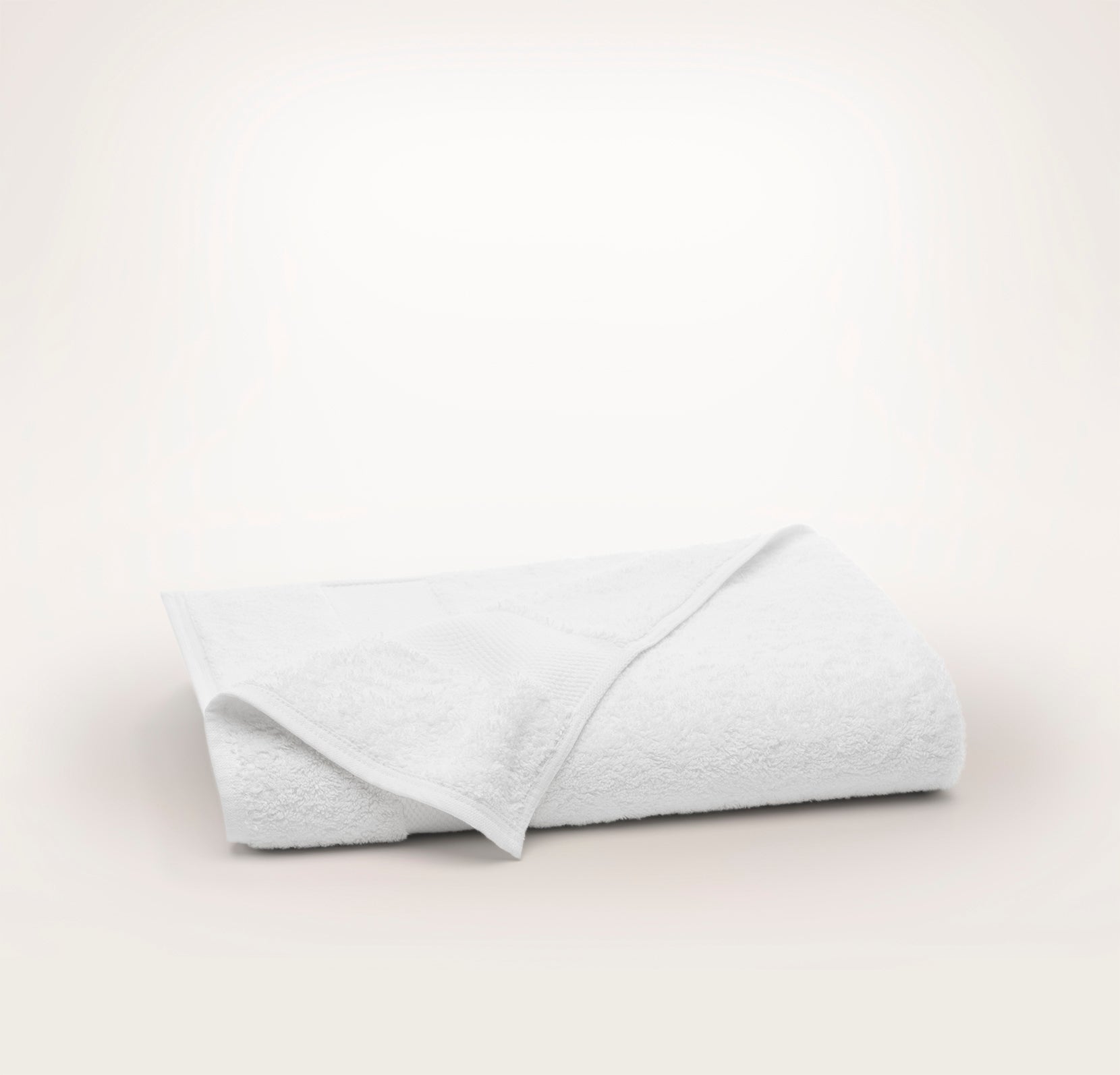
Plush Bath Towel. The flagship. 600 GSM, organic long-staple cotton, GOTS and Fair Trade certified. The towel most associated with the brand. $42-55 per bath towel at full retail.
Linen Bath Towel. Linen-cotton blend for faster drying and texture variety. $39-49 per bath towel.
Waffle Bath Towel. Waffle-weave construction, lighter weight, more textured. $35-49 per bath towel.
Bath Sheets. Larger format versions of the Plush line. $59-79 per piece.
Coordinated pieces. Hand towels ($25-35), washcloths ($12-18), bath mats ($59-79), and robes ($98-128).
For most buyers, the practical decision is between the Plush bath towel (the flagship) and the Linen (the lighter alternative). The Waffle is more of a design choice for specific aesthetics.
The Plush Bath Towel: How It Actually Feels
After 8 months of daily use with the Plush Bath Towel in white, here’s what I noticed:
Out of the package. Soft, lofty, substantial without being heavy. The cotton has that “just-right” weight that feels premium without being so dense it stays damp.
First few washes. Some shedding (typical for any cotton). Manageable, gone after 3 cycles.
Absorbency. Genuinely good. The 600 GSM weight and organic long-staple cotton pull water effectively. Drying after a shower is fast.
Drying time. Faster than 800 GSM Egyptian cotton. The 600 GSM weight and the organic cotton’s slightly less compressed structure means the towels dry overnight on a normal towel bar.
Long-term feel. Has softened gradually over 8 months. Doesn’t feel “broken in” the way real long-staple Egyptian cotton does over years, but smoother than it was at month one.
Construction. Hems still tight. Loops intact. No fraying, no pilling, no loose threads. Solid.
Color (white). Has held perfectly. No yellowing, no graying. Even though I have moderately hard water, no visible mineral buildup yet.
I would buy these again. The price is real but the product justifies it.
The Certifications Actually Verify Something
Most “premium” bath linens make claims (Egyptian cotton, hotel quality, luxury softness) without third-party verification. Boll & Branch is different. Two specific certifications are worth understanding:
GOTS (Global Organic Textile Standard). Verifies the cotton was grown organically without synthetic pesticides or genetically modified seeds, AND that processing/finishing used only approved low-impact chemicals, AND that the supply chain meets specific social and environmental standards. GOTS is the most rigorous organic textile certification available.
Fair Trade Certified. Verifies the manufacturing facilities meet specific worker safety, wage, and working condition standards. The certification is checked through independent audit. Fair Trade is genuine third-party verification, not a marketing claim.
For buyers who specifically care about organic cotton or fair labor practices, these certifications matter. They’re not abstractions; they’re verified standards.
This is what separates Boll & Branch from premium brands that just claim “luxury cotton” without backing.
How Boll & Branch Compares to Coyuchi
The two premium organic cotton bath linen brands most often compared:
| Variable | Boll & Branch | Coyuchi |
|---|---|---|
| Cotton certification | GOTS organic | GOTS organic |
| Fair Trade | Yes | Yes |
| Design aesthetic | DTC contemporary | Sustainable design-forward |
| Color range | 10-15 shades | 12-20 shades, more earth tones |
| Bath towel GSM | 600 | 550-700 (varies by line) |
| Price/Bath Towel | $42-55 | $48-78 |
| Best for | Cleaner contemporary look | Sustainable design preference |
Both deliver genuine GOTS-certified organic cotton with Fair Trade verification. The choice between them is mostly aesthetic: Boll & Branch leans DTC contemporary, Coyuchi leans sustainable design-forward with more textured construction options.
For pure performance, they’re roughly equivalent. For aesthetic alignment with your bathroom, pick the one whose photography speaks to your style.
How Boll & Branch Compares to Egyptian Cotton Brands
The fundamental difference: Boll & Branch is GOTS-certified organic cotton from India. Premium Egyptian cotton brands like Pure Parima are Cotton Egypt Association Pyramid Mark certified Egyptian cotton from Egypt. Two different verification frameworks for two different premium cotton sources.
| Variable | Boll & Branch | Pure Parima |
|---|---|---|
| Cotton source | Organic, India | Egyptian Giza |
| Certification | GOTS + Fair Trade | Pyramid Mark + OEKO-TEX |
| GSM | 600 | 800 |
| Verification quality | Strong (organic standard) | Strong (Egyptian cotton standard) |
| Price/Bath Towel | $42-55 | $45-65 |
Neither is “better” — they’re different premium products. Boll & Branch optimizes for organic certification and Fair Trade verification. Pure Parima optimizes for verified Egyptian cotton long-staple fibre.
If you specifically want organic cotton, Boll & Branch. If you specifically want verified Egyptian cotton, Pure Parima. If you want plushness above all, Pure Parima’s 800 GSM wins on density.
Where Boll & Branch Doesn’t Make Sense
Specific cases where I’d shop elsewhere:
Maximum plushness. Boll & Branch is 600 GSM. For truly plush hotel-spa feel, 800 GSM Egyptian cotton (Pure Parima, Kemet) delivers a more substantial wrap-around feel.
Budget shopping. Boll & Branch is firmly in premium pricing. For budget organic cotton, Pact Apparel or Under the Canopy deliver organic at lower prices.
Specific Egyptian cotton preference. If you’ve decided on Egyptian cotton specifically, Pure Parima or Kemet are the right answers.
Kids’ bathroom or pet-heavy households. Premium organic cotton deserves careful use. Save it for adult-only spaces where it won’t be used as a dog towel.
Buyers prioritizing absolute value per dollar. Kemet Cotton at $35-50 for 800 GSM delivers more cotton mass per dollar without the organic certification.
Boll & Branch Sale Pattern
The promotional pattern for Boll & Branch:
- Friends & Family events. Quarterly. 20-25% off most categories.
- Black Friday / Cyber Monday. Standard heavy discounts.
- End-of-season clearance. Seasonal colors at 30-40% off twice yearly.
- Referral codes. First-purchase discount of 15% through referral program.
Outside major events, Boll & Branch maintains firm pricing. The brand doesn’t discount as aggressively as Frontgate or Bloomingdale’s-distributed alternatives.
When Boll & Branch Is the Right Call
Specific contexts where the value math works:
Organic certification matters to you. If you specifically want verified organic cotton, this is the most accessible premium option.
Fair Trade labor practices matter. The certification is genuine, the supply chain is audited.
You’re already a Boll & Branch sheets customer. Coordinated bath and bed linens at the same brand quality tier.
Sensitive skin or eczema household. Organic cotton processed without harmful chemicals can matter for people with skin sensitivity.
Allergy or chemical-sensitivity buyers. GOTS processing means no formaldehyde finishes, no synthetic softener residue, no harsh dyes.
The Bottom Line
Boll & Branch bath towels deliver what they promise: GOTS-certified organic cotton, Fair Trade manufacturing, premium DTC product experience. The price is real but justified by the verification.
For organic-preference buyers, this is the strongest premium option in the bath linen category. For Egyptian cotton preference, Pure Parima or Kemet are the better paths.
After 8 months in my own bathroom, I’d buy these again. That’s about the best endorsement I can give.
Related Reading
Get our reviews first on Google
Add Cotton With Love as a preferred source and Google will show you more of our towel and sheet reviews.
Add Cotton With Love as a preferred source on GoogleAdd us as a preferred source on Google
See more of our towel and sheet reviews in your Google results.
Frequently Asked Questions
Are Boll & Branch towels worth the price?
Conditionally yes. Boll & Branch towels are GOTS-certified organic cotton with Fair Trade certification, which is rare in bath linens. The cotton is genuinely premium and the construction is solid. At $39-55 per bath towel they're expensive but not unreasonably so for organic certified cotton. The verification you're paying for is real.
Are Boll & Branch towels organic?
Yes. Boll & Branch bath towels carry GOTS (Global Organic Textile Standard) certification, which verifies organic cotton from seed through finished product. The certification covers organic farming practices, processing without harmful chemicals, and supply chain auditing. This is a much stronger verification than the typical 'Egyptian cotton' label that lacks independent certification.
Are Boll & Branch towels Egyptian cotton?
No, Boll & Branch towels are not labelled as Egyptian cotton. The brand uses long-staple organic cotton sourced primarily from India through certified organic supply chains. The cotton is high quality but it's a different verification framework than the Cotton Egypt Association Pyramid Mark.
How does Boll & Branch compare to Coyuchi?
Both are GOTS-certified organic cotton bath linen brands. Coyuchi has stronger sustainable design language and broader product range. Boll & Branch has stronger DTC marketing and slightly more accessible pricing. For specific organic certification, both deliver. For aesthetic preference, the choice is personal.
Where are Boll & Branch towels made?
Boll & Branch bath towels are manufactured in India through Fair Trade certified factory partnerships. The company sources organic cotton from India and processes it through certified organic supply chains. Manufacturing location and certifications are disclosed transparently on the product pages.
How long do Boll & Branch towels last?
With proper care, expect 5-7 years of regular use. The long-staple organic cotton holds up well to repeated washing, and GOTS-certified construction tends to use stronger yarn and finishing than uncertified equivalents. Most negative long-term reviews relate to color fading on saturated shades rather than cotton breakdown.