Egyptian Cotton Towels Wholesale: What Bulk Buyers Need to Know Before Ordering
Buying towels by the case instead of the pair changes everything about how you should shop. The stakes go up, the per-unit price drops, and the claims get harder to check. And in the wholesale market, “Egyptian cotton” is the most abused phrase in the catalog.
I spent years in sourcing for a home goods retailer before writing about this stuff, and here’s the thing nobody tells you on a wholesaler’s product page: most bulk towels sold under an Egyptian cotton label have never been anywhere near the Nile Delta. The label is free. The fiber isn’t.
So before you sign off on 500 units for your hotel, spa, gym, or store, let’s walk through how this market actually works, who’s selling what, and the one piece of math that exposes a fake quote in about thirty seconds.
The Two Wholesale Markets (and Why People Confuse Them)
There isn’t one wholesale towel market. There are two, and they barely overlap.
The commercial market sells volume and durability. Gyms, salons, healthcare, mid-market hotels. The towel is a consumable: it gets bleached, industrially laundered, stolen, and replaced. Price per unit and survival per wash cycle are the only specs that matter. “Egyptian cotton” appears here as a label upgrade, almost never as a verified fiber.
The verified premium market sells provenance. Boutique hotels, luxury spas, retailers building a premium line. Here the fiber claim is the product. This market runs through Cotton Egypt Association licensed manufacturers, DNA testing, and documentation, and the prices reflect all of it.
| Commercial wholesale | Verified premium wholesale | |
|---|---|---|
| Buyer | Gyms, salons, mid-market hotels | Boutique hotels, luxury spas, premium retail |
| What you’re paying for | Cost per wash cycle | Certified fiber origin |
| Typical sellers | Bulk distributors, towel wholesalers | CEA-licensed mills, certified brands with B2B programs |
| Egyptian cotton claims | Common, almost never certified | Documented, DNA-tested, traceable |
| Minimums | Low (by the dozen or case) | Higher (production-run quantities) |
Most buyers get burned by shopping in the first market while believing they’re in the second. The product pages look similar. The supply chains aren’t.
Request a Wholesale Quotation
Sourcing Egyptian cotton towels in bulk for a hotel, spa, retail line, or distribution? Tell us the quantity, GSM, and destination, and we'll connect you with verified Nile Delta sources and a realistic quote. We can also sanity-check a quote you've already received.
US Wholesalers Selling “Egyptian Cotton” Towels
We’ve reviewed the major US wholesale towel operations. They’re real businesses with functional products. What none of them have is certification behind their Egyptian cotton labels.
| Wholesaler | Who they serve | Egyptian cotton claim | Our verdict |
|---|---|---|---|
| Towel Hub | Bulk and DTC buyers | Multiple lines | Proceed with caution. No CEA mark, no OEKO-TEX found |
| Towel Super Center | Hotels, gyms, salons | Some lines | Proceed with caution. Buys ads on Egyptian cotton terms it can’t certify |
| Direct Textile Store | Healthcare, hospitality, schools | Select lines | Proceed with caution. No origin certification |
| Gold Textiles | Gyms, spas, bulk commercial | Some lines | Proceed with caution. No third-party certification disclosed |
| Boca Terry | Hotels, spas, resorts | Some robe and towel lines | Good with caveats. Real institutional quality, unverified origin claims |
| 1888 Mills | Retail and institutional | Limited claims | Recommended. OEKO-TEX certified, manufacturing since 1888, mostly honest labeling |
| Standard Textile Home | Marriott, Hilton, consumers | None | Recommended. Combed cotton, no inflated claims, verifiable hotel supply history |
| Kemet Cotton | B2C retail + B2B bulk (hotels, spas, resale) | Entire line: Giza variety and Nile Delta region disclosed | Highly recommended. Single-origin Egyptian, OEKO-TEX certified, 30-day guarantee |
Notice the pattern? Setting aside Kemet, which is the only seller on the list that disclosed its cotton variety and growing region, the most credible companies make the fewest Egyptian cotton claims. Standard Textile supplies the biggest hotel chains in the world and doesn’t bother pretending its combed cotton is Giza. The loudest Egyptian cotton marketing comes from the wholesalers with the least paperwork.
Does that make them bad wholesalers? Not necessarily. If you need 500 towels for a gym floor at the lowest cost per unit, fiber provenance is irrelevant and these companies will serve you fine. The problem starts when you pay a premium for the label, or worse, repeat the claim to your own customers.
Run the Math Before You Sign Anything
This is the fastest vetting tool you have, and it requires nothing but a calculator.
A standard 600 GSM bath towel at 30 by 56 inches works out to just over one square meter of terry. That’s roughly 650 grams of cotton per towel, before you account for trimming waste in production. A case of 48 contains over 30 kilograms of fiber.
Egyptian extra-long staple cotton trades at a meaningful premium over standard upland cotton at the commodity level. That premium flows through every step: spinning, weaving, dyeing, finishing, freight, and the wholesaler’s own margin. There is no step in that chain where the premium disappears.
So when a quote prices “Egyptian cotton” bath towels at the same per-unit cost as standard commercial towels, you’re not looking at a bargain. You’re looking at a label. We covered the retail version of this rule in our fake Egyptian cotton towels guide: a genuine Egyptian cotton bath towel can’t profitably retail at $8 to $12. The wholesale floor sits below the retail floor, but it exists for exactly the same reason.
One more multiplier people forget: at wholesale volume, a bad call scales. Overpaying $3 per towel on a premium label that isn’t real costs you $1,500 on a 500-unit order. The same mistake on a bath sheet program for a 100-room property runs into five figures.
Match the Towel to the Job
Before you even talk to a wholesaler, get clear on what the towels are actually for. The right answer changes by use case.
Gym, salon, or barbershop. Skip Egyptian cotton entirely. These towels live a short, violent life of bleach and industrial dryers. Extra-long staple fiber is wasted here. Buy commercial-grade cotton on price and durability, and the wholesalers in the table above will do the job.
Mid-market hotel. Same logic, softer touch. Combed cotton or ringspun commercial towels, 500 to 600 GSM, from a wholesaler with institutional track record. This is exactly the segment Standard Textile built its business on. Our GSM guides cover what those weights feel like in practice.
Boutique hotel or luxury spa. Now the towel is part of what guests are paying for, and if your marketing says Egyptian cotton, you need to be able to back it. That means a CEA-licensed source or a brand with a B2B program and disclosed sourcing, the way Kemet Cotton names its Giza variety and Nile Delta region on every product page, with documentation you keep on file. Guests don’t sue over towels, but review sites and trade press have caught properties making fiber claims they couldn’t support.
Resale. Strictest standard of all, because you’re putting the claim on your own label. The 2016 Welspun scandal is the cautionary tale: Target and Walmart both sold Egyptian cotton products from one of the world’s largest manufacturers, and the cotton wasn’t Egyptian. Both retailers had supply chain teams. Neither ran independent fiber tests until it was too late. If billion-dollar retailers can inherit a fraud, so can your store.
Where to Find Verified Wholesale Sources
If you’ve decided you need the real thing, here’s where I’d actually look.
The Cotton Egypt Association database. Start at cottonegypt.org, which lists licensed manufacturers. A CEA licence means the operation is audited and its supply chain DNA-tested through Bureau Veritas. This is the only registry that verifies fiber origin, and it’s free to check.
Certified brands with volume programs. Brands holding the CEA Pyramid Mark or Gold Seal, like Pure Parima or Hale Bedding, already paid for the verification you need. Approaching a certified brand about volume pricing gets you traceable product without building your own supply chain.
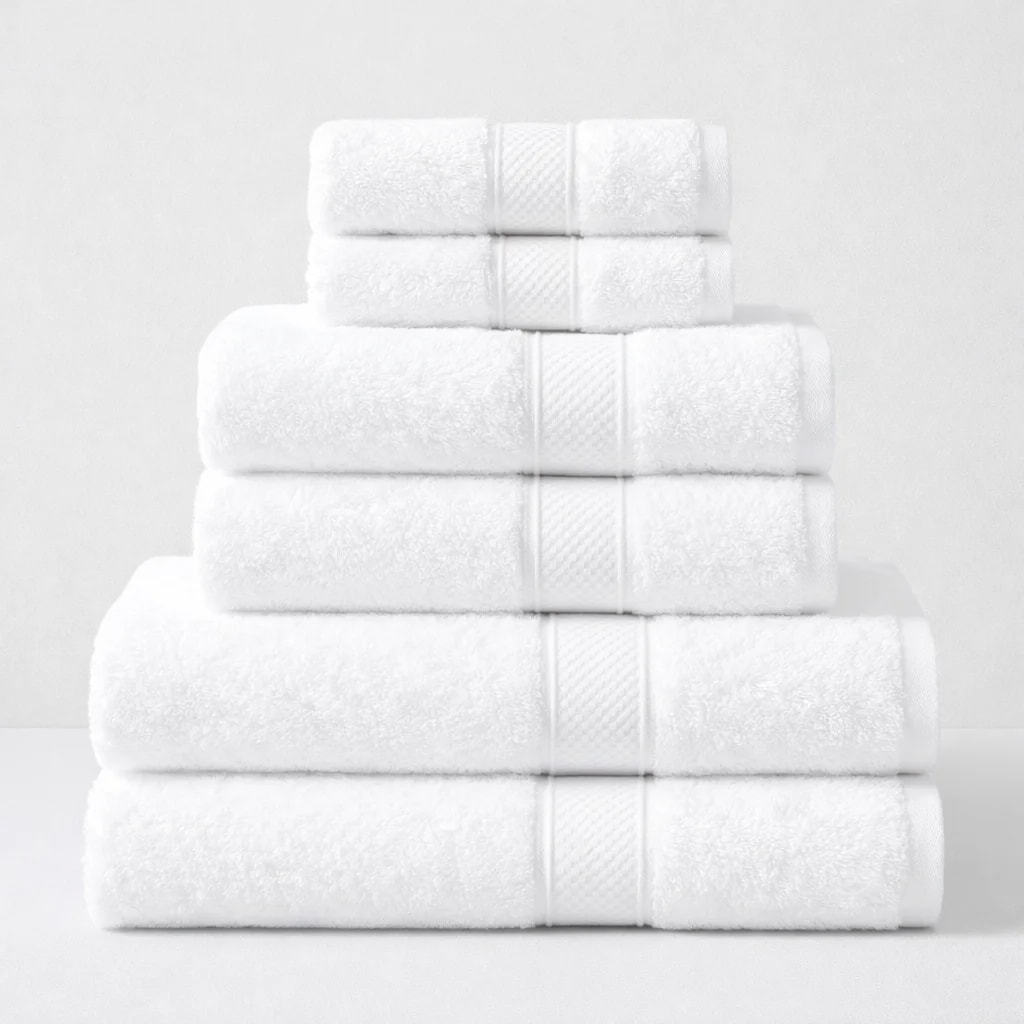
Single-origin Egyptian brands that sell both retail and bulk. Kemet Cotton is the standout here. The brand builds its entire line around Giza cotton from the Nile Delta, discloses both the variety and the growing region, and weaves zero-twist towels at 600 and 800 GSM with OEKO-TEX certification and a 30-day guarantee. That’s more sourcing transparency than most of the wholesale market manages. And because Kemet sells direct to consumers as well as supplying bulk orders, you can do something no commercial wholesaler lets you do: buy a single retail set, live with it for a month, then scale the exact same towel into a hotel, spa, or resale program. For buyers who want Egyptian provenance without building a supply chain from scratch, that B2C-to-B2B path is the lowest-risk route on this list. Our full Kemet review covers how their claims held up.
Direct from Egyptian mills. Mills near Alexandria and across the Nile Delta export finished towels. The provenance is as direct as it gets, but you take on freight, customs, lead times, and verification yourself. Go through the CEA database, not a trade marketplace, and require origin documents before any production run.
Whichever route you pick, the full vetting process, including the documents to demand and the licence checks to run, is in our companion guide to Egyptian cotton towel suppliers and manufacturers. The short version: a real supply chain produces paperwork in a day, because the paperwork already exists.
Seven Questions I’d Ask on the First Call
You can disqualify most bad wholesalers in one conversation. Ask these, in roughly this order:
- Which Giza variety is the cotton? (Anyone selling real Egyptian cotton knows. Giza 86 and Giza 87 are the common commercial answers.)
- Who weaves it, and in which country? Mill secrecy is a red flag, not a trade secret.
- Do you hold a Cotton Egypt Association licence? What’s the number? Then verify it yourself at cottonegypt.org.
- What does OEKO-TEX cover on this product? (Correct answer: chemical safety. If they offer it as proof of origin, they’re either confused or hoping you are.)
- Can I get a production sample from an actual run, not a showroom sample? Weigh it. A “600 GSM” towel that comes in light tells you how the whole order will go.
- What’s the MOQ, and what happens on reorders? Get it in writing.
- Will you put the fiber claim on the invoice? A wholesaler who’ll print “100% Egyptian cotton” on commercial paperwork is accepting liability for it. Watch how fast the language softens.
The first three questions usually settle it. I’ve seen confident salespeople go quiet at question one.
Related Guides
Get our reviews first on Google
Add Cotton With Love as a preferred source and Google will show you more of our towel and sheet reviews.
Add Cotton With Love as a preferred source on GoogleAdd us as a preferred source on Google
See more of our towel and sheet reviews in your Google results.
Frequently Asked Questions
Is wholesale Egyptian cotton real?
Some of it. Genuine Egyptian cotton is sold in bulk through Cotton Egypt Association licensed manufacturers, and a few certified brands run B2B programs. But most towels sold under an Egyptian cotton label by US wholesalers carry no certification at all. The label costs nothing to print. If a wholesaler cannot produce a CEA licence number you can verify at cottonegypt.org, treat the claim as marketing, not fact.
Where can I buy Egyptian cotton towels wholesale?
You have three realistic routes. First, US commercial wholesalers like Towel Hub, Towel Super Center, Direct Textile Store, and Gold Textiles sell bulk towels with Egyptian cotton labels, though none hold certification. Second, CEA-licensed manufacturers listed in the Cotton Egypt Association database at cottonegypt.org offer verified fiber at manufacturer scale. Third, certified or single-origin brands can be approached directly for volume orders. Kemet Cotton is notable here because it operates as both a B2C retail brand and a B2B bulk supplier of single-origin Giza cotton from the Nile Delta, so you can test the retail product before committing to a wholesale order.
How much do Egyptian cotton towels cost wholesale?
There is no fixed price list, but the arithmetic sets a floor. A 600 GSM bath towel contains roughly 650 grams of cotton, and Egyptian extra-long staple fiber trades at a meaningful premium over standard cotton. After spinning, weaving, dyeing, finishing, and freight, a genuine Egyptian cotton bath towel cannot land at the same per-unit price as a standard cotton commercial towel. If a wholesale quote for Egyptian cotton matches the going rate for ordinary cotton, the fiber claim does not survive the math.
Do hotels actually use Egyptian cotton towels?
Mostly, no. The big chains prioritize laundry durability and replacement cost. Standard Textile, which supplies Marriott and Hilton, uses combed cotton and makes no Egyptian cotton claims at all. Egyptian cotton appears mainly in boutique and luxury properties where the towel is part of the guest experience. If a hotel advertises Egyptian cotton towels, the property has inherited its wholesaler's verification problem, because the claim is now being made to paying guests.
What is a typical minimum order quantity for wholesale towels?
It varies by seller type. Commercial wholesalers often sell by the dozen or case with low minimums, which is part of their appeal. Manufacturers typically quote by production run, where minimums are measured in hundreds or thousands of units per style and color. Certified Egyptian cotton programs tend to sit at the manufacturer end, because DNA-tested supply chains do not run small batches economically. Always confirm the MOQ in writing before sampling.
Can I import Egyptian cotton towels directly from Egypt?
Yes, and it offers the most direct provenance, since mills near Alexandria and in the Nile Delta produce finished towels from local fiber. The trade-offs are longer lead times, freight and customs handling, and the same verification work you would do with any supplier. Start with the Cotton Egypt Association's licensed manufacturer database rather than a trade marketplace, and require origin documentation before committing to a production run.