Egyptian Cotton vs Linen Sheets: The Real Differences
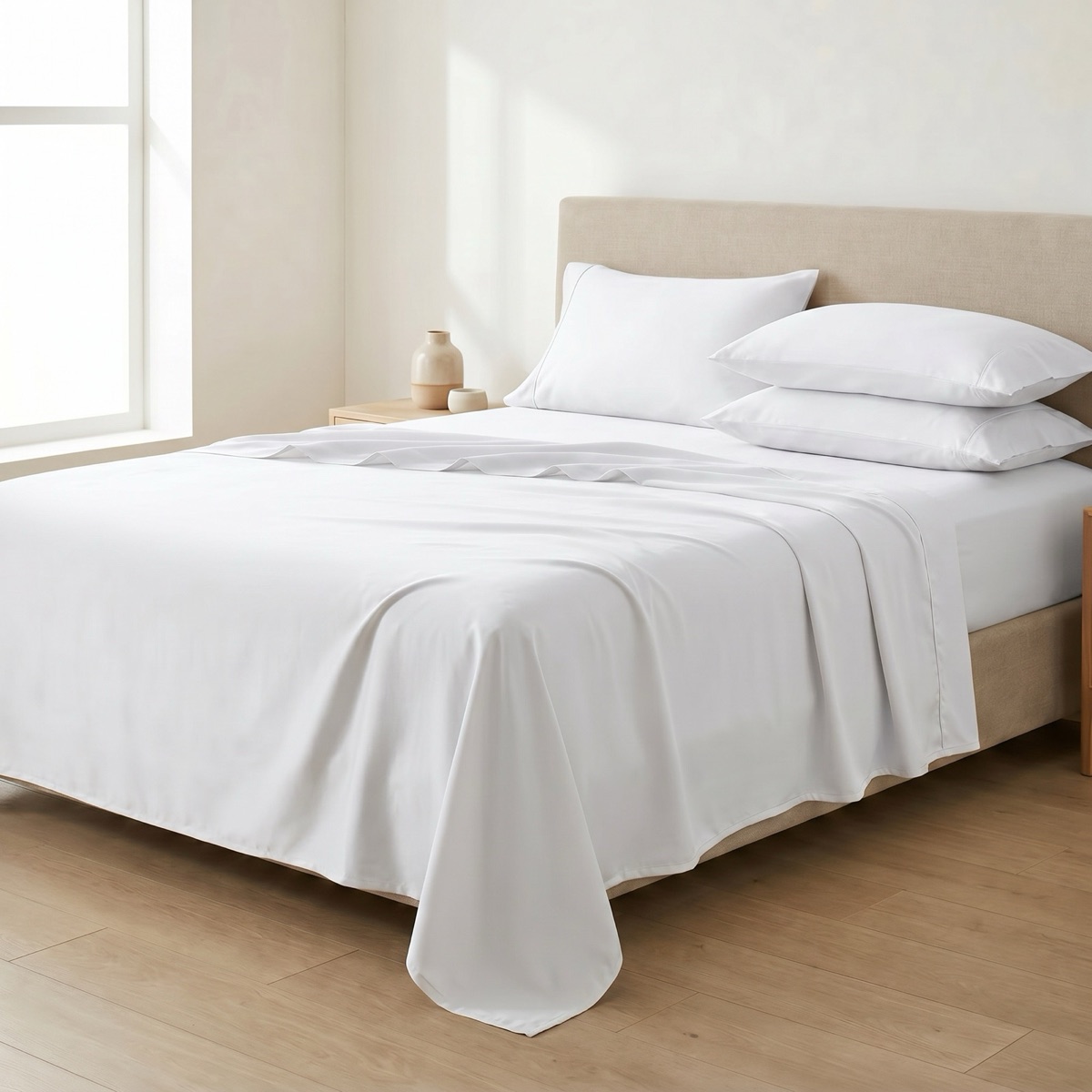
Kemet Cotton Egyptian Sateen Sheet Set
100% extra-long staple Giza cotton from Egypt's Nile Delta, woven into a smooth 600 thread count sateen. Ten colors, all standard sizes.
- 600 thread count sateen weave
- Extra-long staple Giza cotton
- Deep 16-inch pockets
- 30-day money-back guarantee
Sets from $149.95
Shop Kemet Sheets →Two Excellent Fabrics, Completely Different Character
This comparison is unlike most in the bedding space. Usually, one option is clearly superior and the other is coasting on marketing. That’s not the case here. Egyptian cotton and linen are both premium, natural fibers with long histories and genuine quality credentials. The right choice comes down to what you want your sheets to feel like, not which one is objectively better.
That said, they are remarkably different in character. Understanding those differences properly requires looking at where each fabric comes from.
The Fibers
Egyptian Cotton
Egyptian cotton is Gossypium barbadense, an extra-long staple cotton grown in the Nile Delta. The fibers measure 36mm or longer, which allows them to be spun into very fine, strong yarns. The resulting fabric is smooth, consistent, and has a refined hand feel.
If you’re unfamiliar with what makes Egyptian cotton distinctive, our detailed guide explains the fiber science and why origin matters.
Linen
Linen comes from flax (Linum usitatissimum), a completely different plant. The fibers are extracted from the stalk of the flax plant through a process called retting, where the stalks are soaked to separate the usable fibers from the woody core. These fibers are then spun into yarn and woven.
Flax fibers are naturally irregular in thickness, which is why linen has that distinctive textured, slightly slubby appearance. This isn’t a flaw. It’s the nature of the fiber. Quality linen embraces this texture rather than trying to eliminate it.
The best linen comes from Belgium, France, and other parts of northern Europe, where the cool, damp climate produces the finest flax fibers.
Feel and Comfort
This is where the two fabrics diverge most sharply.
Egyptian cotton is smooth from the first night. Depending on the weave, it ranges from crisp and cool (percale) to silky and warm (sateen). The fabric has a consistent, even surface with no textural variation. It gets softer with washing, but it starts from an already-comfortable baseline.
Linen is rough. There’s no polite way around it. New linen sheets feel coarse and stiff compared to cotton. Some people actively dislike them for the first month. The issue is that flax fibers need mechanical softening through repeated washing and use. After 5 to 10 washes, linen begins to develop the relaxed, lived-in softness that linen enthusiasts love. After a year of regular use, well-made linen has a drape and feel that cotton doesn’t replicate.
If you want comfort from night one, Egyptian cotton wins. If you’re willing to invest patience, linen’s long-term feel is distinctive and, for many people, preferable.
Temperature Regulation
Both fabrics breathe well. Both are superior to synthetics and bamboo viscose for temperature management. But they regulate temperature differently.
Egyptian cotton percale breathes through its open weave structure. Air circulates freely, heat dissipates, and the fabric doesn’t cling. It’s excellent for hot sleepers and warm climates. Cotton sateen is warmer but still breathable.
Linen has a unique property: it’s thermoregulating in both directions. The hollow flax fibers absorb moisture without feeling damp, which cools you in summer. In winter, those same fibers trap a layer of insulating air, providing warmth. Linen naturally wicks up to 20% of its weight in moisture before feeling wet.
For year-round use with a single set of sheets, linen has a genuine advantage. For dedicated summer sheets, Egyptian cotton percale is equally good. The practical difference between the two in warm weather is quite small.
Durability
Both fabrics are exceptional here, and this is worth emphasising because most sheet comparisons involve one material that lasts and one that doesn’t.
Linen is the strongest natural textile fiber. It’s approximately 30% stronger than cotton fiber for fiber. Linen sheets can last 20 to 30 years with proper care. There are documented cases of linen lasting significantly longer. The fabric becomes softer without becoming weaker, which is unusual.
Egyptian cotton with extra-long staple fibers lasts 10 to 15 years for quality sets. This is excellent by any standard. The fabric resists pilling and improves with washing. Brands like Pure Parima and Quince produce Egyptian cotton sheets with strong track records for longevity.
Linen wins on raw durability, but both materials will outlast the average sheet set by many years.
Appearance and Aesthetics
This is subjective, but it’s important because these two fabrics look completely different on a bed.
Egyptian cotton looks polished. The fabric lies flat, drapes smoothly, and has either a matte finish (percale) or a subtle sheen (sateen). It looks tidy and put-together. If you make your bed in the morning, it stays looking made.
Linen looks relaxed. It wrinkles naturally and significantly. The fabric has visible texture and a casual, lived-in appearance even on a freshly made bed. Linen’s aesthetic is deliberate casualness, and it either appeals to you or it doesn’t.
There’s no middle ground here. If you want crisp, hotel-style bedding, Egyptian cotton is your material. If you like the European rumpled-bed look, linen is the way to go.
Care
Egyptian cotton is low-maintenance. Machine wash in warm water, tumble dry low, and the sheets take care of themselves. They respond well to frequent washing and don’t require any special handling. Ironing is optional and most people don’t bother.
Linen is also quite easy to care for, with one caveat. Machine wash cold or warm, but avoid high heat in the dryer. Linen dries quickly on its own, and many linen owners prefer to line dry. The fabric doesn’t need ironing (the wrinkled look is part of the appeal), but if you want it smooth, you’ll need to iron it while damp. Linen should never be bleached.
Neither fabric is high-maintenance. Egyptian cotton is slightly more set-and-forget.
Price Comparison
| Factor | Egyptian Cotton | Linen |
|---|---|---|
| Queen set price range | £120 to £400+ | £150 to £400+ |
| Expected lifespan | 10 to 15 years | 15 to 25+ years |
| Cost per year | £10 to £35 | £7 to £25 |
| Break-in period | 3 to 5 washes | 5 to 10+ washes |
| Wrinkle resistance | Moderate to good | Poor (by design) |
| Year-round comfort | Good (may need seasonal rotation) | Excellent |
Quality linen and quality Egyptian cotton occupy a similar price bracket. Linen’s longer lifespan gives it a slight edge in cost-per-year calculations, but the difference isn’t dramatic.
Brooklinen offers both Egyptian cotton and linen options, which makes direct comparison easier if you’re considering the brand.
Which Should You Choose?
Choose Egyptian cotton if: you want smooth sheets from the first night, you prefer a polished bed aesthetic, you like crisp percale or silky sateen, or you don’t want to wait through a break-in period.
Choose linen if: you want the best natural temperature regulation, you like a textured and casual bed look, you value maximum durability above all else, or you’ve tried linen before and know you enjoy the feel.
Consider both if: you’re willing to invest in two sets and rotate seasonally. Egyptian cotton percale for summer, linen for the transitional months. This is quite a practical approach, and it’s what many people who appreciate both fabrics end up doing.
The problem with choosing between Egyptian cotton and linen is that neither one is a compromise. They’re both genuinely excellent. This is one of those comparisons where the answer really does come down to personal preference rather than one material being superior.
Get our reviews first on Google
Add Cotton With Love as a preferred source and Google will show you more of our towel and sheet reviews.
Add Cotton With Love as a preferred source on GoogleAdd us as a preferred source on Google
See more of our towel and sheet reviews in your Google results.
Frequently Asked Questions
Is linen cooler than Egyptian cotton?
Linen has excellent temperature regulation in both directions. It keeps you cool in summer and retains warmth in winter. Egyptian cotton percale is also quite cool and breathable. In peak summer heat, linen has a slight edge. But Egyptian cotton percale is close, and it's smoother against the skin.
Why are linen sheets so wrinkly?
Linen fibers have low elasticity, meaning they don't bounce back to their original shape after being crumpled. This is an inherent property of flax fiber, not a quality defect. You can reduce wrinkling by removing linen from the dryer promptly and smoothing it on the bed while slightly damp, but linen will always have a more relaxed, textured look than cotton.
How long does linen take to soften?
Most linen sheets require 5 to 10 washes before they start feeling soft. Some people find new linen quite scratchy. After about 6 months of regular use and washing, linen develops a beautiful drape and softness that is quite distinctive. The break-in period is real, but the result is worth it if you're patient.
Which lasts longer, Egyptian cotton or linen?
Both are exceptionally durable when made well. Linen is technically the stronger fiber and can last 20 years or more. Egyptian cotton typically lasts 10 to 15 years. In practice, both outlast every other sheet material on the market. This is one category where both options are genuinely excellent.
Can you mix linen and Egyptian cotton bedding?
Absolutely. Many people use a cotton fitted sheet (for smoothness against the skin) with a linen flat sheet or duvet cover (for breathability and texture). This is quite a practical approach that gives you the benefits of both fabrics.
Are linen sheets worth the high price?
If you keep them for a decade or more, yes. Linen's cost per year of use is comparable to or lower than most alternatives. The initial investment is high, typically £150 to £400 for a quality set, but the lifespan offsets this. Whether you enjoy the textured feel is the more important question than whether the price is justified.