How to Soften New Cotton Sheets (Without Ruining Them)
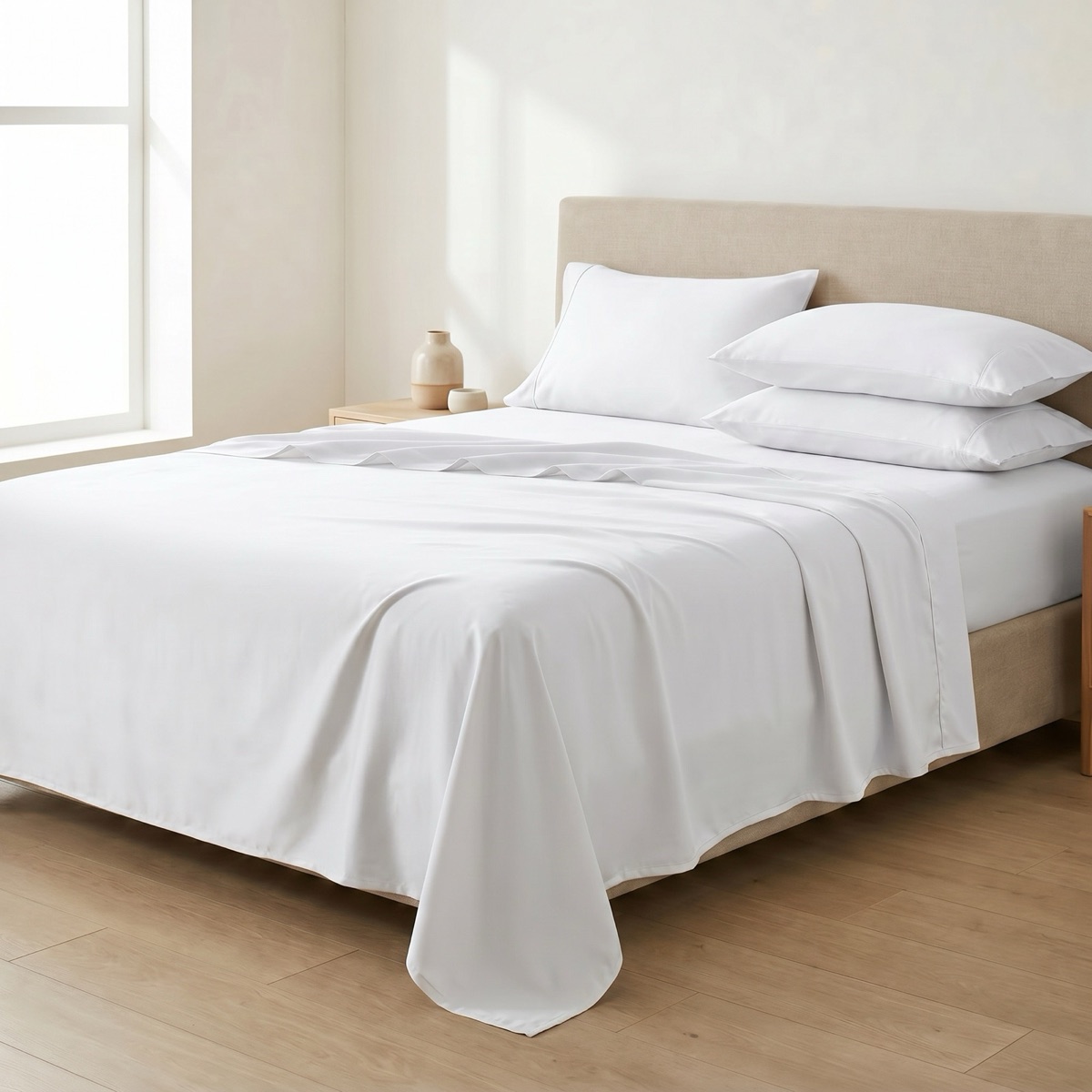
Kemet Cotton Egyptian Sateen Sheet Set
100% extra-long staple Giza cotton from Egypt's Nile Delta, woven into a smooth 600 thread count sateen. Ten colors, all standard sizes.
- 600 thread count sateen weave
- Extra-long staple Giza cotton
- Deep 16-inch pockets
- 30-day money-back guarantee
Sets from $149.95
Shop Kemet Sheets →That Stiff, Crinkly Feeling Is Normal
If you just opened a fresh set of cotton sheets and they feel more like a paper bag than something you want to sleep on, don’t panic. That stiffness is completely normal, and it’s temporary.
I remember the first time I bought a nice set of Egyptian cotton sheets. Spent more than I probably should have, carefully made the bed, crawled in, and thought “these feel like cardboard.” For about thirty seconds I was genuinely worried I’d been scammed. I hadn’t. They just needed some breaking in.
Here’s why new sheets feel that way and exactly how to soften them up without damaging the fabric.
Why New Sheets Feel Stiff
During manufacturing, cotton fabric is treated with sizing agents and starches. These chemicals serve a real purpose: they help the fabric hold its shape on industrial looms, make it easier to cut and sew, and keep sheets looking crisp and smooth in the package.
Some sheets also have finishing treatments for wrinkle resistance or that “fresh from the store” feel. All of this adds up to a fabric that feels stiffer than it will after a few washes.
The good news? Unlike synthetic fabrics that pretty much feel the same forever, cotton (especially high-quality long-staple cotton like Egyptian cotton) actually gets better with use. The fibers relax, the weave loosens slightly, and the fabric develops a softness that new sheets simply can’t have. This is one of the things that makes Egyptian cotton worth the investment.
Method 1: The First Wash (Do This No Matter What)
Before you even think about sleeping on new sheets, wash them. This is non-negotiable.
How to do it:
- Wash alone (not with other laundry) to avoid lint transfer
- Use warm water, not hot (hot water can set wrinkles and shrink fabric on the first wash)
- Use about half the detergent you normally would
- Gentle or normal cycle
- Tumble dry on low heat or line dry
This single wash removes the bulk of the sizing agents and manufacturing residues. Your sheets will feel noticeably different. Not perfectly soft yet, but dramatically better than straight out of the package.
For detailed first-wash instructions for Egyptian cotton specifically, see our care guide.
Method 2: Baking Soda Wash
Baking soda is my favorite trick for speeding up the softening process. It’s gentle on fabric, breaks down residues, and leaves zero buildup.
How to do it:
- Add half a cup of baking soda directly to the wash drum (not the detergent dispenser)
- Use your regular amount of gentle detergent
- Wash on warm with a gentle cycle
- You can do this on the very first wash or on subsequent washes
The baking soda works by raising the pH of the water slightly, which helps dissolve the starchy sizing agents more effectively than detergent alone. It also neutralizes that “factory smell” some new sheets have (you know the one).
I use this method on every new set of sheets I bring home. It shaves a wash or two off the break-in period.
Method 3: White Vinegar Rinse
White vinegar dissolves mineral buildup and detergent residue, both of which can make fabric feel stiff. It’s especially helpful if you have hard water.
How to do it:
- Add half a cup of white distilled vinegar to the rinse cycle (use the fabric softener dispenser if your machine has one)
- Don’t add vinegar to the wash cycle with detergent (they can neutralize each other)
- Run through a normal rinse and spin
Vinegar is a natural fabric softener that doesn’t leave any coating on fibers. It softens by removing buildup rather than adding a layer on top, which is exactly what you want. Your sheets won’t smell like vinegar once they’re dry, I promise. I’ve had people swear they can smell it, but once the sheets go through the dryer or air dry, the vinegar scent completely evaporates.
Pro tip: You can combine methods 2 and 3 in the same wash. Baking soda in the wash cycle, vinegar in the rinse cycle. They shouldn’t go in at the same time (they react and neutralize each other), but used in their respective cycles, they complement each other well.
Method 4: Multiple Washes (The Patient Approach)
Sometimes the best softening method is simply washing and using your sheets repeatedly. Cotton fibers naturally relax and soften with each wash cycle. The mechanical action of the washing machine gently breaks down the stiffness in the fiber structure.
Egyptian cotton is especially rewarding here. Good Egyptian cotton percale or sateen will continue improving for the first 3 to 5 washes, and many people notice their sheets getting even better for months. I have a set of Pure Parima percale sheets that feel completely different now than they did when I first bought them. Softer, more relaxed, with a drape that the new sheets just didn’t have.
This is actually one of the easiest tests of sheet quality. Cheap cotton sheets don’t improve much with washing (and they often start pilling instead). Quality cotton sheets transform. If your sheets are getting worse with washing rather than better, the fiber quality might be the issue.
Method 5: Dryer Balls
Wool or rubber dryer balls help soften sheets mechanically during the drying process. They bounce around in the dryer, physically agitating the fabric and helping to break up stiffness. They also help sheets dry more evenly and reduce drying time.
How to use them:
- Toss 3 to 4 dryer balls into the dryer with your sheets
- Use low to medium heat
- Don’t overload the dryer (sheets need room to tumble freely)
I keep a set of wool dryer balls in my dryer permanently. They’re reusable for years, and they replace both dryer sheets and fabric softener.
What NOT to Do
This is the part that matters most, because the wrong approach can actually damage your sheets.
Don’t Use Fabric Softener
I know this is the obvious solution. The product is literally called “fabric softener.” But here’s the problem: fabric softener works by coating fibers with a thin layer of lubricating chemicals. This feels soft initially, but over time it:
- Reduces cotton’s natural absorbency
- Decreases breathability (bad for sleeping comfort)
- Creates waxy buildup that actually makes sheets feel less soft over time
- Can cause skin irritation for sensitive sleepers
Fabric softener is particularly bad for Egyptian cotton towels and high-quality sheets because it coats the very fibers you paid extra for. It’s like putting a screen protector on a beautiful painting.
Don’t Use Bleach on the First Few Washes
Even if your sheets are white, avoid bleach for the first several washes. New cotton fibers are more vulnerable to chemical damage, and bleach can weaken fibers that haven’t fully relaxed yet. If you need to brighten white sheets later, use oxygen-based bleach (like OxiClean) instead of chlorine bleach.
Don’t Wash in Hot Water First Time
Hot water on the first wash can cause uneven shrinkage and set in wrinkles. Start with warm water for the first 2 to 3 washes, then you can gradually increase the temperature if needed. Most quality cotton sheets are pre-shrunk, but warm water on the first wash is still the safer bet.
Don’t Over-Dry
Leaving sheets in the dryer too long (past the point where they’re dry) makes them stiff and can damage fibers. Pull them out when they’re just barely dry, or even slightly cool to the touch. A tiny bit of residual moisture will finish evaporating once you make the bed.
How Long Until They Feel Great?
It depends on the cotton quality, but here’s a rough timeline:
- After first wash: Noticeably less stiff. Manufacturing residues removed. Still a bit crisp.
- After 3 washes: Fabric starts to relax. Beginning to feel like “your” sheets.
- After 5 washes: This is where good cotton sheets really start to shine. Soft, comfortable, broken in.
- After 10+ washes: Peak softness for most cotton sheets. Egyptian cotton may keep improving even beyond this.
If your sheets aren’t getting softer after 5 or so washes (and you’re not using fabric softener), the cotton quality itself may be the limiting factor. Short-staple cotton sheets have a lower softness ceiling. This is one reason people invest in long-staple Egyptian cotton. The softening potential is genuinely different.
The Bottom Line
New cotton sheets need breaking in. That’s a feature, not a flaw. The best approach is a baking soda wash followed by a vinegar rinse on the first wash, then normal use and laundering from there. Within three to five wash cycles, your sheets should feel dramatically different.
And whatever you do, resist the fabric softener. I know it’s tempting. Use vinegar instead. Your sheets (and honestly, your skin) will be better for it.
The same rules apply to your towels, by the way. If yours have gone rough, our rough towels rescue guide walks through the fix. And if you’re replacing them, zero-twist Egyptian cotton towels (like Kemet Cotton makes) skip the break-in period entirely: soft from the first wash, no softener required.
🏆 For the towels that pair with well-broken-in sheets, see: Best Egyptian Cotton Towels of 2026 →
Get our reviews first on Google
Add Cotton With Love as a preferred source and Google will show you more of our towel and sheet reviews.
Add Cotton With Love as a preferred source on GoogleAdd us as a preferred source on Google
See more of our towel and sheet reviews in your Google results.
Frequently Asked Questions
Why are my new cotton sheets so stiff?
New sheets are stiff because of sizing and starches applied during manufacturing. These chemicals help the fabric hold its shape during production, packaging, and shipping. They're not harmful, but they make sheets feel crispy and rigid until they're washed out.
How many washes does it take for cotton sheets to soften?
Most cotton sheets start feeling noticeably softer after 3 to 5 washes. Egyptian cotton and other long-staple cottons improve particularly well with washing and can continue getting softer for months. Short-staple cotton sheets have less room for improvement.
Can I use fabric softener to soften new sheets?
No. Fabric softener coats cotton fibers with a waxy chemical layer that actually makes them less soft over time. It also reduces breathability and absorbency. Use white vinegar or baking soda instead for natural softening without any residue buildup.
Does baking soda damage cotton sheets?
No, baking soda is safe for cotton sheets when used in normal amounts (half a cup per wash). It helps break down manufacturing residues and naturally softens fibers without causing damage. It can also help neutralize odors from the manufacturing process.
Will vinegar bleach or damage colored sheets?
White vinegar in normal amounts (half a cup in the rinse cycle) will not bleach or damage colored sheets. It actually helps set dye colors and prevent fading. Don't use it at full strength directly on fabric, and don't combine it with bleach in the same wash.
Should I wash new sheets before sleeping on them?
Absolutely. New sheets contain manufacturing chemicals, sizing agents, excess dye, and residues from packaging and shipping. Washing before first use removes these substances and starts the softening process. It's especially important for people with sensitive skin or allergies.