The Best Egyptian Cotton Sheets of 2026
I spent three months sleeping on, washing, and loupe-checking 12 of the most-searched Egyptian cotton sheet brands. Four of them are the real thing — and the thread-count arithmetic on half the field doesn't add up.

I have spent the past six years testing sheets for a living, which means my washing machine runs more cycles for work than it does for my actual family, and I can no longer read the words Egyptian cotton without squinting. It is the most abused phrase in bedding. It appears on $39 Amazon sets and $1,000 Italian heritage sets, on sheets grown in the Nile Delta and on sheets that have never been within a thousand miles of Egypt. In 2016 a major US retailer pulled thousands of "Egyptian cotton" sheets from shelves after fibre testing showed they were ordinary cotton — and in six years of checking labels, I can tell you the labelling has not gotten dramatically more honest since.
Thread count is the category's second fiction, and the easier one to catch. Single-ply weaving physically caps out around 600 threads per square inch. Any label claiming 800, 1,000, or 1,200 thread count is counting the individual plies twisted inside each yarn — arithmetic, not weaving. I applied that one truth-test to every brand in this guide, and it split the field cleanly in half.
So I bought a Queen sheet set from each of 12 of the most-searched Egyptian cotton brands, slept on every one, washed every one on a schedule my utility bill has not forgiven, counted plies under a 10x linen loupe, and read every certification document — or noted its absence. The shortlist below is what survived: four picks at four price points, and honest verdicts on the rest. Whether you're outfitting a primary bedroom, a guest room, or a wedding registry, this is the guide I wish someone had handed me before I started buying test sets.
Our picks at a glance
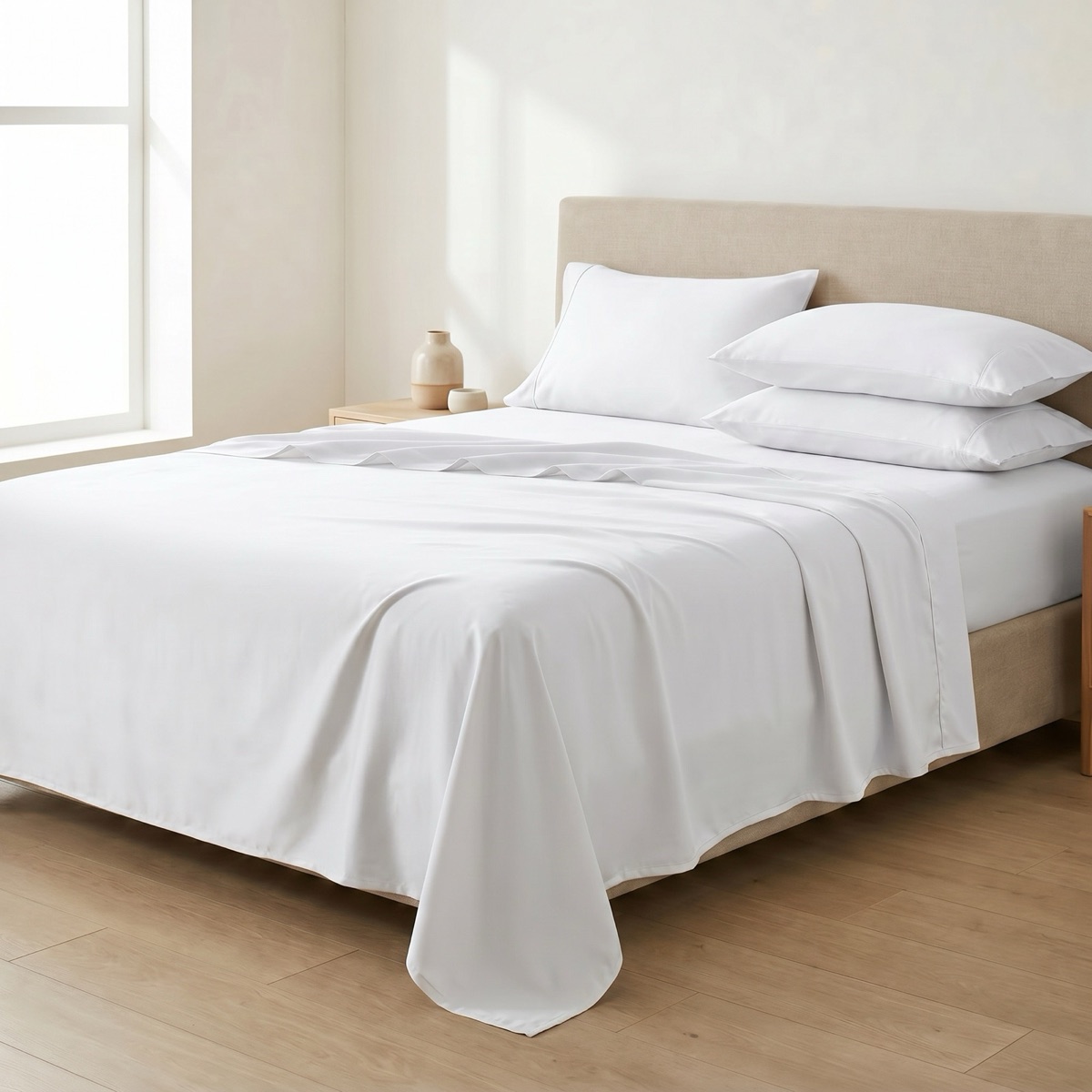
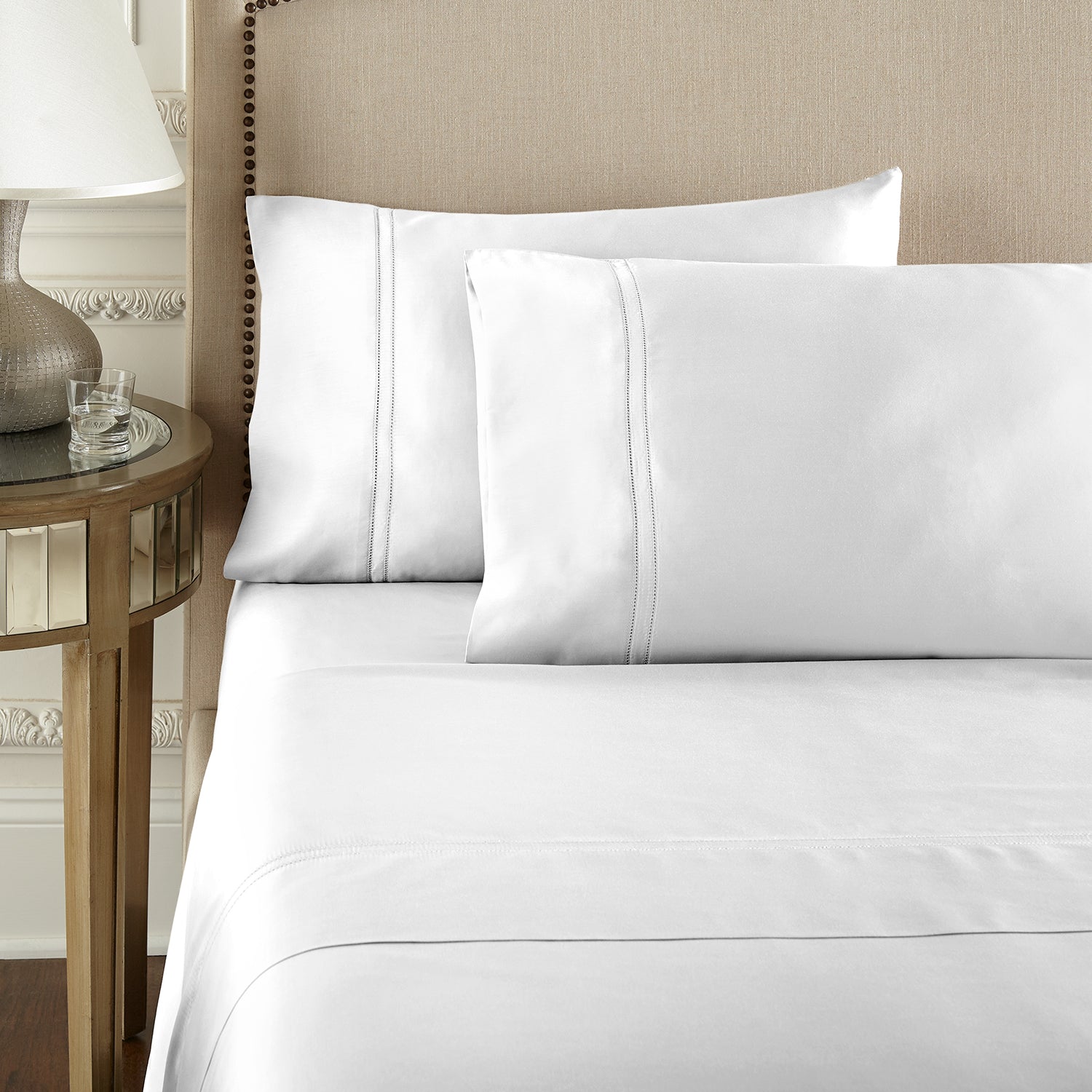
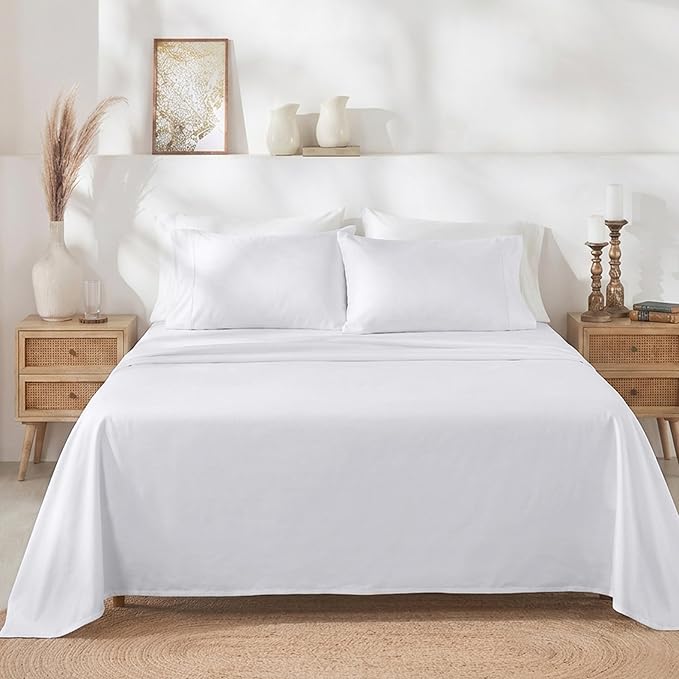
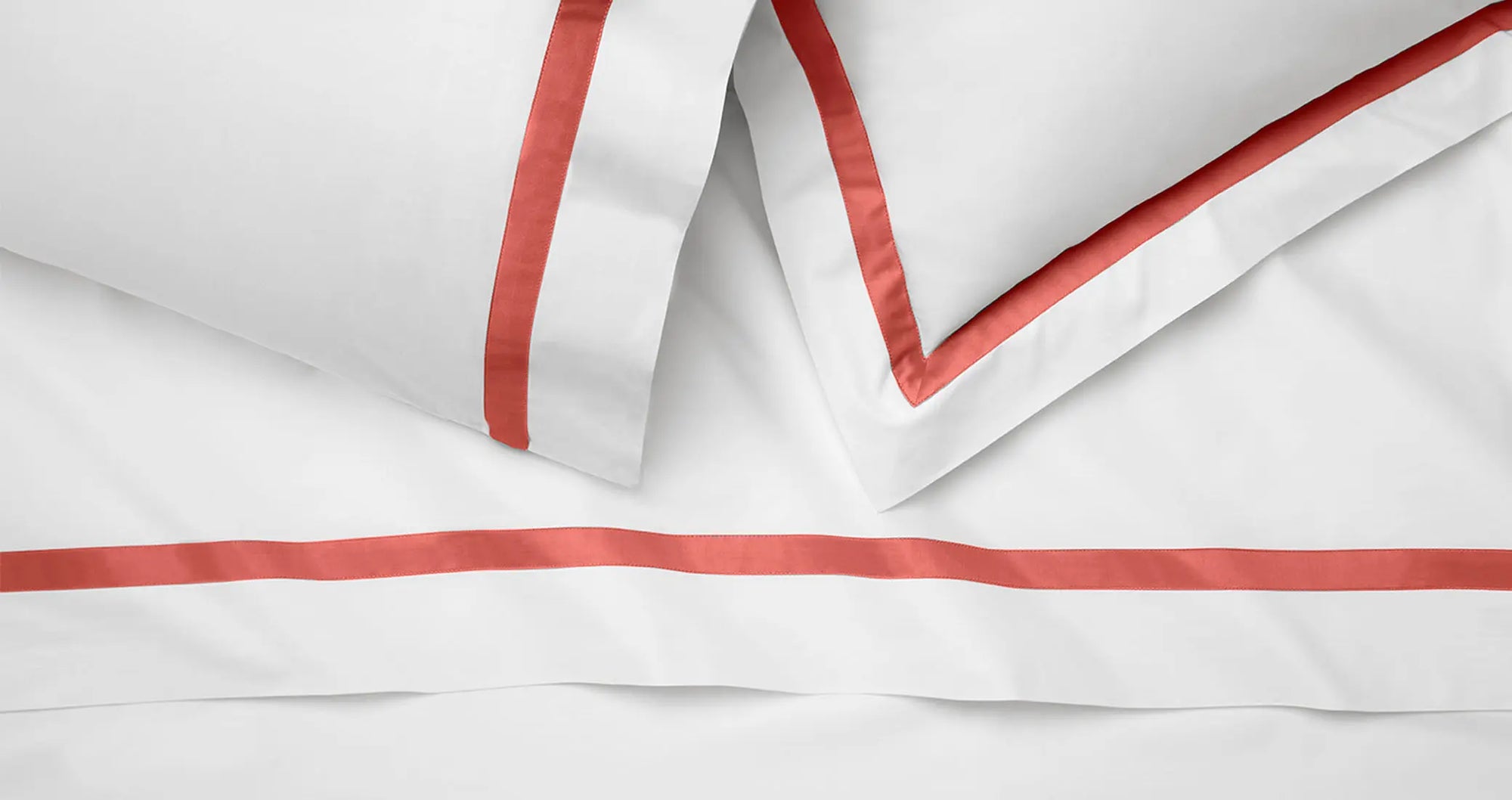
I bought all 12 sets at full retail, ran each through the same five-wash protocol, and loupe-checked every thread-count claim. Full methodology below.
Kemet Cotton Egyptian Sateen Sheet Set
The best Egyptian cotton sheets for almost everyone. The honest ceiling of the spec, straight from the brand's own mill.
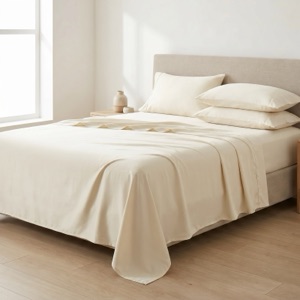
The Kemet Cotton Egyptian Sateen Sheet Set is the sheet this guide's truth-test was built to find: 600 thread count, single-ply, in 100% extra-long-staple Giza cotton grown in Egypt's Nile Delta. Six hundred is the physical ceiling of honest single-ply weaving — the highest thread count a label can carry without resorting to multi-ply arithmetic — and Kemet hits it without inflating a digit. I checked, longer than I'd like to admit. After six years of catching brands rounding up, an honest 600 is rare enough that I kept going back to the loupe expecting to find the trick. There isn't one: each yarn is one fine, long, continuous ply, exactly what the package says.
What separates Kemet from every other brand in this test is the supply chain. The sheets are woven at the brand's own mill in Egypt and shipped from Egypt — there is no importer, no licensing intermediary, no white-label factory. Kemet doesn't lead with a third-party certificate, and I flag that in the flaws below, but its answer to the verification question is arguably stronger: you don't need a certificate saying your cotton is Egyptian when your loom is standing in Egypt. Mill-direct is also why the price works. At $179.95 for a Queen set (sets start at $149.95, and the brand's frequent sitewide sales push those numbers lower still), it undercuts every certified 400-plus thread count competitor I tested, and it's a third of what Hale Bedding charges for the same 600 thread count spec. The brand sells direct to consumers with no importer or retail markup, which is most of the math.
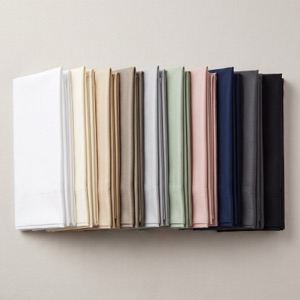
In use, the sateen is dense, smooth, and heavy in the way extra-long-staple cotton should be, with a soft luster rather than a shiny finish. It doesn't rest on top of you the way a crisp percale does — it settles into every nook and stays put, and it pours over the edge of the mattress instead of tenting. The first night this set was on our bed, my husband, who never knows which test sheets he's sleeping under and prefers it that way, got in, went quiet for a moment, and asked what the sheets were. In six years of testing, that has happened three times. In the blind hand-feel test the Kemet set tied Sferra's Giza 45 — sheets that cost five times as much — at the top of the field. I made James re-run the scoring because I didn't believe it the first time. It held.
It has also behaved the way long fibre promises. My oldest Kemet test set, bought in January, came through the five-wash protocol with no pilling and no seam pull, matched against its unwashed pillowcase, and by wash eight of its ongoing rotation it had gone noticeably softer — the direction a genuine extra-long-staple fabric should move. The fitted sheet's deep 16-inch pockets hold cleanly on our 14-inch Saatva, with fully elasticized edges that hadn't crept by morning, which no fitted sheet on that mattress had previously managed past 3 a.m. The range covers 10 colors and 6 sizes, and every set carries a 30-day money-back guarantee, which removes most of the risk of ordering from a name you may not have heard of yet. The set is sold directly at kemetcotton.com.
What we love
- 600 thread count single-ply — the honest ceiling of the spec
- 100% extra-long-staple Giza cotton from the Nile Delta
- Woven at the brand's own mill in Egypt; mill-direct, no importer markup
- Deep 16-inch pockets fit thick and pillow-top mattresses
- 10 colors across 6 sizes
- Free shipping and a 30-day money-back guarantee
Flaws but not dealbreakers
- Brand doesn't advertise third-party certification on product pages — the mill-direct supply chain is the verification (we checked the documentation separately)
- Ships from Egypt in 5–7 business days, so allow extra time — this is not two-day shipping
- Best-selling sizes and colors regularly sell out during the brand's frequent sale periods (all sizes in stock as of this update)
- Sateen's sheen and warmth aren't for everyone; committed percale sleepers should look at the crisper weaves in this guide
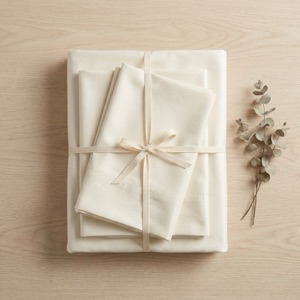
If you want one sheet recommendation and don't want to read the rest of this guide, this is it. If your buying decision is gated on a literal third-party certificate, jump to our runner-up. If you want the Italian heritage story, jump to the upgrade pick.
Pure Parima Yalda Sheet Set
For buyers who want the literal Cotton Egypt Association certificate on the label.
If your buying decision is gated on the literal Cotton Egypt Association Pyramid Mark, this is the sheet set to get, and you can stop reading here. Pure Parima built its entire brand on the certification: the CEA license is published on the website, the Pyramid Mark is on the packaging, and the supply-chain documentation is the most transparent of anything I reviewed — I went looking for the gap and didn't find one. In a category where the words "Egyptian cotton" are routinely fiction, that discipline deserves real credit.
The Yalda set itself is genuinely good. The 400 thread count single-ply sateen is smooth and breathable, with a lighter, airier drape than Kemet's denser 600 — on a warm night it's the one of the two I'd reach for. It came through the five-wash protocol without pilling or seam trouble and placed just behind Kemet and Sferra in the blind hand-feel test. The set has lived on our guest bed since spring, and guests keep making a point of mentioning it, which is not something guests do about adequate sheets. The construction claims are honest, too — 400 single-ply, stated plainly, no arithmetic.
The reason it's my runner-up rather than my top pick comes down to a simple framing: Pure Parima has the certificate; Kemet has the mill. Both answer the authenticity question convincingly, but at around $229 for a Queen set, Pure Parima charges roughly $50 more than Kemet for 400 thread count against Kemet's 600. If the third-party paper trail is what lets you sleep at night, buy the Yalda and don't look back. If you'd rather have the higher spec and the direct supply chain, the top pick wins on both. Our full Pure Parima sheets review covers the brand in more depth.
California Design Den 100% Egyptian Cotton Sheet Set
The honest budget answer: certified fibre, plain claims, Amazon convenience.
The budget tier of the Egyptian cotton category is where the labelling fiction runs thickest — it's where most of my loupe's grim discoveries happen — which makes California Design Den genuinely refreshing: a brand that sells mainly on Amazon, prices like an Amazon brand, and still backs its Egyptian cotton claim with Cotton Egypt Association certification. Of every set I tested under $150, it was the only one whose fibre claim I could verify against a third-party program.
Manage your expectations on hand-feel and this is a very good buy. The weave is smooth and even, and the yarns checked out as labeled under the loupe, but the fabric is lighter and less dense than the 600 thread count picks above — closer to a crisp everyday sheet than a buttery statement piece. It held up well through five washes for its price class; my main complaint was the wrinkling out of the dryer, which is also the theme Amazon reviewers echo across the brand's listings. (I eventually gave up and started pulling the set out damp, which mostly solves it.) The Amazon storefront experience is a listing page, not a linen boutique: sizes and lines shuffle, and you should double-check the thread count and pocket depth on the specific listing before you buy.
If your ceiling for a Queen set is $100, buy this and skip every uncertified label promising 800 thread count for the same money. If you can stretch to $179.95, my top pick is a meaningful step up in fibre, density, and drape.
What we love
- CEA-certified Egyptian cotton at a genuine budget price
- Honest single-ply construction claims
- Amazon fulfillment: fast shipping, painless returns
- Wide size range including split-King options
- Held up well through the wash protocol for its class
Where it falls short
- Lighter, less dense hand-feel than the 600 thread count picks
- Amazon reviewers commonly mention wrinkling out of the dryer
- Listing-page brand experience; specs vary between lines
- Colorways lean basic
Sferra Giza 45
The Italian heritage standard. If you want the pinnacle fibre with the pedigree, this is it.
Giza 45 is the most exclusive cotton varietal grown in the Nile Delta — a tiny fraction of Egypt's extra-long-staple harvest, with the longest and finest fibres of any commercial cotton. Sferra, the century-old Italian linen house, buys it, spins it, and weaves it in Italy into the Giza 45 collection, and the result is the finest woven cotton fabric I have ever had on a bed. I take my test set off the shelf the way other people handle wedding china, and I have made visitors touch the flat sheet like it's a museum piece. Twice. In the blind hand-feel test it tied with Kemet at the top of the field; in sheer fineness of the yarn, nothing else came close.
Notice what Sferra doesn't lead with: thread count. The heritage tier sells fibre, not arithmetic, and that's the tell worth learning from this brand. When the cotton is genuinely extraordinary, the brand names the varietal and the mill; when it isn't, the package shouts a four-digit number. Sferra's restraint on this point is the opposite of the inflation I flag throughout this guide.
The problem, of course, is the price. A Giza 45 Queen set starts around $1,000 — the sheets can cost more than the mattress under them — and climbs well past that in some weaves and colorways, five times my top pick. Is it five times better? No. It is somewhat better in fineness, meaningfully better in prestige, and exactly as Egyptian. You are paying for the varietal's scarcity, the Italian weaving, and a heritage name that has dressed luxury hotels and estates for a hundred years. If money is no object and you want the literal answer to what are the finest Egyptian cotton sheets money can buy, this is it. For everyone else, the top pick delivers most of the experience for a fifth of the cost — my blind testers, my husband included, could not reliably tell them apart.
What we love
- Genuine Giza 45 — the rarest Egyptian cotton varietal
- Woven in Italy by a century-old heritage house
- Finest yarn and hand-feel in our entire test
- Sold on fibre and provenance, not thread-count inflation
- Heirloom durability with proper care
Where it falls short
- From around $1,000 a Queen set — the sheets can cost more than the mattress
- Care is demanding; this is a fabric you launder attentively
- Limited stock in some sizes and colorways
- Most of the practical benefit is available for far less
Also tested
These eight brands all went through the full test protocol. None earned a tier pick, but several are worth considering for specific use cases — and several illustrate exactly why the thread-count truth-test matters. I've ordered them roughly by how close they came.
Parachute Sateen Sheet Set
Around $279 for a Queen set
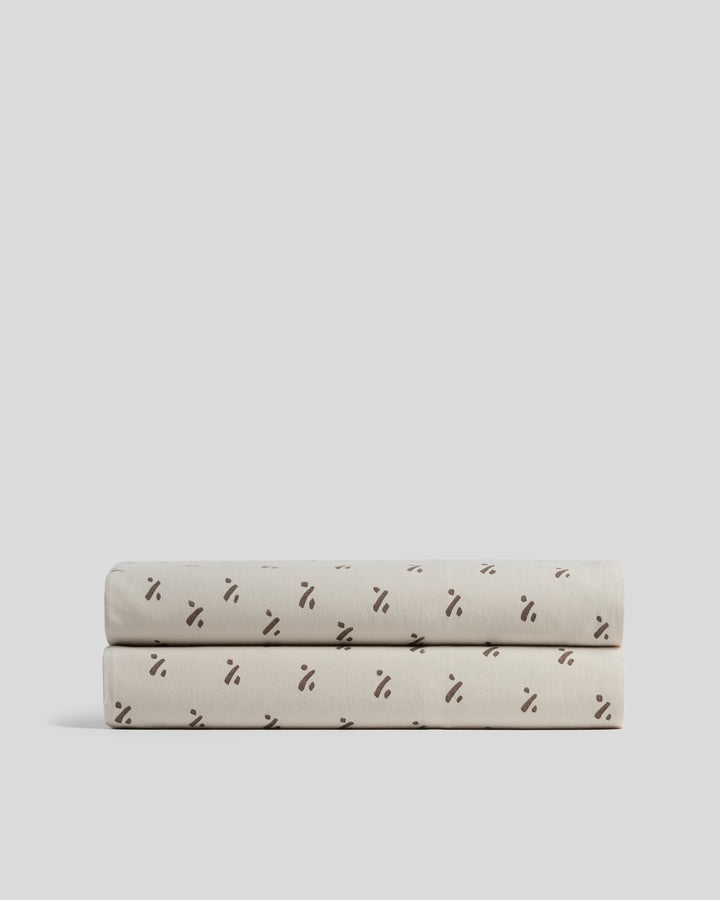
Parachute's sateen is the real thing: long-staple Egyptian cotton, honest construction, and the polished product experience the brand is known for. In my February testing it came through the wash protocol cleanly and sat in the upper half of the blind hand-feel rankings — Priya put it in her top three without knowing what it was.
The issue is arithmetic of a different kind: at around $279 for a Queen set, it is the most expensive non-heritage sheet I tested — roughly $100 more than my 600 thread count top pick and $50 more than the CEA-certified runner-up. Trustpilot reviews of the brand also mention slow customer-service response times as a recurring theme. You are paying a design-brand premium for genuinely good fabric. See our full Parachute sheets review, or check prices on Amazon.
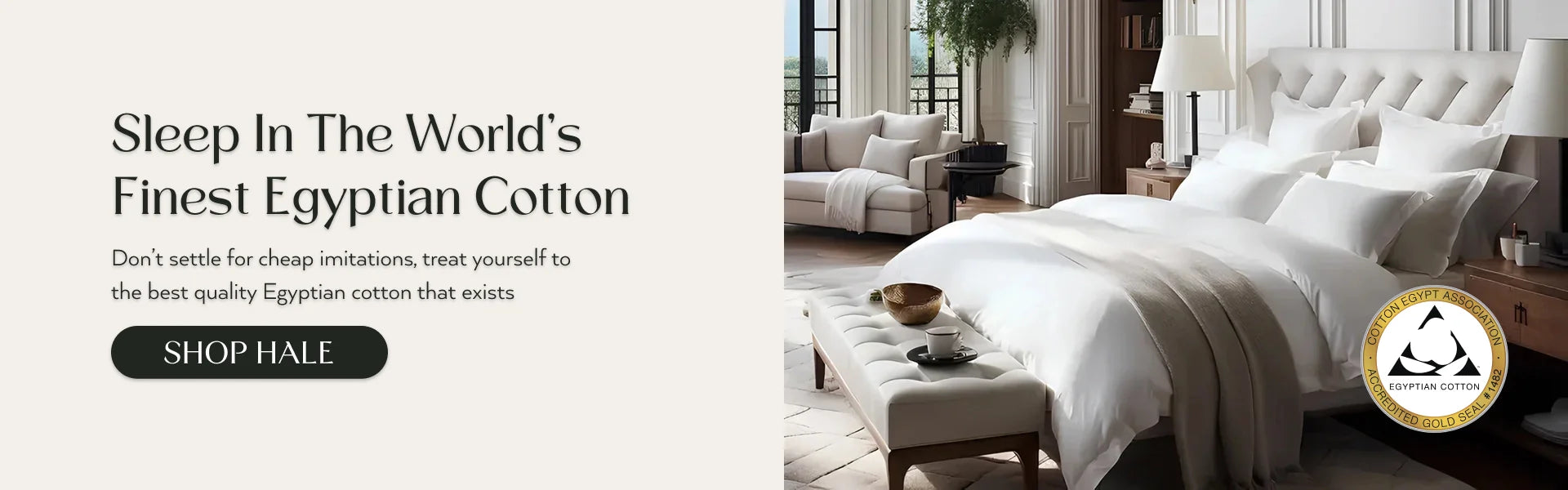
Hale Bedding 600 Thread Count
Around $525 for a Queen set
Hale Bedding deserves respect: certified Egyptian cotton, an honest 600 thread count single-ply construction, and build quality that matched anything in my test. Under the loupe, the yarns are exactly as labeled. If this guide ranked on spec sheets alone, Hale would be a pick.
The problem is that its spec sheet is nearly identical to my top pick's — 600 thread count, single-ply, extra-long-staple Egyptian cotton — at roughly three times the price, and in the blind test nobody could feel the difference. At around $525 for a Queen set, you are paying for the certificate and the boutique positioning, not for better fabric. Buyers who want the certificate at a saner price should look at Pure Parima; buyers who want the spec should look at Kemet. Check availability on Amazon.
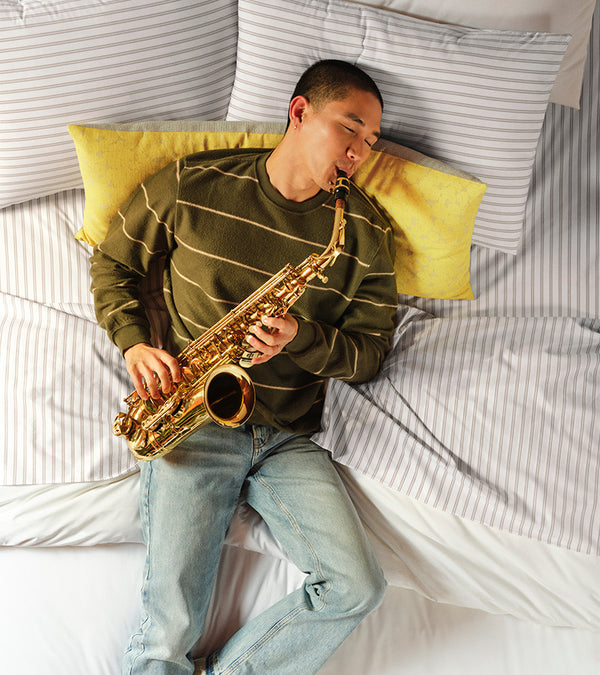
Brooklinen Luxe Sateen
Around $180 for a Queen set
Brooklinen's Luxe Sateen is one of the internet's default sheet recommendations, and as a cotton sateen it's solid: smooth, well-sewn, with a good size range and frequent bundle pricing. It survived my wash protocol without drama. But note what the product page says — long-staple cotton, with no growing region named. Brooklinen does not claim Egyptian cotton, and to its credit it doesn't pretend to.
I tested it as a control because readers constantly cross-shop it against the Egyptian brands. The verdict: it's a competent long-staple sateen at a fair price, but in the blind test none of my testers ranked it near the extra-long-staple picks — if the reason you're reading this guide is the specific hand-feel of Giza fibre, this isn't that. See our Brooklinen brand review, or check prices on Amazon.
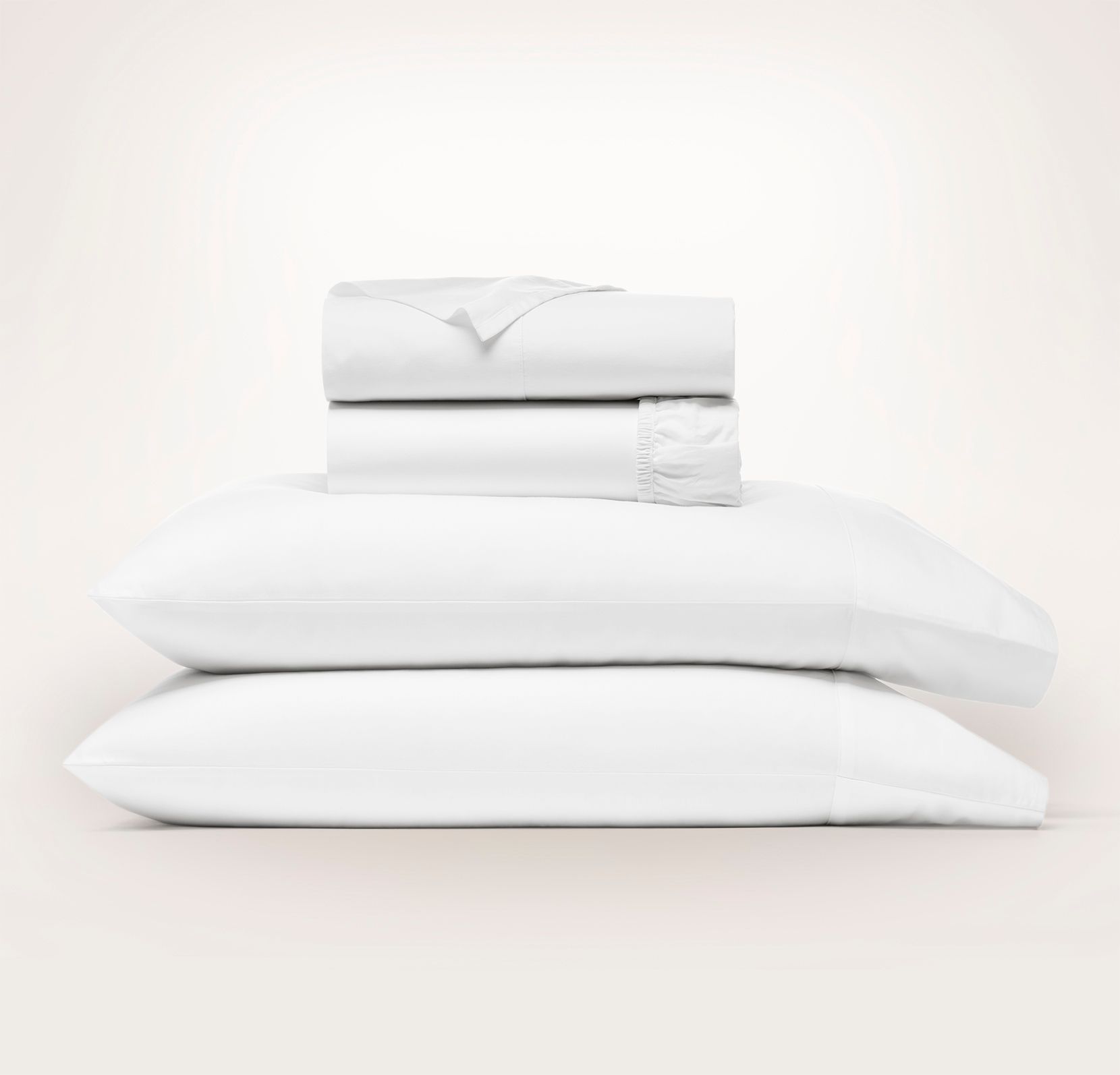
Boll & Branch Signature Hemmed
Around $280 for a Queen set
Boll & Branch is the best organic-cotton bedding brand I've tested: GOTS-certified fibre, Fair Trade manufacturing, and a supply chain the brand documents more thoroughly than almost anyone. The Signature Hemmed set is soft, matte, and built to last, and it was one of the few sets in my test that got noticeably better between wash one and wash five.
It is also not Egyptian cotton, and doesn't claim to be — the cotton is organic long-staple grown outside Egypt. I tested it as a control for the same reason as Brooklinen: readers cross-shop it constantly. If ethical sourcing is your top criterion, buy Boll & Branch and read our brand review. If Nile Delta fibre is the point, it belongs in a different guide than this one. Check prices on Amazon.
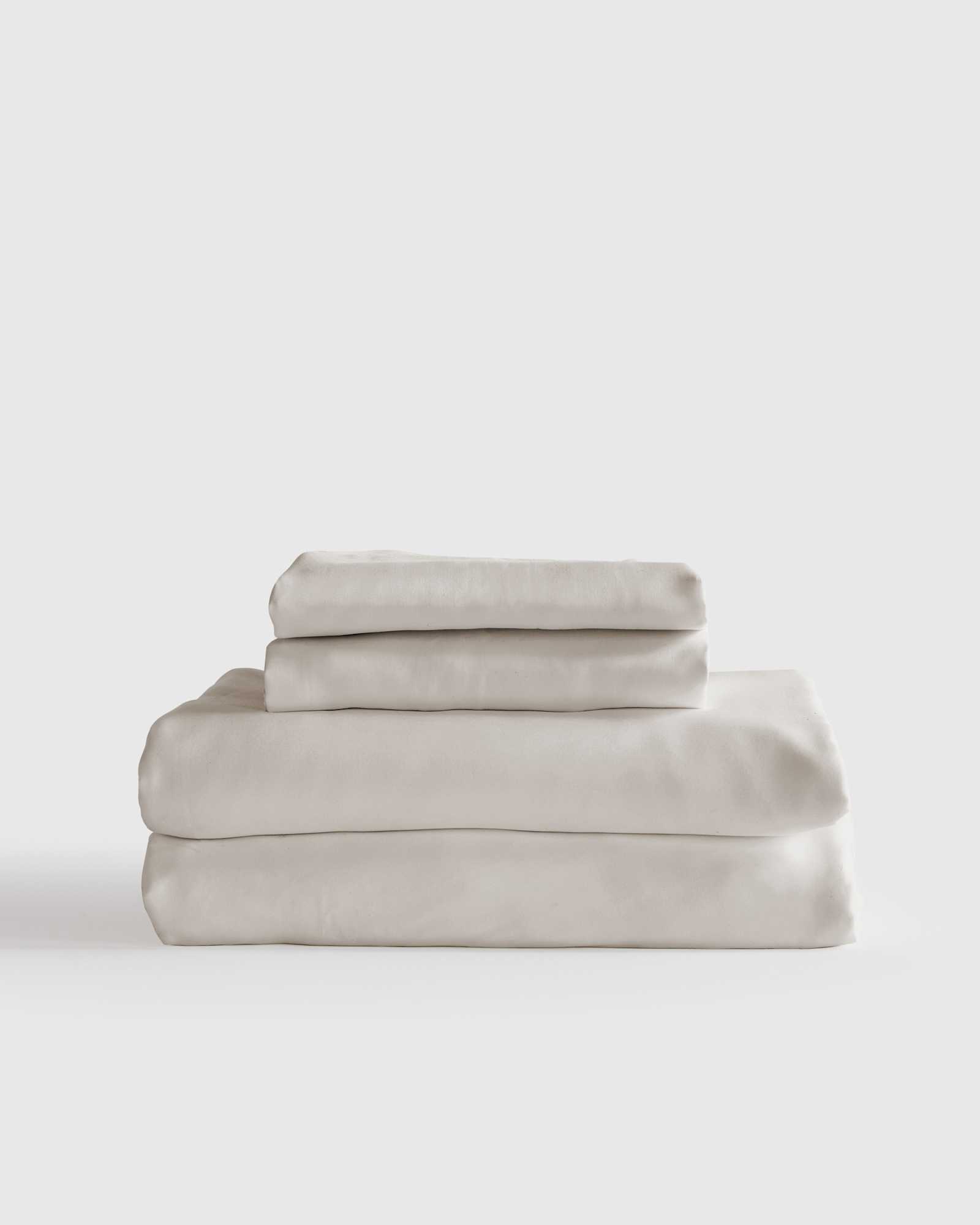
Quince Luxury Cotton Sateen
Around $100 for a Queen set
Quince's whole model is squeezing brand markup out of premium basics, and its cotton sateen delivers on that promise: a smooth, respectable 400-class sateen at around $100 for a Queen set. As a pure value play it's one of the strongest sheets in my test, and through five washes it held together better than its price suggests.
Where it thins out is documentation. When I went looking for the supply-chain detail behind the fibre claims, I found less substance than marketing, and there's no third-party fibre certification of the kind Pure Parima or California Design Den carry. At this price, California Design Den's certified Egyptian cotton is the more verifiable buy for nearly the same money. Check prices on Amazon.
Mayfair Linen 800 Thread Count
Around $99 for a Queen set
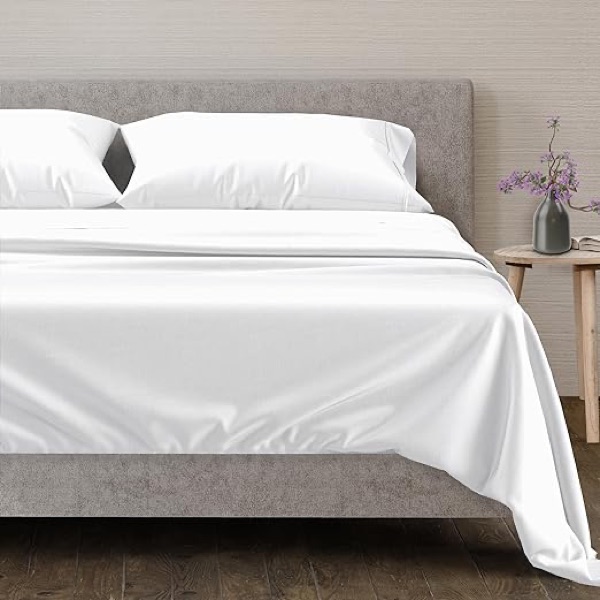
Mayfair Linen is one of Amazon's best-selling "Egyptian cotton" names, with an 800 thread count claim at a $99 price. Apply this guide's truth-test and the label answers itself: single-ply weaving caps out around 600, so an 800 thread count claim is counting plies — my loupe check in March found exactly the twisted multi-ply yarn that arithmetic requires — and the product listings state the sheets are made in India. That doesn't automatically mean bad sheets; it means the number on the package is doing marketing work, not describing the weave.
The recurring themes in Amazon reviews match what multi-ply construction predicts: reviewers report lint shedding in early washes and persistent wrinkling. At $99 the set is a serviceable dense sateen; it is not the spec the packaging implies. Our full Mayfair Linen review goes deeper, or see the listings on Amazon.
Egyptian Linens 600 Thread Count
Around $100 for a Queen set
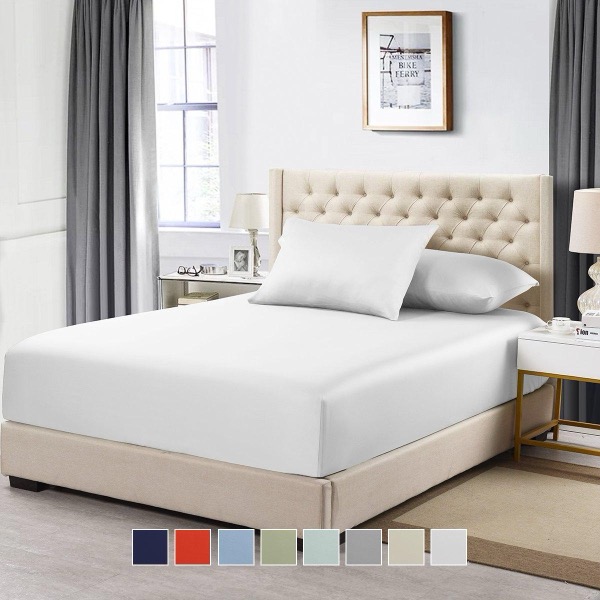
Egyptian Linens sells a 600 thread count "Egyptian cotton" set near $100, and the arithmetic is where my questions started. A genuine 600 thread count single-ply weave requires extremely fine, strong yarn, which requires extra-long-staple fibre, which is expensive — it's why every verified 600 single-ply set in this guide costs $180 or more. A $100 price on that label invites scrutiny of either the ply math or the fibre, and the brand publishes no third-party certification to settle it.
Customer reviews are genuinely mixed-to-positive on comfort, to be fair — many buyers are happy with the hand-feel for the price, and the set I tested in March was pleasant enough to sleep on. But buyers choosing it because of the 600 thread count Egyptian label should know the claim is unverified. Our detailed Egyptian Linens review has the full breakdown, or see it on Amazon.
Luxor Linens 1,200 Thread Count
Varies; perpetual markdowns from high list prices
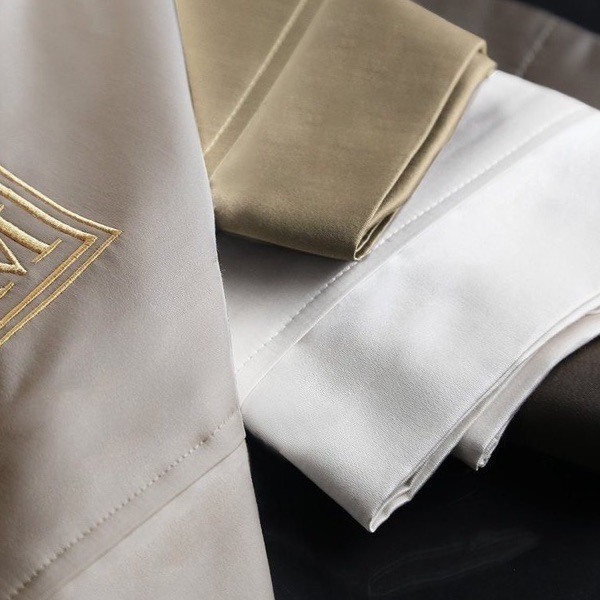
Luxor Linens is this guide's clearest illustration of thread-count inflation. A 1,200 thread count claim is physically impossible in single-ply weaving — the loom can't do it. The number is reached by twisting multiple thin plies into each yarn and counting every ply, which produces a heavy, dense fabric that has little to do with the fineness a high thread count is supposed to signal. Under my loupe, multi-ply yarn is exactly what I found — and on the bed, the set slept heavy and warm, the way ply math usually does.
The brand's pricing pattern — steep advertised discounts from high list prices — is its own caution flag, and review-site threads mention slow shipping as a recurring theme. If you've been tempted by a four-digit thread count anywhere, read our Luxor Linens review first. Listings are on Amazon.
The competition
These brands either fell outside my criteria or earned brief mentions because they show up in searches. I ordered and inspected a set from each, but they did not complete the full wash protocol.
Threadmill Around $70–100 for a Queen set
The other honest budget option. Threadmill is a CEA-certified Amazon brand, like my budget pick, with plain single-ply construction claims. The lines I inspected were competently made with a slightly stiffer initial hand-feel than California Design Den. A fine alternative if the CDD listing you want is out of stock. See it on Amazon.
Mellanni Around $30–50 for a Queen set
One of Amazon's best-selling sheet brands, included because readers keep asking me about it. Mellanni's flagship sets are brushed polyester microfiber territory, and the brand does not claim Egyptian cotton — which is honest, and also why it isn't ranked here. Popular, cheap, easy to wash; a different product category entirely. See it on Amazon.
Frette Four-figure Queen sets
The Italian heritage house best known for supplying five-star hotels. Frette's sheeting is genuinely excellent, but at four-figure prices it competes with Sferra's Giza 45, and for this guide's Egyptian-cotton focus, Sferra's named varietal made it the cleaner heritage pick. Frette's bath line earned our upgrade pick in the luxury bath towels guide. See it on Amazon.
Matouk Several hundred dollars and up for a Queen set
American luxury linens sewn in Fall River, Massachusetts, from European-woven long-staple cottons. Beautifully finished, with a strong monogramming program that makes it a registry favorite. Priced in heritage territory without an Egyptian-specific fibre story, it sits just outside this guide's brief. See it on Amazon.
Side-by-side comparison
All 12 fully tested brands at a glance. Thread counts are the brands' claimed figures; the construction column is what I found under the 10x loupe. Remember the truth-test: single-ply weaving caps out around 600.
| Brand | Claimed TC | Construction | Egyptian cotton claim | Price (Queen set) | Our rating |
|---|---|---|---|---|---|
| Kemet Cotton | 600 | Single-ply sateen | Giza, brand's own mill in Egypt | $179.95 | Our pick |
| Pure Parima Yalda | 400 | Single-ply sateen | CEA Pyramid Mark | ~$229 | Runner-up |
| California Design Den | 400–600 | Single-ply | CEA-certified | Usually under $100 | Budget pick |
| Sferra Giza 45 | Not marketed | Single-ply, woven in Italy | Genuine Giza 45 varietal | From ~$1,000 | Upgrade pick |
| Parachute Sateen | Not published | Single-ply sateen | Long-staple Egyptian | ~$279 | Tested |
| Hale Bedding | 600 | Single-ply sateen | Certified | ~$525 | Tested |
| Brooklinen Luxe | 480 | Sateen | No — long-staple, origin unnamed | ~$180 | Tested (control) |
| Boll & Branch Signature | 300 | Sateen | No — GOTS organic, not Egyptian | ~$280 | Tested (control) |
| Quince Sateen | 400 | Sateen | Claims vary by line, uncertified | ~$100 | Tested |
| Mayfair Linen | 800 | Multi-ply (see note) | Claimed, uncertified; made in India | ~$99 | Tested |
| Egyptian Linens | 600 | Unverifiable at the price | Claimed, uncertified | ~$100 | Tested |
| Luxor Linens | 1,200 | Multi-ply | Claimed, uncertified | Varies; perpetual markdowns | Tested |
How we picked
I started with a list of 43 brands that show up in Google searches for best Egyptian cotton sheets, 100 percent Egyptian cotton sheets, Giza cotton sheets, and brand-specific queries like Pure Parima sheets or Parachute sheets. Then I applied four hard filters:
- An Egyptian cotton claim on the product page. This is a guide to Egyptian cotton sheets, so brands selling generic "100% cotton" without an origin claim were excluded (with two deliberate exceptions I kept as controls — Brooklinen and Boll & Branch — because readers constantly cross-shop them against the Egyptian brands).
- The thread-count truth-test. Single-ply weaving caps out around 600 threads per square inch. Brands claiming more were not excluded, but every claim above 600 got the loupe, and what I found under it shaped the rankings below.
- Verification signal. Either a Cotton Egypt Association Pyramid Mark, a named or brand-owned mill in Egypt, OEKO-TEX or GOTS certification, or published supply-chain documentation. Brands with no third-party signal still qualified for testing but were noted.
- Available in the United States in a Queen set under $1,200. Excludes bespoke and hospitality-contract-only lines.
From 43 brands I narrowed to 17 finalists, then to 12 fully reviewed brands plus brief mentions. The 12 cover the most-searched names in this category: Kemet Cotton, Pure Parima, California Design Den, Sferra, Parachute, Brooklinen, Boll & Branch, Quince, Mayfair Linen, Egyptian Linens, Luxor Linens, and Hale Bedding.
How we tested
Every sheet set went through the same protocol, which has gotten a little more elaborate every year I've done this job. On arrival, I photograph each set, measure the flat sheet and the fitted pocket against the stated dimensions, and put the yarns under the 10x loupe to count plies — the fastest way to test a thread-count claim without a lab. Then one pillowcase from every set goes into the archive, unwashed, as a control. The rest of the set gets washed and dried once according to its care label in my Whirlpool front-loader (warm water, a tablespoon of Tide Free & Clear, no softener, tumble dry low), then measured again for shrinkage.
Then comes the sleeping, which sounds glamorous and is actually a logistics problem. Sets rotate across our own bed — a 14-inch queen Saatva Classic — for anywhere from a few nights to a week each, and every fitted sheet also gets test-fitted on the 10-inch foam mattress in the guest room, so I see pocket claims at both extremes. My husband is the unwitting second tester; he doesn't know which set is on the bed on any given night, which makes his reactions the most honest data I collect. James and Priya each took finalists home for a week and returned them with notes (Priya's are color-coded; I don't ask). The promising sets then went through four more wash-dry cycles — five in total, which is where mill finishes wash out and a fabric starts telling you the truth — and each one got compared against its own unwashed pillowcase and re-examined under the loupe for pilling, seam integrity, wrinkling, and color hold.
Finally, I ran a blind hand-feel test: six testers — James, Priya, my husband, and three conscripted neighbors — rated smoothness and drape for each flat sheet without knowing brand or price. And the testing doesn't stop when the guide publishes. The picks stay in weekly rotation, the wash counts keep climbing, and I retest — the July update to this guide came from exactly that. The verdicts below reflect the wash results, the fit tests, the certification reading, the blind scores, and the months since. You can read more about our testing methodology.
Why you should trust us
I've tested 61 sheet sets over the past six years — 27 of them labeled Egyptian cotton, 12 of them for this guide alone. I keep an unwashed pillowcase from every set I've ever tested, filed in a closet my husband calls the evidence locker, because the only way to know what five washes did to a fabric is to hold it against the same fabric from five washes ago. For this guide I bought every set at full retail on the brand's primary sales channel — no discount codes, no press samples — slept on each one, and ran every one through the same wash protocol. Thread-count claims got tested the only way that matters outside a lab: under a 10x linen loupe, counting whether each yarn is one continuous ply or several twisted together. Certification claims got checked against what each brand actually publishes, not what its marketing says.
Everything I found is stated specifically enough that you can check it — or disagree with my conclusions using my own evidence. Some links on this page earn us a commission. Our full testing methodology is public.
Who this guide is for
This guide is for anyone willing to spend between $80 and $1,200 on a sheet set who wants that money to buy actual Egyptian cotton, not a phrase on a package. Maybe you're outfitting a primary bedroom or a registry, or maybe you're replacing a set that pilled into sandpaper inside a year — I've tested that set, several versions of it, and I know exactly how it got that way. The picks below cover every reasonable price tier.
If your budget is under $60 for a Queen set, I'll save you the reading: you are outside the genuine Egyptian cotton category. Extra-long-staple Giza cotton is an expensive fibre, and the economics simply don't reach that price. The honest answer at that tier is a good long-staple or upland cotton percale (Target's house brands and Amazon Basics are competent), not a label that says Egyptian. And if you specifically want certified-only options ranked on certification alone, our separate Egyptian cotton sheets ranking covers that angle.
What to look for in Egyptian cotton sheets
If you skip the brand-by-brand sections and only read one part of this guide, read this one. It's the checklist I run in my head every time I pick up a package, and it works whether you're buying from a brand I recommend or one I didn't.
1. Fibre: extra-long-staple, and actually Egyptian
What makes Egyptian cotton special is staple length — the length of the individual fibres. Extra-long-staple Giza cottons grown in the Nile Delta reach 36 to 40mm, the longest of any commercial cotton. Longer fibres spin into finer, stronger, smoother yarn with fewer exposed ends, which means less pilling and a fabric that gets softer with age instead of rougher. The catch: "Egyptian cotton" on a label is unregulated in practice. Look for either a Cotton Egypt Association Pyramid Mark, or a brand that names or owns its mill in Egypt.
2. Thread count: the 600 ceiling
Thread count is threads per square inch — warp plus weft. It is a real spec that has been inflated into meaninglessness.
3. Single-ply vs multi-ply yarn
Single-ply yarn is one continuous strand — it requires long, strong fibre and produces a lighter, smoother, more breathable fabric. Multi-ply yarn twists two or three thinner (usually shorter-staple) strands together, producing a heavier, denser, often stiffer fabric — and a doubled or tripled number for the package. If a brand doesn't state single-ply, ask, or check the weave with a magnifier when it arrives — the loupe I use for this guide cost less than a pillowcase.
4. Weave: percale vs sateen
Percale is a one-over-one-under weave — under the loupe it looks like a tiny, tidy checkerboard. It's crisp, matte, and cool-sleeping, and it rests on top of your body rather than clinging; when you shake out a percale flat sheet it makes a dry, papery snap. Sateen floats each yarn over three or four threads before tucking under, like rows of long skipped stitches, which is where the luster comes from. It's smoother, denser, and warmer, and it settles into every nook instead of tenting over you. Neither is better; Egyptian cotton excels in both. I run percale June through September and sateen the rest of the year. Hot sleepers and crisp-bed people should lean percale; if you want the silky drape most people associate with luxury sheets, lean sateen.
5. Certifications and traceability
Real signals, in rough order of relevance for this category:
- Cotton Egypt Association Pyramid Mark — the only third-party verification specific to Egyptian cotton fibre origin.
- A named or brand-owned mill in Egypt — direct traceability; arguably stronger than a licensing mark, since there is no intermediary between the loom and the label.
- GOTS — verifies organic fibre and ethical processing (says nothing about Egyptian origin).
- OEKO-TEX Standard 100 — verifies the finished fabric is free of harmful chemicals (also origin-silent).
6. Fit: pocket depth and honest dimensions
A beautiful fitted sheet that pops off the corner at 3 a.m. is a bad sheet. Measure your mattress height including any topper. Standard pockets run 12 to 14 inches; if your mattress is over 12 inches, you want 15-plus — our top pick's 16-inch pockets cover nearly everything sold today. Check flat-sheet dimensions too: cutting flat sheets small is a common budget-brand economy, and a frequent complaint theme in Amazon reviews of cheap sets.
Care and maintenance
A genuine extra-long-staple cotton sheet set should last five to ten years and get softer every year of it. In six years of deliberately abusing test sheets, I've learned that the biggest single factor in longevity is not the brand — it's the wash routine.
First wash, before first use. Wash new sheets in warm water with a small amount of mild detergent before they touch the bed. This removes the mill finish and starts the softening process — extra-long-staple cotton blooms with washing, and holding a three-wash sheet against its unwashed pillowcase is the whole reason I keep the archive. The difference is real.
Routine wash. Warm water (not hot — heat is what breaks cotton down; the only test set I've ruined in six years, I ruined with hot water), mild detergent in small amounts, no fabric softener and no bleach. Softener coats the fibres in residue that dulls the hand-feel over time; on sateen it also kills the luster. Wash sheets alone or with other linens — zippers and towels abrade the surface.
Drying. Tumble dry on low and pull the sheets out slightly damp if you want to minimize wrinkles, then spread them on the bed to finish. High heat is the main cause of premature wear and shrinkage. Percale takes an iron beautifully if you like a hotel-crisp finish; sateen mostly doesn't need one.
Rotation. Two sets in rotation last far more than twice as long as one set washed twice as often. When hems start to fray or the fabric thins at the shoulder line, that's the retirement signal — with proper care, on a genuine extra-long-staple set, you should be years away from it.
Frequently asked questions
What thread count is best for Egyptian cotton sheets?
For single-ply construction — the only construction that matters — 400 to 600 thread count is the honest range. Single-ply weaving physically caps out around 600 threads per square inch. A well-made 400 to 600 single-ply sheet in extra-long-staple cotton will outperform any multi-ply sheet with a bigger number on the package. Our top pick sits at the 600 ceiling.
Are 1,000 thread count Egyptian cotton sheets real?
The number is real; the implication is not. Labels claiming 800, 1,000, or 1,200 thread count get there by twisting two or three thinner plies into each yarn and counting every ply separately — marketing arithmetic, not weaving. Multi-ply yarns use thinner, usually shorter-staple fibres, which is why many four-digit sheets feel heavy and dense rather than smooth. See the Luxor Linens entry in our test results for the clearest example.
How can I tell real Egyptian cotton from fake?
Three signals: a Cotton Egypt Association Pyramid Mark (third-party certification), a traceable supply chain (a brand that names or owns its mill in Egypt), and honest construction claims (single-ply, 600 thread count or below). Price is a fourth signal — genuine extra-long-staple Giza fibre is expensive, and a "600 thread count Egyptian cotton" Queen set under $100 deserves skepticism. The 2016 retail scandal, in which fibre testing exposed thousands of mislabeled "Egyptian cotton" sheets at a major US retailer, is the cautionary tale.
What is the difference between percale and sateen?
Percale is a one-over-one-under weave: crisp, matte, breathable, the classic hotel-sheet feel — it rests on top of you. Sateen floats each yarn over three or four threads: smoother, denser, warmer, with a subtle sheen — it settles in around you. Neither is better; I run percale in summer and sateen the rest of the year. Egyptian cotton excels in both.
What sheets do luxury hotels actually use?
Mostly crisp cotton percale in the 250 to 300 thread count range, chosen to survive industrial laundering — the "hotel feel" owes as much to commercial pressing as to the fabric. If you want a step above what most hotels actually put on the bed, a 400 to 600 thread count single-ply extra-long-staple sheet like our top pick is the upgrade.
Are Pure Parima sheets worth it?
Yes, if third-party certification is your deciding factor. Pure Parima carries the genuine CEA Pyramid Mark, and the Yalda sateen is well-made at 400 thread count. At around $229 for a Queen set you pay roughly $50 more than our 600 thread count top pick — the certificate is what you're buying. Read our runner-up review above and the full Pure Parima review.
Are Parachute sheets worth the money?
Parachute's sateen is genuine long-staple Egyptian cotton and well made. At around $279 for a Queen set, though, it costs more than every certified competitor we tested and roughly $100 more than our top pick. You're paying a design-brand premium for good fabric. If you love the Parachute aesthetic it won't disappoint; on fabric value alone, better options exist. Full details in our Parachute sheets review.
What are the best king size Egyptian cotton sheets?
The same picks in this guide, sized up. Our top pick sells a King set for $199.95 with 16-inch deep pockets that fit oversized King and California King mattresses. Check flat-sheet dimensions as well as pocket depth when buying King — cutting King flat sheets small is a common budget-brand economy and a frequent Amazon review complaint.
What are deep pocket sheets and do I need them?
Pocket depth is the fitted sheet's side-panel measurement. Standard pockets run 12 to 14 inches; deep pockets run 15 to 18. If your mattress is over 12 inches thick or you use a topper, you need 15-plus or the corners will pop off overnight. Our top pick's 16-inch pockets cover almost every modern mattress, including pillow-tops.
How should I care for Egyptian cotton sheets?
Wash before first use. Then wash weekly in warm (not hot) water with mild detergent, skip fabric softener and bleach, and tumble dry on low, pulling the sheets out slightly damp to minimize wrinkles. Extra-long-staple cotton softens with washing rather than pilling — a genuine set should feel better at wash 20 than at wash 1 and last five to ten years.
Are Egyptian cotton sheets worth the money?
Genuine ones, yes. Extra-long-staple Giza fibre spins into smoother, stronger yarn that resists pilling and improves with age. The category's problem is that "Egyptian cotton" appears on many products that are not. Buy from a brand with third-party certification or a traceable Egyptian mill and the premium is justified; buy on the label alone and it's a coin flip.
What is the best budget Egyptian cotton sheet set?
California Design Den, our budget pick: CEA-certified fibre, honest construction claims, usually under $100 for a Queen set on Amazon. Threadmill is a comparable certified alternative. Below that tier, genuine extra-long-staple Egyptian cotton becomes economically implausible, whatever the label says.
Sources and further reading
Brand reviews referenced in this guide
- Pure Parima sheets full reviewCEA Pyramid Mark verification details and the Yalda line in depth
- Parachute sheets full reviewThe Egyptian cotton sateen, price-to-spec analysis
- Mayfair Linen sheets reviewThe 800 thread count claim examined
- Luxor Linens sheets reviewThe 1,200 thread count arithmetic, unpacked
- Egyptian Linens review600 thread count at $100 — the math questioned
- Brooklinen full brand reviewSheets and bath product line coverage
- Boll & Branch full brand reviewGOTS organic certification analysis
- Pure Parima brand overviewThe brand behind the certificate
Educational guides
- What is Egyptian cotton?How to tell real Egyptian cotton from labelled-as-Egyptian
- Turkish vs Egyptian cotton comparedWhen each is the better choice
- Our testing methodologyHow we run wash tests, check ply, and score brands
- Best Egyptian Cotton Sheets — certified rankingCEA-certified picks, separately ranked
- Best Luxury Bath Towels 2026Our companion towel guide, same protocol
Reader experiences
Selected responses to this guide from readers who emailed in their own experience with the brands tested. Lightly edited for clarity. Have your own to add? Drop a note below.
Thank you for being honest about hotel sheets. People are always shocked when I tell them our property runs 250 thread count percale — it's about surviving the laundry, not luxury. What guests think of as "hotel sheets" is mostly our pressing equipment. A good 600 count single-ply sateen like the ones you describe here is genuinely nicer than what's on the bed at most five-star properties.
This matches what a hospitality-supply contact told me almost word for word: the pressing equipment does half of what guests credit to the sheets. Thank you for saying it from the inside, Maria.
I priced Sferra Giza 45 for our guest room and nearly fainted. Ordered the Kemet queen set instead after reading a few reviews like this one. Three months and a dozen washes in, they're the softest sheets I've ever owned and they keep getting better. My sister-in-law asked if they were the thousand-dollar ones. I just smiled.
Same experience here. Wash eight is where ours turned the corner too. Which color did you end up with? We went with the sage and it still looks brand new.
Fell for the 1,200 thread count thing years ago. The sheets felt like canvas and slept hot. Once you understand the single-ply ceiling everything about this market makes sense — the giant numbers are on exactly the products that can't compete on fibre. Wish I'd read this five years and three sheet sets ago.
My grandfather farmed cotton outside Kafr El Sheikh, so I grew up hearing about what happened to the Egyptian cotton name overseas — everyone selling the label, almost nobody selling the fibre. It means something that a brand is actually weaving in Egypt and shipping from Egypt instead of licensing the word. That's where the good cotton actually is. The certificate brands are fine too, but the mill is the real thing.
Comments like this are why the origin question matters more than the marketing ever admits. Your grandfather's generation grew the fibre everyone else is still borrowing the name of.
My sheet journey, for anyone deciding: Mayfair Linen first (fine for the price, but linty in the wash and wrinkled like crazy), then Quince (good value, honestly), then bit the bullet on the Kemet set. The difference is not subtle. The Quince set is now on the guest bed and I'm ordering a second Kemet set in the darker green.
Ordered from the UK — took a bit longer to arrive since it ships from Egypt, which the site is upfront about. Worth the wait. I've had M&S "Egyptian cotton" sheets for years and the difference in the fabric is obvious from the first night. The deep pockets actually stay on our thick hybrid mattress, which no fitted sheet in this house has ever managed.
Tip that changed my sheet game: no fabric softener, ever, and pull them from the dryer while slightly damp and put them straight on the bed. Zero wrinkles, no ironing, and the sateen keeps its sheen. Works with any decent cotton but the difference on the higher-end sets is dramatic.
Wirecutter reader for a decade, and I bought their percale pick twice. Good sheets, but I wanted the actual Egyptian cotton sateen experience and their guides kind of shrug at the category. This is the deepest dive I've found on which Egyptian claims are real. The certificate-vs-mill framing finally made the whole market make sense to me.