Egyptian Cotton vs Bamboo Sheets: Which Is Actually Better?
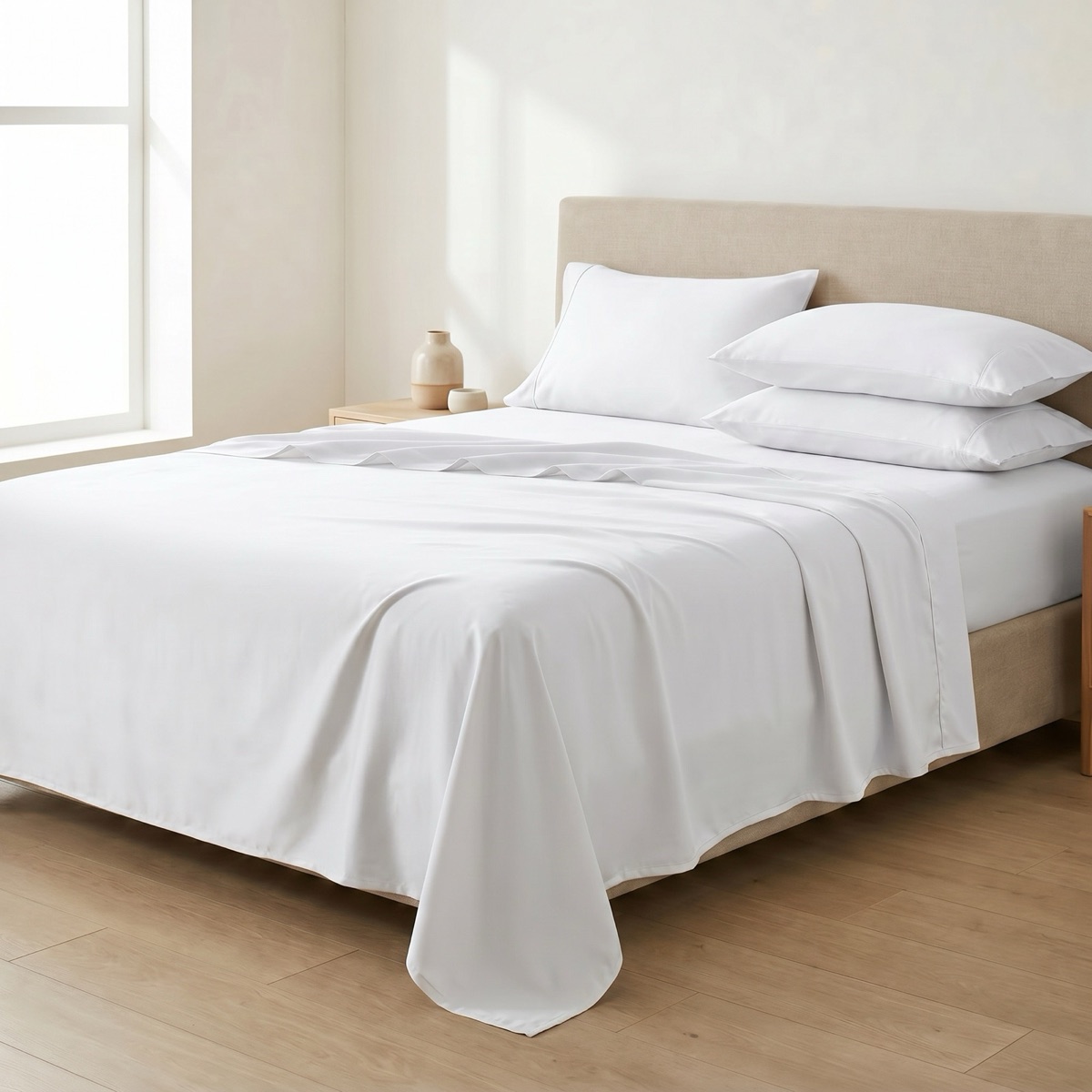
Kemet Cotton Egyptian Sateen Sheet Set
100% extra-long staple Giza cotton from Egypt's Nile Delta, woven into a smooth 600 thread count sateen. Ten colors, all standard sizes.
- 600 thread count sateen weave
- Extra-long staple Giza cotton
- Deep 16-inch pockets
- 30-day money-back guarantee
Sets from $149.95
Shop Kemet Sheets →What You’re Actually Comparing
Before getting into specifics, there’s a terminology problem that needs sorting. When you see “bamboo sheets” on a product listing, you’re almost certainly looking at bamboo viscose or bamboo rayon. These are semi-synthetic fabrics derived from bamboo pulp, not woven bamboo fibers. The distinction matters because the manufacturing process fundamentally changes the material’s properties.
Egyptian cotton, by contrast, is a natural fiber. The cotton is picked, cleaned, spun into yarn, and woven into fabric. The fiber itself is what gives the sheet its characteristics. With bamboo viscose, the original plant structure is completely dissolved and rebuilt.
This isn’t a minor technical detail. It affects durability, environmental impact, and long-term performance. If you’re interested in the fundamentals of Egyptian cotton, our guide on what is Egyptian cotton covers the fibre science in depth.
Fiber Properties and Feel
Egyptian Cotton
Extra-long staple Egyptian cotton fibers measure 36mm or longer. These longer fibers can be spun into finer, stronger yarns with fewer exposed ends, which is why the fabric feels smoother and pills less over time.
The feel depends on the weave. A percale weave produces a crisp, cool sheet. A sateen weave produces something smoother and slightly warmer. Either way, Egyptian cotton develops a distinctive softness through washing. Sheets that feel slightly firm on day one will feel notably better after five or six washes. This is a genuine advantage, not marketing talk.
Pure Parima is a good example of what properly sourced Egyptian cotton feels like at its best.
Bamboo Viscose
Bamboo viscose has a silky, cool-to-the-touch feel right out of the packaging. There’s no break-in period. For many people, this immediate softness is the primary selling point, and it’s legitimate. The fabric does feel quite pleasant initially.
The problem here is longevity of that feel. Bamboo viscose fibers are weaker than cotton fibers, particularly when wet. Over time, the initial silkiness gives way to pilling and thinning. I’ve examined bamboo sheets after 18 months of regular use that looked three years old.
Brands like Cariloha and Cozy Earth produce some of the better bamboo viscose options on the market, but even premium bamboo sheets face these structural limitations.
Breathability and Temperature Regulation
Bamboo sheets are heavily marketed as cooling sheets. There’s some basis for this. Bamboo viscose does wick moisture effectively, and the fabric has a cool initial hand feel. If you tend to sleep hot, that first-touch coolness is noticeable.
But breathability over the course of a night is a different question. Egyptian cotton percale has a more open weave structure that allows air to circulate continuously. Rather than just wicking moisture away, it prevents heat buildup in the first place. For a more detailed look at temperature regulation, our hot sleeper guide breaks this down further.
Egyptian cotton sateen is warmer than percale but still breathes better than bamboo viscose at comparable thread counts. The issue is that bamboo viscose sheets tend to trap heat once your body warms the fabric, despite that initial cool sensation.
The honest answer: bamboo feels cooler when you first get into bed. Egyptian cotton percale keeps you cooler through the night. Which matters more to you depends on whether your heat problems are at the start of the night or the middle.
Durability
This is where the comparison becomes quite lopsided.
Egyptian cotton sheets, properly cared for, last a long time. We’re talking 10 to 15 years for a quality set from a reputable brand. The extra-long staple fibers resist pilling, and the fabric actually improves with washing. Many Egyptian cotton owners report that their sheets feel better at year three than year one.
Bamboo viscose has a structural weakness. The cellulose regeneration process produces fibers that are significantly weaker than natural cotton fibers, especially when wet. This means every wash cycle degrades the fabric slightly. Most bamboo sheets begin showing wear within two to three years. Pilling, thinning at stress points, and colour fading are common complaints.
On a cost-per-year basis, a £200 Egyptian cotton set lasting 12 years costs about £17 per year. A £100 bamboo set lasting 3 years costs about £33 per year. The cheaper option is actually more expensive.
Sustainability: The Real Picture
Bamboo’s sustainability credentials are the most overstated claims in the bedding industry. This is misleading, and I’m not hedging on that assessment.
The bamboo plant itself is genuinely sustainable. It grows fast (up to a metre per day for some species), doesn’t require pesticides, needs relatively little water, and sequesters carbon effectively. These facts are real.
The viscose manufacturing process is not sustainable. It typically involves:
- Sodium hydroxide (caustic soda) to break down the bamboo pulp
- Carbon disulfide to dissolve the cellulose (a toxic, volatile chemical)
- Significant water usage in the processing phase
- Chemical wastewater that requires careful treatment
Some manufacturers use a closed-loop process that recaptures most of the chemicals. This is genuinely better. But the majority of bamboo viscose production, particularly in facilities that supply mass-market brands, does not use closed-loop systems.
Egyptian cotton has its own environmental concerns. Conventional cotton farming uses substantial water and pesticides. But organic Egyptian cotton (certified GOTS) addresses most of these. The processing from raw fiber to fabric is mechanical rather than chemical, which is a meaningful distinction.
Neither material is perfectly green. But bamboo’s marketing presents it as an eco-friendly choice when the manufacturing reality is considerably more complex.
Care and Maintenance
Egyptian cotton is straightforward to care for. Machine wash warm, tumble dry low, and the sheets improve over time. They’re quite forgiving. You can wash them frequently without significant degradation, which matters for hygiene.
Bamboo viscose requires more careful handling. Most manufacturers recommend cold water washing, gentle cycles, and low heat drying. The fibers are more vulnerable to heat and agitation. Fabric softener is generally discouraged because it coats the fibers and reduces moisture-wicking performance.
If you want sheets you don’t have to think about when doing laundry, Egyptian cotton is the more practical choice.
Price Comparison
| Factor | Egyptian Cotton | Bamboo Viscose |
|---|---|---|
| Queen set price range | £120 to £400+ | £60 to £200 |
| Expected lifespan | 10 to 15 years | 2 to 4 years |
| Cost per year | £10 to £35 | £20 to £65 |
| Break-in period | 3 to 5 washes | None |
| Care requirements | Standard | More delicate |
Which Should You Buy?
Choose Egyptian cotton if: you want sheets that last, you prefer a fabric that improves over time, you value breathability through the night, or you’re willing to invest more upfront for a lower long-term cost. Look for CEA-certified Egyptian cotton from brands like Pure Parima.
Choose bamboo viscose if: you specifically want that silky cool-touch feel, you don’t plan to keep sheets for more than a few years, or you prefer a softer initial feel without a break-in period.
The problem with most bamboo-vs-cotton comparisons online is that they treat the two materials as equivalent alternatives with different strengths. They’re not equivalent. Egyptian cotton is a premium natural fiber with verified provenance. Bamboo viscose is a semi-synthetic fabric with a good marketing narrative. Both can make decent sheets, but the performance gap over time is real and measurable.
Get our reviews first on Google
Add Cotton With Love as a preferred source and Google will show you more of our towel and sheet reviews.
Add Cotton With Love as a preferred source on GoogleAdd us as a preferred source on Google
See more of our towel and sheet reviews in your Google results.
Frequently Asked Questions
Are bamboo sheets actually made from bamboo?
Technically yes, but not in the way most people imagine. The vast majority of bamboo sheets are bamboo viscose or bamboo rayon. The bamboo plant is dissolved in chemical solvents (typically sodium hydroxide and carbon disulfide), then extruded into fibers. The final fabric has no structural resemblance to the bamboo plant. The FTC has fined companies for labelling these simply as 'bamboo' without the viscose/rayon qualifier.
Which lasts longer, Egyptian cotton or bamboo sheets?
Egyptian cotton lasts significantly longer. A quality set of Egyptian cotton sheets can last 10 to 15 years with proper care. Bamboo viscose sheets typically show wear, pilling, or thinning within 2 to 4 years. The chemical processing that makes bamboo fibers soft also weakens them structurally.
Are bamboo sheets cooler than Egyptian cotton?
Bamboo viscose does feel cool to the initial touch, which is why it's marketed as a cooling fabric. But Egyptian cotton percale is more breathable over the course of a full night's sleep. Bamboo's moisture-wicking properties are genuine, but the fabric doesn't circulate air as effectively as a well-woven percale cotton sheet.
Are bamboo sheets better for the environment?
It's complicated. Bamboo grows quickly without pesticides, which is a genuine advantage. But the viscose manufacturing process uses harsh chemicals, produces toxic wastewater, and requires significant energy. Egyptian cotton has its own environmental concerns (water usage, pesticides in conventional farming). Neither is a clear environmental winner, despite bamboo's green marketing.
Why are bamboo sheets so much cheaper than Egyptian cotton?
Bamboo is a fast-growing crop that doesn't require the specific growing conditions or hand-harvesting of Egyptian cotton. The viscose process is industrially efficient at scale. Egyptian cotton represents less than 0.5% of global cotton production and requires specific Nile Delta growing conditions. Scarcity and labour costs drive the price difference.
Can I find sheets that combine bamboo and Egyptian cotton?
Some brands sell blends, but this defeats the purpose of both materials. Blending dilutes the long-staple strength of Egyptian cotton and doesn't improve bamboo's durability. You're better off choosing one or the other based on your priorities.