Egyptian Cotton vs Tencel Sheets: What's the Difference?
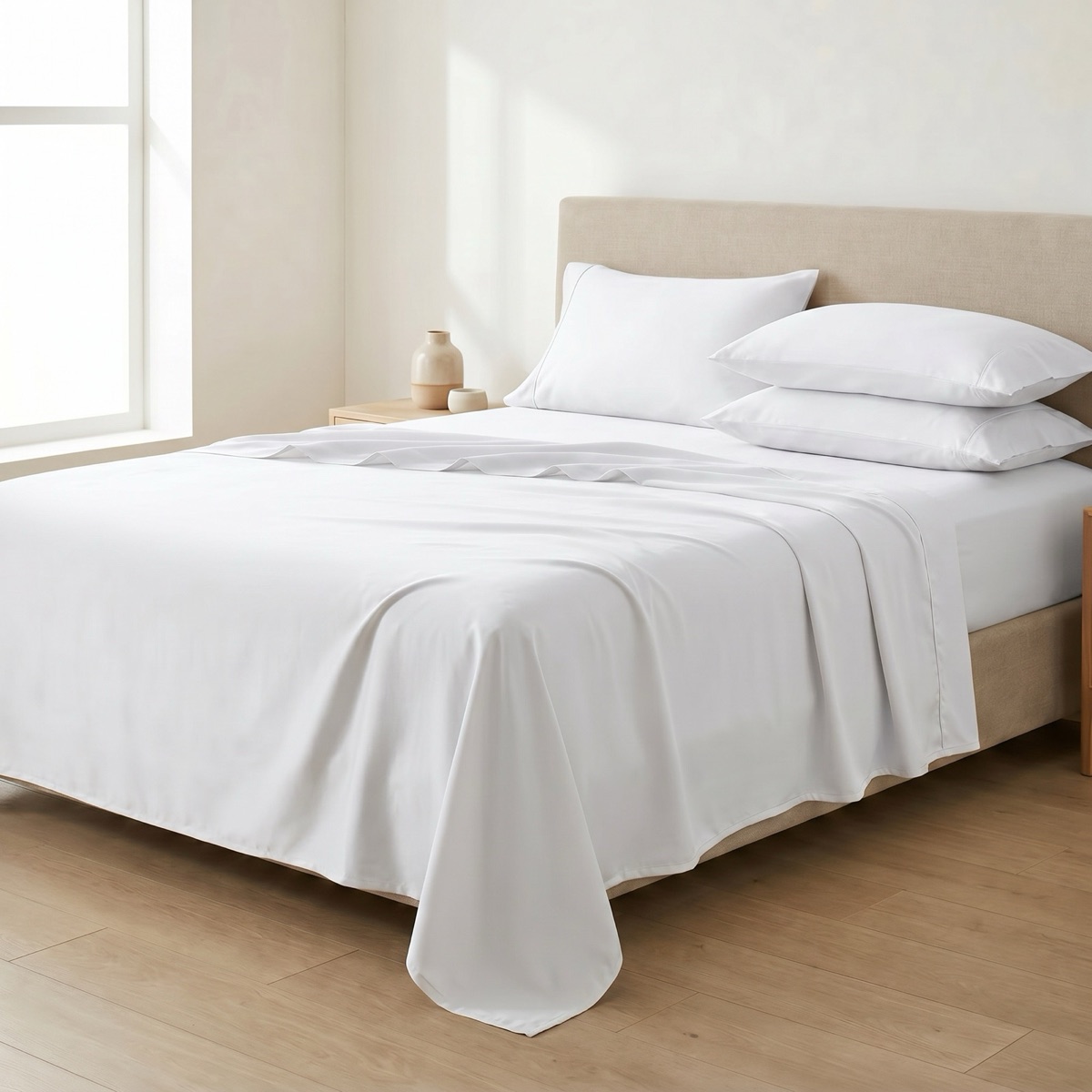
Kemet Cotton Egyptian Sateen Sheet Set
100% extra-long staple Giza cotton from Egypt's Nile Delta, woven into a smooth 600 thread count sateen. Ten colors, all standard sizes.
- 600 thread count sateen weave
- Extra-long staple Giza cotton
- Deep 16-inch pockets
- 30-day money-back guarantee
Sets from $149.95
Shop Kemet Sheets →Understanding What Tencel Actually Is
Tencel is one of the few bedding materials where the sustainability claims aren’t exaggerated. That’s important to establish upfront because so many “eco-friendly” fabric claims collapse under scrutiny. Tencel lyocell is different. But sustainability and performance as a sheet fabric are separate questions, and they need to be evaluated separately.
Tencel is a brand name for lyocell fiber, manufactured by Lenzing AG in Austria. The process starts with wood pulp, typically from eucalyptus trees grown on sustainably managed plantations. That pulp is dissolved in an organic solvent called NMMO (N-Methylmorpholine N-oxide), pushed through spinnerets to form fibers, and then the solvent is recovered and recycled. Lenzing claims a recovery rate above 99%.
This closed-loop process is what distinguishes Tencel from standard viscose or rayon, which use harsher chemicals and generate more waste. If you’ve read our bamboo sheets comparison, you’ll understand why this distinction matters.
Egyptian cotton, by contrast, is a natural fiber that goes through mechanical processing rather than chemical dissolution. The cotton is picked, ginned, combed, spun, and woven. The fiber’s properties come from the plant itself, not from a manufacturing process.
How They Feel
Tencel
Tencel lyocell has a smooth, cool, almost frictionless surface feel. It’s often described as silky, which is fairly accurate. The fabric drapes well and has a slight sheen. Out of the packaging, Tencel feels soft and inviting with no break-in period needed.
The hand feel is quite consistent from brand to brand because the fiber manufacturing is standardised. A Tencel sheet from one company will feel broadly similar to a Tencel sheet from another, assuming similar weave construction.
Egyptian Cotton
Egyptian cotton’s feel varies more depending on weave and thread count. A percale weave is crisp and matte. A sateen weave is smoother and has more sheen, bringing it closer to Tencel’s character. Both improve with washing.
The important distinction is trajectory. Tencel starts soft and stays roughly the same (or gradually degrades). Egyptian cotton starts good and gets better. After six months of washing, an Egyptian cotton sateen sheet will have developed a broken-in softness that Tencel doesn’t match, because the natural fiber responds to mechanical softening in a way that regenerated cellulose doesn’t.
Moisture and Temperature
Tencel’s moisture management is genuinely impressive. The fiber structure absorbs moisture efficiently and releases it quickly. Lenzing’s data shows that Tencel lyocell absorbs 50% more moisture than cotton. In practice, this means Tencel sheets feel dry against your skin even when you’re perspiring.
Egyptian cotton percale manages temperature through breathability rather than moisture absorption. The open weave structure allows air circulation, which prevents heat and moisture from building up. The approach is different. Tencel wicks and evaporates. Cotton ventilates and dissipates.
Both work. For people who sweat heavily at night, Tencel’s moisture-wicking has a slight edge. For general temperature comfort, they’re comparable. The difference in real-world sleeping conditions is smaller than the marketing materials suggest.
Durability: Where the Gap Shows
This is the deciding factor for many buyers, and the comparison is clear.
Egyptian cotton with extra-long staple fibers is one of the most durable sheet fabrics available. Ten to fifteen years of regular use is a reasonable expectation from a quality brand. The fabric resists pilling, maintains its structure, and gets softer without getting weaker. There’s a reason hotels invest in Egyptian cotton despite the higher cost. It survives commercial laundering cycles that would destroy lesser fabrics.
Tencel is a mid-durability fabric. Three to five years is a realistic lifespan for a quality Tencel sheet set. The regenerated cellulose fibers are softer and smoother than natural cotton but structurally weaker. They’re more susceptible to thinning, particularly at friction points like where your body contacts the mattress.
The issue isn’t that Tencel is fragile. It’s that it doesn’t have the structural reserves of extra-long staple cotton. When you factor in that Tencel sheets typically cost £80 to £200, the cost-per-year calculation often favours Egyptian cotton despite its higher upfront price.
Sustainability Compared Honestly
This is where Tencel has a legitimate advantage, and it deserves acknowledgement.
Tencel lyocell:
- Wood pulp from FSC-certified eucalyptus plantations
- Eucalyptus grows fast, requires no irrigation in most climates, and no pesticides
- Closed-loop solvent process with 99%+ chemical recovery
- Lower water footprint than conventional cotton
- Biodegradable fiber
Egyptian cotton:
- Requires significant irrigation (Nile Delta water)
- Conventional farming uses pesticides and fertilisers
- Organic Egyptian cotton (GOTS certified) addresses chemical concerns but not water usage
- Mechanical processing (lower chemical footprint than viscose)
- Longer product lifespan reduces replacement waste
If environmental impact is your primary decision criterion, Tencel has a strong case. But the shorter lifespan means more frequent replacement, which partially offsets the lower per-unit environmental cost. A single Egyptian cotton set lasting 12 years produces less total waste than three Tencel sets over the same period.
Care Requirements
Egyptian cotton is the easier of the two. Machine wash warm or hot, tumble dry on any setting, and the fabric handles it. You can wash Egyptian cotton frequently without worrying about degradation. It’s quite forgiving.
Tencel needs gentler handling. Cold or warm wash, low heat drying, no bleach. The fibers are more sensitive to heat and agitation. This isn’t onerous, but it does require paying attention to your laundry settings. Wrinkles are minimal with Tencel, which is one genuine care advantage it holds over cotton.
Price Comparison
| Factor | Egyptian Cotton | Tencel Lyocell |
|---|---|---|
| Queen set price range | £120 to £400+ | £80 to £200 |
| Expected lifespan | 10 to 15 years | 3 to 5 years |
| Cost per year | £10 to £35 | £20 to £55 |
| Break-in period | 3 to 5 washes | None |
| Environmental impact | Moderate (lower if organic) | Lower per unit |
| Care sensitivity | Low | Moderate |
Which Should You Buy?
Choose Egyptian cotton if: durability is important to you, you want a fabric that improves with age, you prefer not to think about laundry settings, or you’re calculating long-term value rather than upfront cost. Look for CEA-certified cotton from verified brands like Pure Parima.
Choose Tencel if: sustainability is your top priority and you accept the shorter lifespan, you want immediate softness without a break-in period, you sweat heavily at night and want maximum moisture-wicking, or you prefer a silky smooth feel.
The honest assessment is that both are good sheet fabrics with different strengths. Tencel’s environmental story is real, which puts it ahead of bamboo viscose and most synthetics. But Egyptian cotton’s durability advantage means it’s still the better long-term investment for most buyers. The two materials serve different priorities, and neither one is a mistake.
Get our reviews first on Google
Add Cotton With Love as a preferred source and Google will show you more of our towel and sheet reviews.
Add Cotton With Love as a preferred source on GoogleAdd us as a preferred source on Google
See more of our towel and sheet reviews in your Google results.
Frequently Asked Questions
What exactly is Tencel?
Tencel is a brand name owned by the Austrian company Lenzing AG. It refers to lyocell fiber, which is made by dissolving wood pulp (usually eucalyptus) in a solvent and extruding it into fibers. Unlike viscose or rayon, the Tencel lyocell process uses a closed-loop system that recovers and reuses over 99% of the solvent. This makes it genuinely more sustainable than most semi-synthetic fabrics.
Is Tencel softer than Egyptian cotton?
Tencel has a very smooth, almost silky initial feel that many people find softer than cotton out of the package. But Egyptian cotton develops increasing softness through washing and use. After a year, a quality Egyptian cotton set will feel as soft as or softer than Tencel, and the cotton fabric will still be structurally sound while the Tencel may be showing wear.
Do Tencel sheets pill?
Tencel is moderately resistant to pilling, though less so than extra-long staple Egyptian cotton. Pilling tends to appear in Tencel sheets after 1 to 2 years of regular use, particularly in blended fabrics where Tencel is combined with polyester. Pure Tencel lyocell pills less than Tencel blends.
Is Tencel actually eco-friendly?
Tencel lyocell has genuine environmental credentials. The closed-loop solvent process, the use of sustainably sourced wood pulp (FSC certified in many cases), and lower water usage compared to conventional cotton are real advantages. It's one of the few semi-synthetic fabrics where the sustainability claims are backed by verifiable processes.
Which lasts longer, Egyptian cotton or Tencel?
Egyptian cotton lasts significantly longer. A quality Egyptian cotton set can last 10 to 15 years. Tencel sheets typically last 3 to 5 years before noticeable thinning or wear. The regenerated cellulose fibers in Tencel are structurally weaker than natural cotton fibers, which limits the fabric's lifespan.
Can Tencel sheets go in the dryer?
Most Tencel sheets can be tumble dried on low heat, but they're more heat-sensitive than cotton. High heat can cause shrinkage and damage the fibers. Egyptian cotton is more forgiving with dryer settings. If you routinely use medium or high heat, cotton is the safer choice.