Is 1000 Thread Count Worth It? The Truth About High Thread Counts
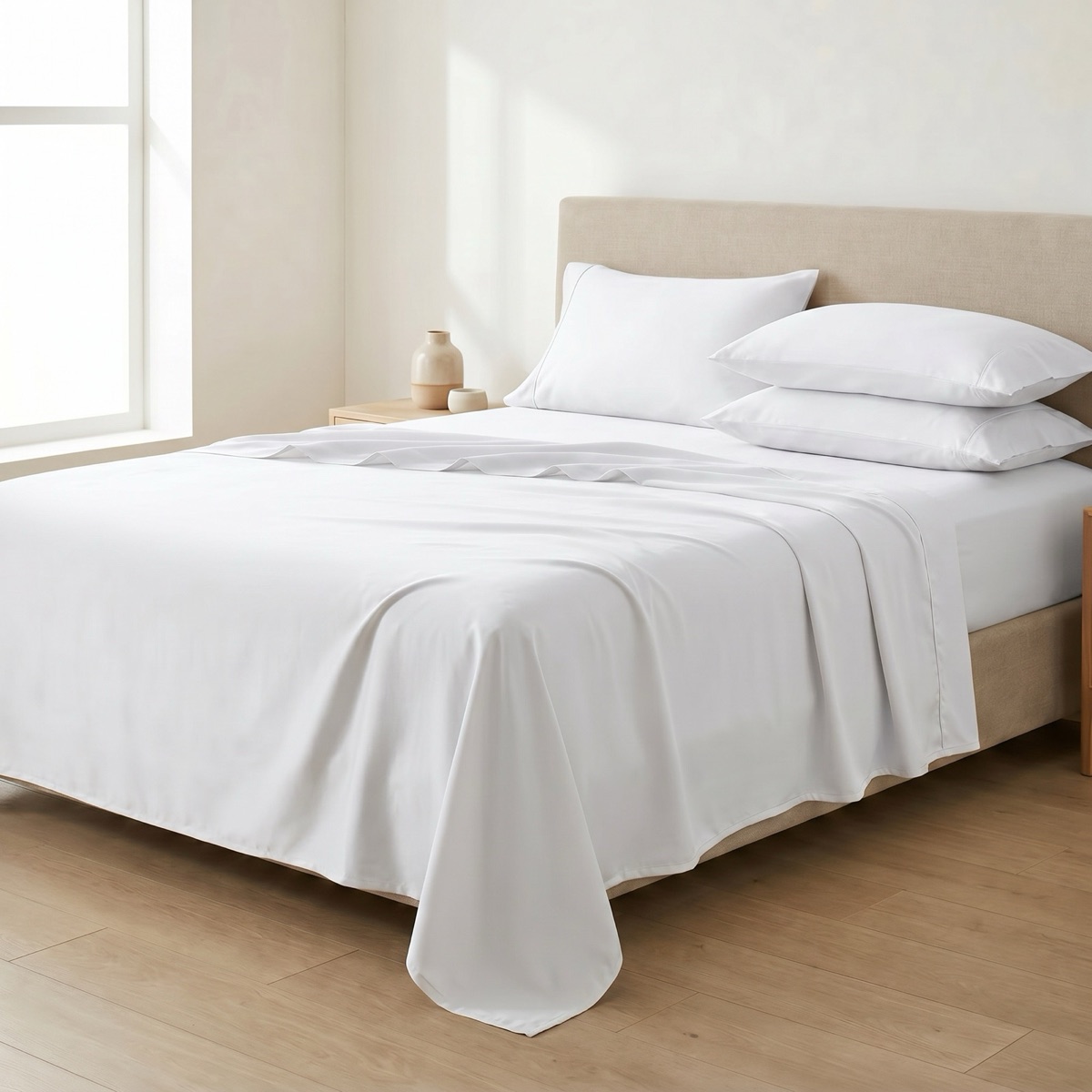
Kemet Cotton Egyptian Sateen Sheet Set
An honest 600 thread count sateen woven from extra-long staple Giza cotton — no inflated multi-ply math, just a count that means what it says.
- 600 thread count sateen weave
- Extra-long staple Giza cotton
- Deep 16-inch pockets
- 30-day money-back guarantee
Sets from $149.95
Shop Kemet Sheets →The Short Answer
1000 thread count sheets are not twice as good as 500 thread count sheets. In most cases, they aren’t better at all. The number is almost always inflated through a counting method that doubles or triples the stated figure without adding any real threads to the fabric.
If you’re shopping for sheets and you see 1000TC on the label, the question isn’t whether those sheets are luxurious. The question is whether the number means what you think it means. It usually doesn’t.
How Thread Count Inflation Works
Thread count measures the number of threads woven into one square inch of fabric, counting both horizontal and vertical threads. A fabric with 200 threads running each direction has a thread count of 400. Simple enough.
The problem is with multi-ply yarn.
Cotton yarn can be made from a single strand (single-ply) or from multiple strands twisted together (two-ply, three-ply). When a manufacturer uses two-ply yarn, they have a choice: count each yarn as one thread, or count each individual strand within that yarn as a separate thread.
The FTC allows both methods. Most brands selling high thread count sheets choose the method that produces the bigger number.
Here’s what that looks like in practice:
- 500 actual yarns per square inch, single-ply = 500TC
- 500 actual yarns per square inch, two-ply = 1000TC
- 400 actual yarns per square inch, three-ply = 1200TC
The fabric in that 1000TC example has the same number of physical yarns as the 500TC fabric. It isn’t denser. It isn’t smoother. The number is just bigger.
This is misleading. I won’t soften that statement. The practice exists because there’s no regulation requiring brands to disclose ply count alongside thread count, and consumers have been conditioned to believe bigger numbers equal better sheets.
Why Higher Thread Count Can Actually Be Worse
There’s a physical limit to how many yarns you can pack into a square inch of fabric. For Egyptian cotton, which can be spun into exceptionally fine yarn, the practical ceiling for genuine single-ply thread count is roughly 600 to 700. For standard cotton, it’s lower.
Beyond that ceiling, two things happen.
The fabric loses breathability. Dense weaves trap heat. One of cotton’s primary advantages is that it allows air to circulate, keeping you cool in warm weather and comfortable year-round. A genuinely dense 1000TC fabric (if such a thing existed in single-ply) would sleep quite warm. The multi-ply versions achieve the number differently, but the thicker yarns still reduce airflow compared to fine single-ply alternatives.
The fabric becomes heavier without becoming softer. Softness in cotton sheets comes primarily from fiber quality and finishing processes, not from cramming more threads into each square inch. A well-finished 400TC Egyptian cotton sateen will feel silkier than a 1000TC sheet made from shorter-staple cotton, regardless of what the packaging claims.
The Sweet Spot: 300 to 600TC Single-Ply
If thread count inflation has you questioning every label, here’s the straightforward guidance.
For percale weave (crisp, cool, matte finish), look for 300 to 400TC in single-ply. This range produces a light, breathable fabric with a satisfying crispness that improves with washing. Pure Parima offers percale options in this range using CEA-certified Egyptian cotton.
For sateen weave (smooth, slightly lustrous, warmer), look for 400 to 600TC in single-ply. Sateen’s weave structure naturally uses more threads than percale, so higher counts make sense here. This is where Egyptian cotton really shows its quality, as the long fibers create a consistent, pill-resistant surface.
Above 600TC in single-ply, you hit diminishing returns. The sheets may feel marginally denser, but they won’t feel meaningfully better. You’re paying a premium for a number that has little practical impact on your sleep.
For a full breakdown of how thread count interacts with weave types, see our thread count guide.
How to Tell If Thread Count Is Inflated
Brands that use multi-ply counting rarely volunteer that information. But there are reliable indicators.
Price is the first signal. Genuine high thread count single-ply Egyptian cotton is expensive to produce. A queen sheet set at 800TC or above in true single-ply will typically cost $250 or more. If you’re seeing 1000TC Egyptian cotton for $60 on Amazon, the thread count is inflated, the cotton origin is questionable, or both.
Check for ply disclosure. Some brands, particularly those confident in their product, will state “single-ply” on the packaging or product listing. If a brand advertises 1000TC but doesn’t mention ply count, assume multi-ply.
Look for certifications. The Cotton Egypt Association’s Pyramid Mark verifies that sheets contain genuine Egyptian cotton, though it doesn’t directly address thread count claims. Brands like California Design Den that carry CEA certification tend to be more transparent about their specifications because they’ve already submitted to third-party verification.
Feel the weight. This only works in person, but a 1000TC multi-ply sheet will feel noticeably heavier than a 400TC single-ply sheet of the same size. That weight comes from the thicker yarn, not from better quality.
What the Industry Won’t Tell You
The issue is that thread count has become a proxy for quality in consumer marketing, and it was never designed for that purpose. It’s a density measurement. Nothing more.
Here’s what actually determines how sheets feel and perform:
- Fiber quality. Egyptian cotton’s extra-long staple fibers (35mm or longer) can be spun into finer, stronger yarn than standard cotton. This is the single biggest factor in sheet quality.
- Spinning method. Combed and ring-spun yarn removes short fibers, producing smoother, more consistent thread.
- Weave type. Percale and sateen produce fundamentally different textures at identical thread counts.
- Finishing. Mercerization, calendering, and enzyme washes all affect how sheets feel on day one and how they age.
Thread count sits somewhere below all four of these factors in terms of actual impact. A 300TC sheet made from genuine Egyptian cotton, ring-spun, and well-finished will outperform a 1000TC sheet made from short-staple cotton every single time.
The Bottom Line
Save your money. A well-made 400 to 600TC single-ply sheet set will sleep better, breathe better, and last longer than most 1000TC alternatives. The brands that rely on inflated thread counts are selling you a number, not a better product.
If you’re serious about quality, focus on cotton origin (look for CEA certification), ask about ply count, and ignore any thread count above 600 unless the brand can explain exactly how they achieved it. For more on spotting misleading claims, see our guide on fake Egyptian cotton sheets.
The truth is quite simple: the best sheets don’t need a four-digit thread count to prove themselves.
Related Reading
Get our reviews first on Google
Add Cotton With Love as a preferred source and Google will show you more of our towel and sheet reviews.
Add Cotton With Love as a preferred source on GoogleAdd us as a preferred source on Google
See more of our towel and sheet reviews in your Google results.
Frequently Asked Questions
Is 1000 thread count good for sheets?
In most cases, no. A 1000 thread count almost always means the manufacturer is using multi-ply yarn and counting each ply as a separate thread. A two-ply 1000TC sheet has the same number of actual yarns as a 500TC single-ply sheet. You're paying for a bigger number, not a better fabric.
What thread count is actually the best?
For single-ply sheets, 300 to 600 thread count is the sweet spot. Within this range you get excellent softness, breathability, and durability. Egyptian cotton performs particularly well at 400 to 600TC because its extra-long staple fibers can be spun into very fine yarn.
Why do brands sell 1000 thread count sheets?
Because consumers have been trained to believe higher numbers mean better quality. The FTC allows multi-ply counting, so a brand can legally double or triple the stated thread count without adding any real threads to the fabric. It's technically accurate but practically misleading.
Can you actually feel the difference between 500TC and 1000TC?
If both are made from the same cotton and weave type, you're unlikely to feel a meaningful difference. The 1000TC version may actually feel heavier and less breathable because the multi-ply yarns create a denser, less airy fabric. Many people prefer the lighter hand of a genuine 400 to 600TC single-ply sheet.
Are there any legitimate 1000 thread count sheets?
Genuine 1000TC single-ply sheets are extraordinarily rare and would cost several hundred pounds for a queen set. They exist, but they represent a tiny fraction of the market. If a 1000TC sheet set costs under $150, it is almost certainly using multi-ply counting to reach that number.
Does thread count matter more than cotton type?
Cotton type matters more. A 400TC sheet made from genuine Egyptian cotton will outperform a 1000TC sheet made from standard upland cotton in softness, durability, and feel. The fiber quality determines the ceiling. Thread count is just one factor within that range.