Best Sheets for Sensitive Skin: What Actually Helps
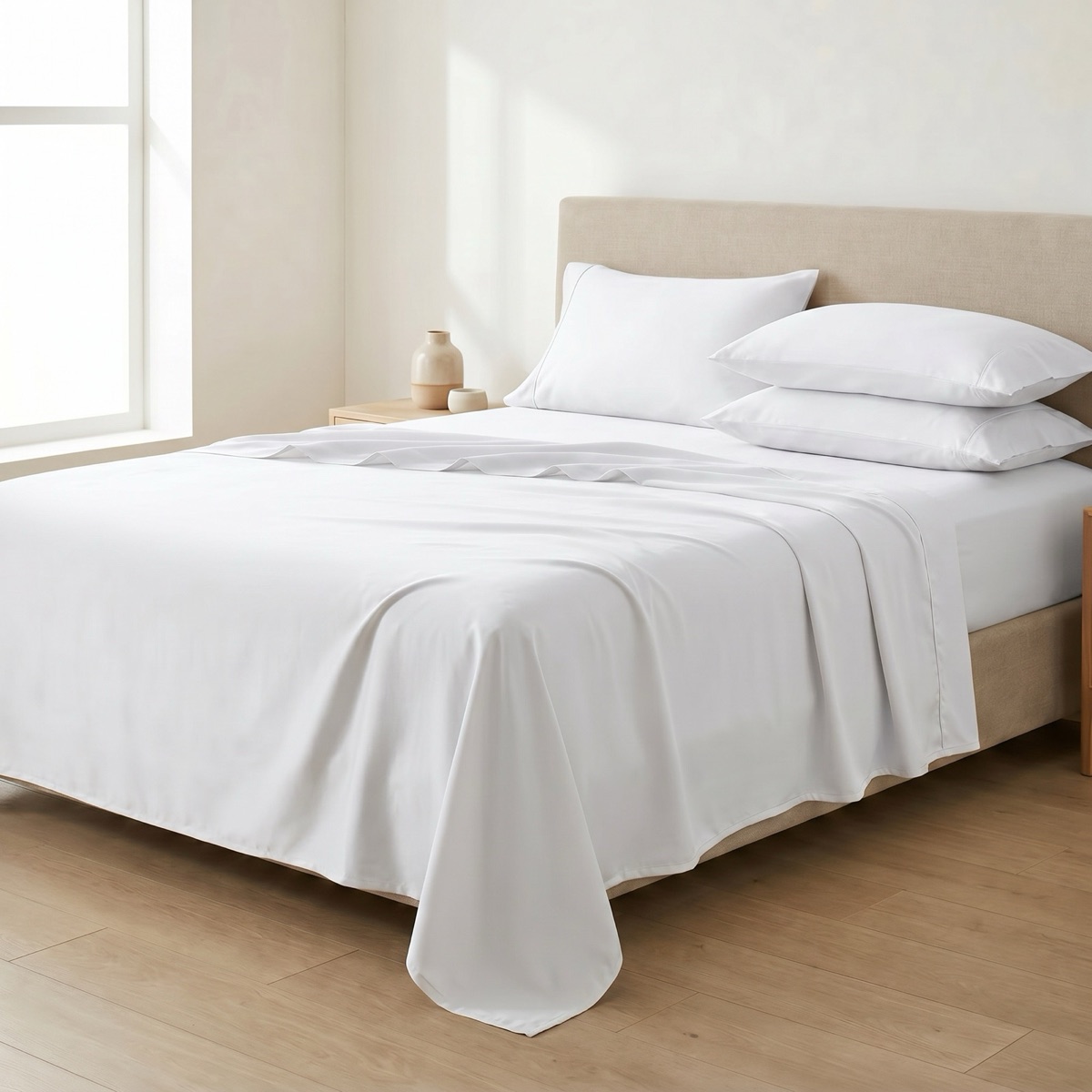
Kemet Cotton Egyptian Sateen Sheet Set
100% extra-long staple Giza cotton from Egypt's Nile Delta, woven into a smooth 600 thread count sateen. Ten colors, all standard sizes.
- 600 thread count sateen weave
- Extra-long staple Giza cotton
- Deep 16-inch pockets
- 30-day money-back guarantee
Sets from $149.95
Shop Kemet Sheets →Your Sheets Might Be Making Things Worse
If you’ve ever woken up with itchy arms, red patches on your cheeks, or that prickly feeling across your chest, your sheets could be part of the problem. I know that sounds dramatic. But after dealing with my daughter’s eczema flare-ups for two years (and systematically swapping out every product that touched her skin), I can tell you that bedding matters more than most people realize.
You spend roughly eight hours a night with your face and body pressed against fabric. If that fabric contains chemical residues, irritating textures, or traps heat and moisture against already-reactive skin, it’s going to show up. Sometimes as obvious redness, sometimes as that vague itchiness you can’t quite explain.
The good news? Switching to the right sheets can make a noticeable difference within a week or two. Here’s what actually matters.
Why Some Sheets Irritate Sensitive Skin
There are three main culprits, and they’re not always obvious.
Chemical Residues
New sheets go through a lot of processing before they reach your bed. Fabrics are treated with formaldehyde-based resins (for wrinkle resistance), optical brighteners (to make whites look extra white), and various dyes and finishing chemicals. Most people’s skin handles these trace amounts without issue. But if your skin is reactive, these residues can trigger contact dermatitis, itching, or redness.
This is especially common with cheaper sheets that skip the extra rinsing steps at the factory. It’s also why washing new sheets before first use isn’t just nice to do, it’s essential.
Fiber Roughness and Texture
Not all fibers feel the same against skin. Short-staple cotton (the kind in most budget sheets) has tiny fiber ends that poke out of the fabric surface. You can’t see them, but sensitive skin can absolutely feel them. Polyester and microfiber can create friction and static, which irritates reactive skin even further.
Long-staple and extra-long-staple cotton (like Egyptian cotton or Supima) produce smoother yarn with fewer protruding fiber ends. The difference is subtle if your skin isn’t sensitive, but really noticeable if it is.
Heat and Moisture Trapping
Fabrics that don’t breathe well create a warm, damp environment against your skin. That’s a recipe for irritation, especially if you’re prone to eczema or heat rash. Synthetic sheets are the worst offenders here because they don’t absorb moisture. It just sits on the surface, keeping your skin damp.
What to Look For: Certifications That Actually Matter
OEKO-TEX Standard 100
This is the certification I look for first. OEKO-TEX Standard 100 means the fabric has been independently tested for over 100 harmful substances, including formaldehyde, heavy metals, pesticide residues, and allergenic dyes. It’s not a marketing badge. It’s actual lab testing.
Brands with OEKO-TEX certified sheets include Pure Parima and California Design Den. Not every brand has it, and it’s a genuine differentiator for sensitive-skin shoppers.
GOTS (Global Organic Textile Standard)
If your concern is chemical exposure specifically, GOTS-certified organic cotton takes things a step further. It covers the entire supply chain, from farming (no synthetic pesticides) through manufacturing (restricted chemical processing). It’s the strictest standard out there for organic textiles.
What About “Hypoallergenic” Labels?
Here’s the thing. “Hypoallergenic” isn’t a regulated term. Any brand can put it on their packaging without meeting any specific standard. It’s not meaningless (it usually signals the brand is at least thinking about skin sensitivity), but it doesn’t guarantee anything. Look for actual certifications instead.
Best Fabrics for Sensitive Skin
1. Egyptian Cotton Percale
This is my top recommendation for most people with sensitive skin. Egyptian cotton’s extra-long staple fibers create an exceptionally smooth surface with minimal fiber ends to irritate skin. In a percale weave, the fabric is crisp, breathable, and cool against skin.
Percale also gets softer with every wash without needing fabric softener, which matters when you’re trying to avoid chemical irritants. After about five washes, good Egyptian cotton percale feels like it’s been in your life forever. For more on what makes Egyptian cotton different, see our guide on what Egyptian cotton actually is.
2. Organic Cotton
Organic cotton grown without synthetic pesticides and processed without harsh chemicals is about as gentle as fabric gets. The downside is that not all organic cotton is long-staple, so you might sacrifice some of that silky-smooth feel. Look for organic cotton with a thread count between 300 and 400 for the best balance of softness and breathability.
3. Tencel (Lyocell)
Tencel is made from wood pulp (usually eucalyptus) using a closed-loop solvent process. It’s exceptionally smooth, naturally moisture-wicking, and gentle on skin. It’s a great choice if you want something silkier than percale without the chemical concerns of bamboo viscose.
The fiber surface is smoother than cotton at a microscopic level, which means less friction against sensitive skin. It’s also naturally temperature-regulating, so it works well if heat is part of your irritation trigger.
4. Linen (With a Caveat)
Linen is wonderfully breathable and naturally antimicrobial, which can help with skin issues related to heat or bacteria. But here’s my honest take: new linen is textured and slightly rough. If your sensitivity is about texture and friction, linen might not feel great until it’s been washed many times. It gets beautifully soft eventually (I’m talking 15 to 20 washes), but the break-in period is real.
Fabrics to Avoid
Polyester and Microfiber
Polyester traps heat, doesn’t absorb moisture, and can create friction against skin. Microfiber (which is just very fine polyester) often feels smooth initially, but it’s not breathable. For sensitive-skin sleepers, the heat and moisture buildup is usually the bigger problem than the fiber itself.
Heavily Dyed or Printed Fabrics
Deep, saturated colors and elaborate prints require more chemical processing. If your skin reacts to chemical residues, stick with white, ivory, or light solid colors. It’s not that dark colors are always problematic, but they carry more risk.
Wrinkle-Free or No-Iron Sheets
That wrinkle-free finish? It’s usually formaldehyde-based. If you have chemical sensitivities, skip these entirely. Yes, you’ll need to embrace some wrinkles (or iron if you’re that kind of person). Your skin will thank you.
Washing Matters as Much as the Sheets Themselves
Getting the right sheets is only half the equation. How you wash them matters just as much.
Always wash before first use. This removes manufacturing residues, excess dye, and sizing chemicals. Use warm water and a gentle, fragrance-free detergent. For more detail on caring for your sheets, check out our Egyptian cotton care guide.
Skip the fabric softener. I know I keep saying this, but it bears repeating. Fabric softener coats fibers with a chemical layer that builds up over time, reducing breathability and leaving residue against your skin. Use half a cup of white vinegar in the rinse cycle instead. It softens without leaving anything behind.
Use fragrance-free detergent. Fragrance is one of the most common skin irritants in laundry products. It doesn’t matter how nice your sheets are if you’re washing them in heavily scented detergent.
Wash frequently. Dust mites, dead skin cells, and sweat accumulate in sheets quickly. If you have allergies or eczema, washing every week in hot water (if the sheets can handle it) helps keep irritant levels down.
Brands Worth Looking At
For sensitive-skin shoppers specifically, I’d focus on brands that carry OEKO-TEX or GOTS certifications and use long-staple cotton.
Pure Parima is OEKO-TEX Standard 100 certified and uses Egyptian cotton in both percale and sateen weaves. Their percale is particularly good for sensitive skin because it’s lightweight, breathable, and gets genuinely soft after a few washes.
California Design Den is another OEKO-TEX certified option at a more accessible price point. The cotton quality isn’t quite at the same level as Pure Parima, but for the price, it’s a solid choice if chemical safety is your primary concern.
Quince offers organic cotton options at reasonable prices. Their direct-to-consumer model keeps costs lower than most organic brands.
The Bottom Line
Sensitive skin and good sleep aren’t mutually exclusive. The combination that works for most people is straightforward: certified (OEKO-TEX or GOTS) long-staple cotton in a percale weave, washed with fragrance-free detergent, no fabric softener, in light colors.
It’s not the most exciting recommendation, and it won’t make great marketing copy. But it works. My daughter’s eczema flare-ups dropped dramatically once we switched her sheets, and honestly, that’s the only data point I needed.
If you’re still figuring out what’s triggering your skin issues, start with the sheets. They’re one of the easiest things to control, and you’ll know within a couple of weeks if they’re making a difference.
Get our reviews first on Google
Add Cotton With Love as a preferred source and Google will show you more of our towel and sheet reviews.
Add Cotton With Love as a preferred source on GoogleAdd us as a preferred source on Google
See more of our towel and sheet reviews in your Google results.
Frequently Asked Questions
What type of sheets are best for sensitive skin?
Natural fiber sheets like Egyptian cotton percale, organic cotton, or Tencel are best for sensitive skin. They're breathable, moisture-wicking, and less likely to contain chemical irritants. Look for OEKO-TEX Standard 100 certification, which means the fabric has been tested for over 100 harmful substances.
Can sheets cause skin irritation?
Yes. Sheets can irritate skin through chemical residues from manufacturing (formaldehyde, harsh dyes, optical brighteners), rough fiber texture (common with low-quality synthetics), or by trapping heat and moisture against your skin. People with eczema, psoriasis, or contact dermatitis are especially vulnerable.
Are polyester sheets bad for sensitive skin?
Polyester isn't inherently toxic, but it's not great for sensitive skin. It doesn't breathe well, traps moisture against your skin, and can create friction that irritates already-reactive skin. Microfiber (which is polyester) is particularly problematic because it can feel staticky and hot.
What does OEKO-TEX certification mean for sheets?
OEKO-TEX Standard 100 means the fabric has been independently tested for harmful substances including formaldehyde, heavy metals, pesticides, and certain dyes. It's one of the most reliable certifications for people with chemical sensitivities. Not all brands have it, so it's worth checking before you buy.
Should I use fabric softener on sheets if I have sensitive skin?
No. Fabric softener coats fibers with a waxy chemical layer that can trigger reactions in sensitive skin. It also reduces the fabric's breathability and absorbency. Use white vinegar in the rinse cycle instead. It softens naturally without leaving residue.
Are bamboo sheets good for sensitive skin?
Bamboo viscose can be soft and smooth, but it's heavily processed using chemical solvents. If your sensitivity is to chemicals rather than texture, bamboo might not be ideal. Tencel (lyocell) is a better option in this category because it uses a closed-loop process that recovers most of the solvents.