Boll & Branch Sheets Review (2026): Are They Really Worth the Price?
Quick Verdict
Boll & Branch sheets are exactly what the brand says they are, and that is both the compliment and the critique.
The organic claims check out. GOTS certification is real, the Fair Trade status is real, and the supply chain is disclosed with more precision than almost any competitor. In eight years of checking textile paperwork for a living, I saw plenty of brands whose labels fell apart under scrutiny. Boll & Branch is not one of them.
But here is what the marketing gets you to skip past: this is long-staple organic cotton from India, not extra-long staple Egyptian cotton. At $279 to $299 for a queen Signature Hemmed set at full retail, you are paying for the certification stack and the brand, not for the finest fiber money can buy. The hand-feel is genuinely good. It is not the best you can get at this price, and it is not close to the best you can get below it.
If verified organic and Fair Trade sourcing are what you value, buy with confidence. If pure luxury feel per dollar is the goal, there are better answers, and I name them below.
What Boll & Branch Actually Sells in Sheets
Boll & Branch launched in 2014 in Summit, New Jersey, with a specific goal: become the first bedding brand with Fair Trade Certified status. It did, and the sheet range has grown considerably since. Here is the current lineup, in the order most buyers should care about it.
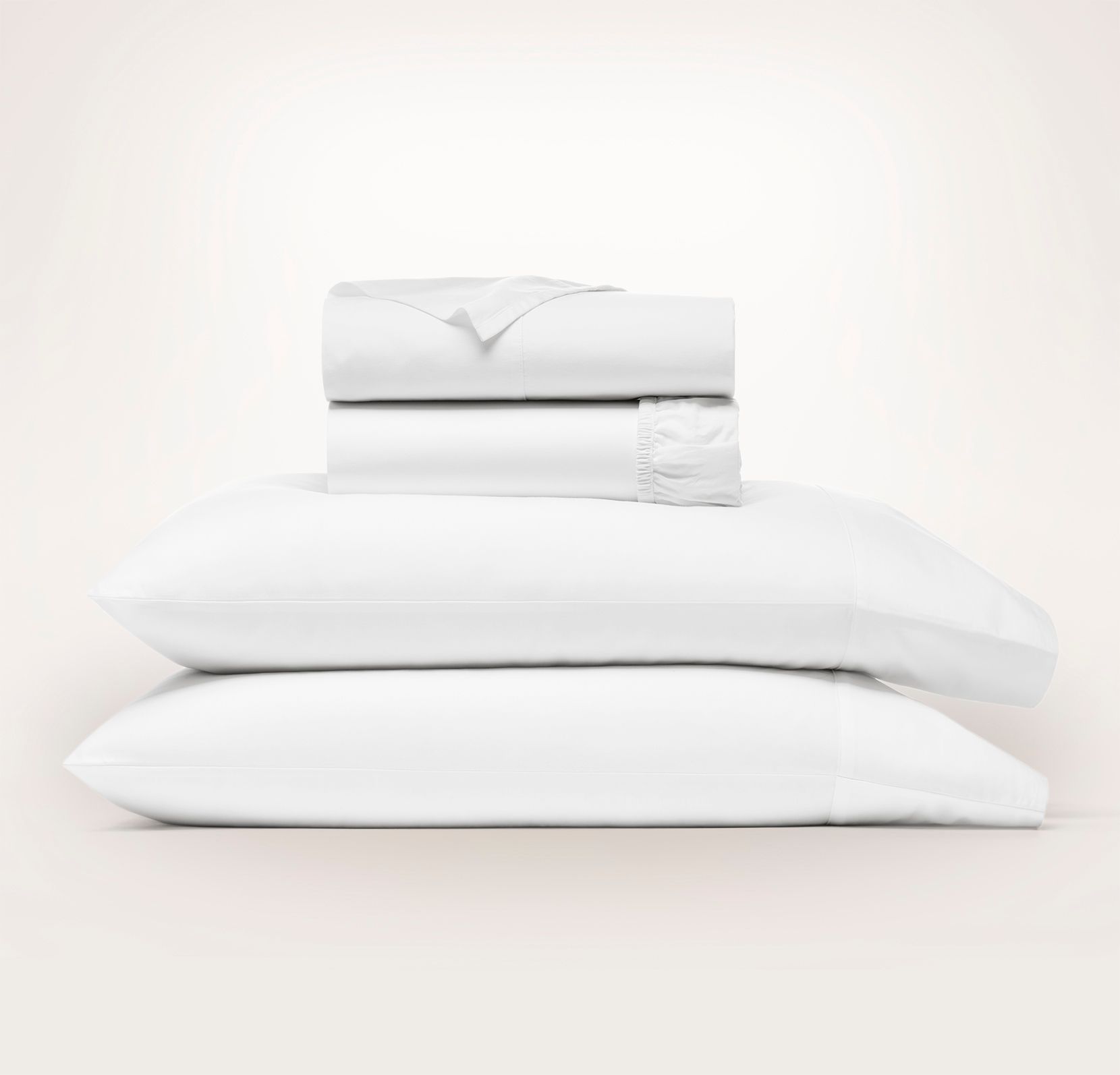
Signature Hemmed Sheet Set. The flagship, and what most people mean when they say “Boll & Branch sheets.” A 300 thread count single-ply sateen in organic long-staple cotton, with a 4-over-1 weave that produces the smooth, slightly luminous finish sateen fans want. Queen sets run $279 to $299 at full retail, with kings around $299 and up. Fitted sheets have a 17-inch deep pocket.
Percale Hemmed Sheet Set. The same organic cotton in a crisp, matte, one-over-one-under weave. Cooler and more breathable than the Signature sateen, typically $20 to $30 less per set. If you run hot at night, start here rather than with the flagship.
Vintage Washed and Embellished variants. Both the Signature and Percale fabrics come in garment-washed versions (a softer, relaxed, lived-in finish) and embellished versions with decorative hemming. Same fabric underneath, cosmetic differences on top.
Reserve Sheet Set. The premium tier, with a silkier, denser finish and pricing that climbs well past the core lines. My view: if you are willing to spend Reserve money, you have left the category where organic certification is the deciding factor, and Egyptian cotton alternatives get very hard to argue against.
Linen, Flannel, Cooling Percale, and Summit Supima. Seasonal and specialty lines. The flannel is made in Portugal rather than India, and the Summit line uses American Supima rather than the brand’s usual Indian organic cotton.
For this review I am focused on the Signature Hemmed and Percale Hemmed sets, because that is what the overwhelming majority of buyers purchase and what the brand’s reputation rests on.
An Honest 300 Thread Count (Yes, That Is a Compliment)
The single most trustworthy thing on a Boll & Branch product page is the number most shoppers hold against it: 300 thread count.
If you have read our Egyptian cotton sheets buying guide, you know the thread count game. Brands twist multiple thin plies into a single yarn, count each ply separately, and print “1,000 thread count” on a sheet that is materially worse than an honest 300. The result feels heavy and dense out of the package and degrades quickly.
Boll & Branch does not play that game. The Signature Hemmed set is a true 300 thread count, single-ply construction, which is squarely in the quality range for sateen. Single-ply means each yarn is one continuous strand of long-staple fiber, which is only possible when the fiber is decent to begin with. Short, cheap cotton cannot be spun into strong single-ply yarn. So the honest number is itself a quality signal, the same way zero-twist construction is in towels.
The weave is a 4-over-1 sateen: each horizontal thread floats over four vertical threads before tucking under one. More thread surface on top of the fabric means a smoother, subtly lustrous face, a heavier drape, and more warmth. It also means slightly more snag exposure than percale, which is just the physics of the weave, not a Boll & Branch flaw. If you want the full breakdown of how these two weaves behave differently, our percale vs sateen guide covers it properly.
The Percale Hemmed line is the same cotton in the tighter one-over-one weave. Crisper hand, matte finish, better airflow. Buyers consistently describe both lines as softening noticeably over the first months of washing, which matches how quality long-staple cotton behaves.
The Verification Check: Do the Organic Claims Hold Up?
This is the part of the review I care most about, because it is where most premium bedding brands quietly fail. I spent eight years checking what factories actually shipped against what the paperwork promised, and the gap between label and reality in textiles is wider than most shoppers would believe.
So let me be precise about what Boll & Branch claims and what stands behind each claim.
GOTS (Global Organic Textile Standard). This is the most rigorous organic textile certification that exists. It is not a self-declared label. GOTS requires annual third-party audits at every processing stage, chain-of-custody documentation from ginning through finishing, and restrictions on the dyes and chemicals used in production. A GOTS-certified sheet is organic from field to finished hem, verified by people whose job is to catch the gap between claim and shipment. Boll & Branch’s GOTS status is genuine.
Fair Trade Certified. Boll & Branch was the first bedding brand to earn Fair Trade certification from Fair Trade USA, and manufacturing runs through certified factories in India, primarily around Kolkata. Fair Trade is independently audited against wage, safety, and working condition standards. Again: real, checkable, not marketing.
OEKO-TEX Standard 100. The finished product is tested for a long list of harmful substances. This certification is common at the premium tier, but it is still third-party verification and Boll & Branch holds it.
Disclosed sourcing. The cotton comes from CHETNA Organic, a cooperative of roughly 15,000 smallholder farmers in Odisha, India. Naming your farming cooperative is the supply chain equivalent of showing your work. Most “luxury cotton” brands will not tell you the country their fiber comes from, let alone the growers.
My verdict as a former auditor: this is one of the most verifiable supply chains in consumer bedding. Every material claim Boll & Branch makes about ethics and organic status is backed by an independent, audited standard. Our full cotton certifications guide explains what each of these standards does and does not cover.
Which brings us to what the certifications do not cover.
The Catch: Long-Staple Is Not Extra-Long Staple
GOTS tells you how the cotton was grown and processed. It tells you nothing about how fine the fiber is. Those are separate questions, and Boll & Branch’s marketing benefits enormously from shoppers conflating them.
Here is the fiber reality. Cotton quality is driven primarily by staple length, the length of the individual fiber. Longer fibers spin into finer, stronger, smoother yarn with fewer exposed ends, which is what your skin reads as “luxurious.”
- Upland cotton (most of the world’s supply): roughly 25 to 28mm staple. Budget sheets.
- Long-staple cotton (what Boll & Branch uses): roughly 28 to 32mm. Genuinely good. A clear step up from commodity cotton.
- Extra-long staple (ELS) cotton (Egyptian Giza varieties, Supima, Sea Island): about 35mm and up. The ceiling of the category. Finer yarn, higher luster, a smoothness that long-staple physically cannot reach.
Boll & Branch sheets sit in the middle tier. That is not an insult. It is a materials fact, and the brand itself never claims otherwise, which I respect. But it means the hand-feel ceiling of a Boll & Branch sheet is lower than an ELS Egyptian cotton sheet at the same weave and comparable construction. You can feel it most in sateen, where fiber fineness is what separates “smooth” from “liquid.”
So the honest framing of the $279 to $299 queen price is this: you are paying a premium for the certification stack, the Fair Trade ethics, and the brand. You are not paying for top-tier fiber. Whether that trade is worth it depends entirely on which of those things you personally value. For buyers whose priority is the feel of the sheet, the same money, or less, buys measurably better cotton. Our best Egyptian cotton sheets ranking covers the verified options.
Kemet Cotton Egyptian Sateen Sheet Set
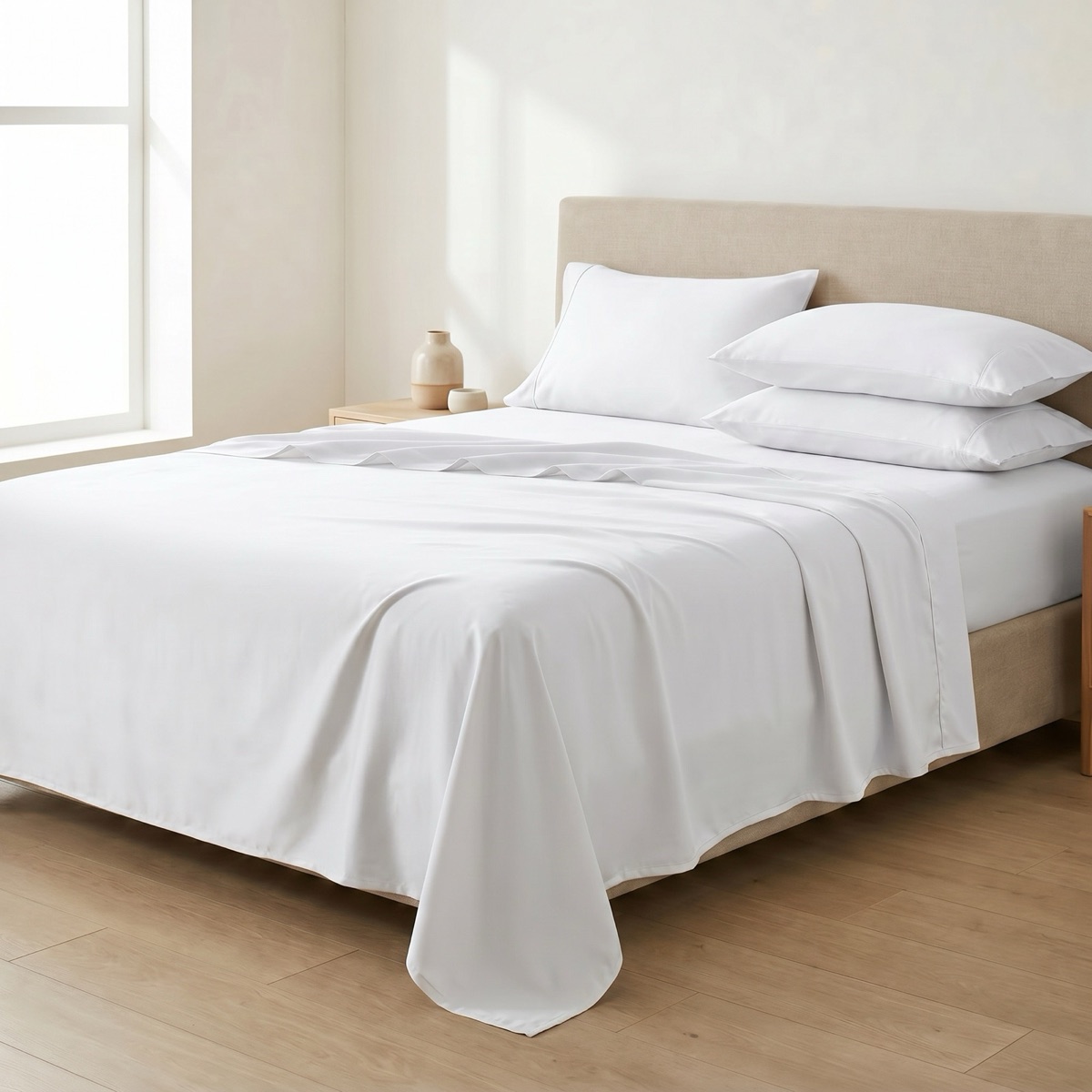
If hand-feel is what you are actually paying for, this is the stronger buy: 600 thread count Egyptian sateen spun from extra-long staple Giza cotton, at roughly half the price of a Boll & Branch queen set.
- 600 thread count sateen weave
- Extra-long staple Giza cotton
- Deep 16-inch pockets
- 30-day money-back guarantee
Sets from $149.95
Shop Kemet Sheets →Price Breakdown: What $279 Buys You Elsewhere
Put the Signature Hemmed queen set next to its real competition and the positioning gets clear fast.
| Brand & Set | Queen Price | Cotton Type | Certifications | Weave |
|---|---|---|---|---|
| Boll & Branch Signature Hemmed | $279 to $299 | Organic long-staple (India) | GOTS, Fair Trade, OEKO-TEX | 300TC sateen |
| Kemet Cotton Egyptian Sateen | From $149.95 | Extra-long staple Giza (Egypt) | Named Giza sourcing, no Pyramid Mark yet | 600TC sateen |
| Pure Parima | $169 to $249 | Egyptian Giza (Egypt) | Pyramid Mark, OEKO-TEX | 400TC sateen |
| Coyuchi | $250 to $350 | Organic long-staple (India) | GOTS, Fair Trade, B-Corp, OEKO-TEX | Varies by collection |
| Quince Organic Percale | Around $100 | Organic long-staple | GOTS, OEKO-TEX | Percale |
Three observations from that table.
Within the organic category, Boll & Branch is competitive but not dominant. Coyuchi matches every certification and adds B-Corp status with a 30-year organic track record, at overlapping prices. Quince delivers the same core GOTS credential for roughly a third of the money, with a simpler product and thinner ethics story. Boll & Branch’s edge is the Fair Trade first-mover history and the more polished product experience.
Against Egyptian cotton, the value math turns hard against Boll & Branch. Pure Parima sells Pyramid Mark certified Egyptian sateen for less than a Signature Hemmed set. Kemet Cotton sells a 600 thread count extra-long staple Giza sateen set from $149.95, roughly half the Boll & Branch price, with a 30-day money-back guarantee. Neither of those is organic certified. Both are finer fiber.
You are choosing a verification framework, not a quality ranking. GOTS verifies farming and chemistry. The Pyramid Mark and named Giza sourcing verify fiber origin. They answer different questions, and no brand in this table answers both. Decide which question matters to you before you spend $279 answering the wrong one.
One more practical note: Boll & Branch runs quarterly Friends & Family events at 20 to 25 percent off, plus the usual Black Friday discounting. At $210 to $225 on promotion, the queen set is a noticeably easier recommendation than at full retail. If you have decided on the brand, wait for the sale.
What Buyers Actually Report
I have not run a year of wash cycles on these sheets, so I will not pretend otherwise. What I can do is what I did with the Wirecutter towel picks: read the evidence across sources and tell you where it converges.
The softening claim is consistently confirmed. Across roughly 10,000 reviews on the brand’s own site (4.5+ average), over 11,500 on Amazon (about 4.2), and a 4.6 on Trustpilot, the single most repeated observation is that the sheets get softer with washing without pilling or thinning in the first years. For a 300TC single-ply long-staple sateen, that is exactly what materials science predicts, so I believe it.
The complaints cluster on price and long-term durability. The most common negative review theme is “good sheets, not $300 good.” A smaller cluster, visible in BBB complaints and long-term forum threads, reports thinning, runs, or tears developing after a year or two of heavy use. That failure pattern usually traces to hot washing and high-heat drying, which stress any fine cotton, but it appears often enough to note. Boll & Branch offers no warranty on sheets, so past the 30-night window you own the outcome.
Customer service reads as decent, not flawless. Responsive by most accounts, with occasional fulfillment complaints. Nothing like the horror stories attached to some premium DTC bedding brands, but the company is not BBB accredited and a handful of complaints sit unresolved.
Percale buyers skew happier than you would expect. The Percale Hemmed line gets less marketing attention but very steady reviews from hot sleepers. If that is you, it is the better buy of the two core lines and saves you money besides.
Who Should Buy Boll & Branch Sheets
Buy them if organic certification is a requirement, not a preference. For eczema and chemical-sensitivity households, GOTS processing rules out formaldehyde finishes, harsh dye chemistry, and synthetic softener residues. That is a concrete, verified benefit no Egyptian cotton brand in the table above matches.
Buy them if the ethics are the point. Fair Trade certified factories, a named farming cooperative, honest thread counts, and no fiber claims they cannot back. If you want your $279 to fund the most transparent supply chain in mainstream bedding, this is it, and the product that arrives is genuinely well made.
Buy them if you already own Boll & Branch towels and want the matched set. We reviewed the Boll & Branch towels separately, and the same conclusion holds across categories: real certifications, premium pricing, quality that justifies most of the gap for organic-first buyers.
Buy the percale if you sleep hot. It is the quiet overachiever of the range.
Who Should Skip Them
Skip them if you are chasing the best hand-feel per dollar. Extra-long staple Egyptian sateen at $149.95 to $249 beats long-staple organic sateen at $279 to $299 on pure feel, and it is not particularly close once the sheets are broken in. 🏆 For that route, start with the best Egyptian cotton sheets ranking, where Kemet Cotton’s 600TC Giza sateen from $149.95 is the value pick.
Skip them if you thought you were buying Egyptian cotton. A surprising number of shoppers do. Boll & Branch never claims it, but the brand shows up in the same listicles and the same price bracket, and the confusion works in its favor. Different fiber, different verification, different product.
Skip them if budget matters more than the ethics story. Quince gets you GOTS-certified organic percale for around $100 a queen. It is a plainer product from a plainer brand, but the core certification is the same.
Skip the Reserve line unless money is no object. At that price tier you are deep into genuine luxury Egyptian and Supima territory, where the fiber argument becomes overwhelming. See our Egyptian cotton vs Supima comparison if you are weighing that end of the market.
The Bottom Line
Boll & Branch sheets earn an unusual verdict from me: fully honest brand, partially mispriced product.
The verification story is the best in mainstream bedding. GOTS, Fair Trade, OEKO-TEX, a named cooperative of 15,000 farmers, and an honest 300 thread count in a category built on inflated numbers. Every claim I can check, checks out. After years of auditing textile paperwork, I do not say that often.
But certifications describe how cotton was grown, not how it feels at 11pm. On fiber quality, this is good long-staple cotton priced like great extra-long staple cotton, and the difference is real against your skin. Organic-first buyers should purchase confidently, ideally during a 20 to 25 percent promotion. Feel-first buyers should take the same money to verified Egyptian cotton and come out ahead on both price and product.
Know which buyer you are, and you cannot really go wrong. Our full Boll & Branch brand review has the ratings breakdown if you want the scores.
Related Reading
Get our reviews first on Google
Add Cotton With Love as a preferred source and Google will show you more of our towel and sheet reviews.
Add Cotton With Love as a preferred source on GoogleAdd us as a preferred source on Google
See more of our towel and sheet reviews in your Google results.
Frequently Asked Questions
Are Boll & Branch sheets worth it?
If certified organic cotton and Fair Trade manufacturing are your priorities, yes. The certifications are real and independently audited, and the 300 thread count sateen is honest single-ply construction. If you simply want the softest possible sheet for the money, no. At $279 and up for a queen set, you can buy extra-long staple Egyptian cotton with a finer hand-feel for considerably less.
Is Boll & Branch really organic?
Yes. Boll & Branch holds GOTS certification, which audits the cotton from farm through finished product, including the dyes and finishing chemicals. The cotton comes from the CHETNA Organic cooperative in India, and manufacturing runs through Fair Trade certified factories. These are independently audited standards, not marketing language. Of the organic claims I have checked in this category, Boll & Branch's are among the best documented.
Why are Boll & Branch sheets so expensive?
Three reasons: certification costs, supply chain ethics, and brand. GOTS and Fair Trade compliance add real cost at every step, from farm premiums to factory audits, and Boll & Branch also spends heavily on marketing, which gets priced in. What you are not paying for is rarer fiber. The cotton is quality organic long-staple, but it costs less to grow than extra-long staple Egyptian or Supima.
Do Boll & Branch sheets pill?
Not commonly. The single-ply, long-staple yarn resists pilling far better than the multi-ply cotton behind inflated thread counts, and most buyer reviews report the sateen softening over years without pilling. The realistic risks are different. Sateen snags more easily than percale, and a minority of long-term reviews mention thinning or small tears after a year or two of heavy use and hot washing.
Are Boll & Branch sheets Egyptian cotton?
No, and to the brand's credit, it has never claimed they are. Boll & Branch uses organic long-staple cotton grown in India. Egyptian cotton, specifically the extra-long staple Giza varieties, has longer fibers that spin into finer, smoother, more lustrous yarn. If genuine Egyptian cotton is what you are shopping for, Boll & Branch is the wrong brand, however good its certifications are.
Where are Boll & Branch sheets made?
The core sheet lines are cut and sewn in Fair Trade certified factories in India, primarily around Kolkata, using organic cotton grown by the CHETNA cooperative of roughly 15,000 farmers in Odisha. The flannel line is made in Portugal. Boll & Branch discloses all of this openly, which is more supply chain transparency than most premium bedding brands offer.
What is Boll & Branch's return policy on sheets?
A 30-night return window. You can return or exchange within 30 days of delivery, though refunds have historically excluded the original shipping cost, so confirm the current terms at checkout. Thirty nights is enough to judge feel and early washing behavior, but it is shorter than the 60 to 100 night trials some bedding competitors now offer.
Should I buy Boll & Branch sateen or percale sheets?
The Signature Hemmed sateen is the flagship and the safer pick if you want the buttery, draping feel the brand is known for. The Percale Hemmed set is crisper, cooler, and the better call for hot sleepers. Both use the same organic cotton, so this is purely a weave preference. Read our percale vs sateen guide if you are unsure which feel suits you.