Loofah for Keratosis Pilaris: What Actually Helps Those Bumps (and What Makes Them Worse)
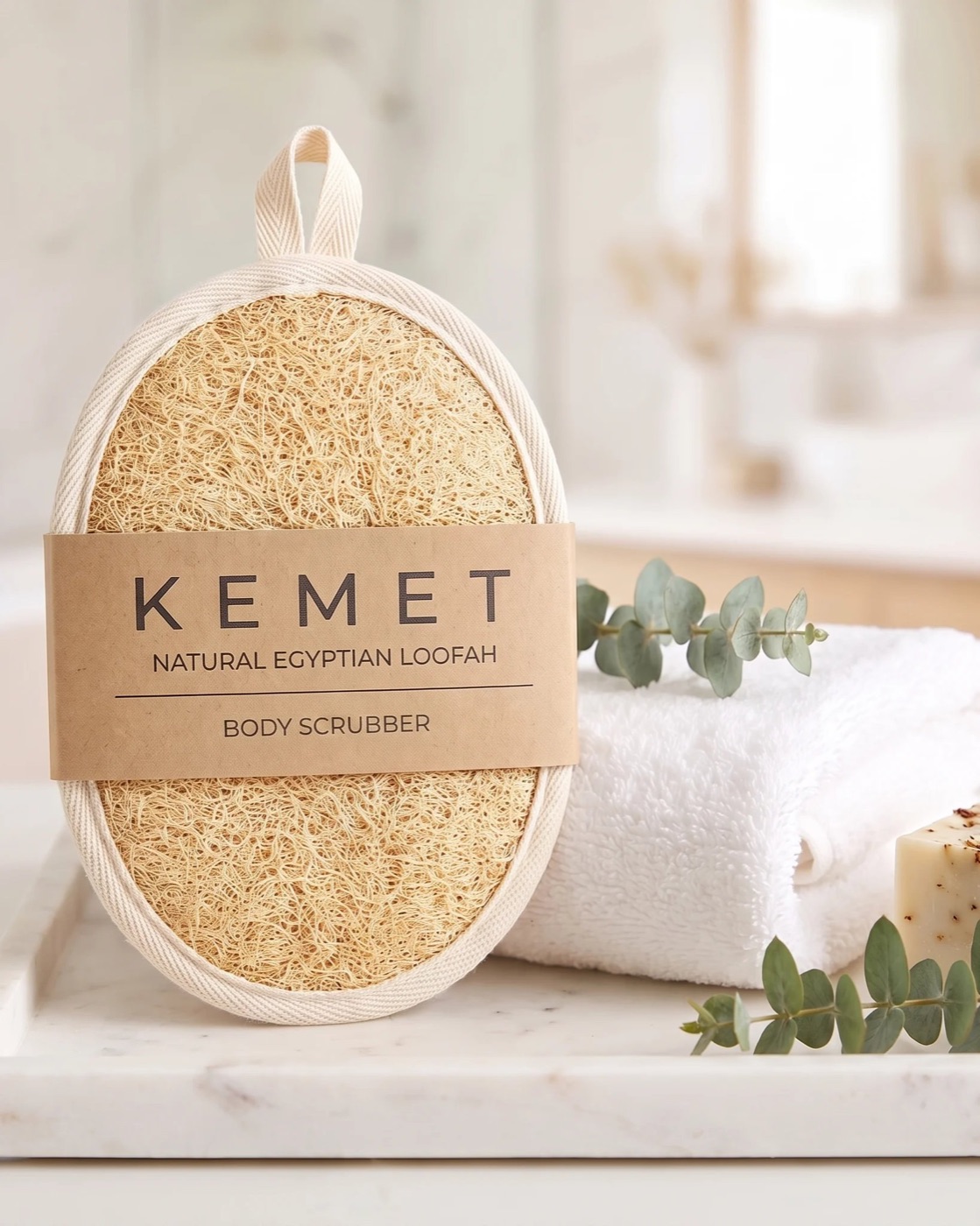
The Short Answer
Yes, a loofah can help keratosis pilaris, but only if you use it gently, and only as one part of a routine. The bumps on the backs of your arms are plugs of keratin sitting in your hair follicles, and a soaked natural loofah lifts the dead skin layer over them so they look and feel smoother. What it can’t do is make them go away for good. Nothing does that.
The real routine, the one dermatologists actually suggest, is light exfoliation a few times a week, a moisturiser applied straight after (ideally one with urea or lactic acid), and shorter, cooler showers. The loofah is a supporting player. Scrub hard with it and you’ll make KP worse, which is the mistake almost everyone makes first.
I’ve had KP on my upper arms since I was a teenager, and my older kid has it on her cheeks and thighs. So this isn’t theoretical for me. I’ve done the aggressive scrubbing phase (didn’t work), the do-nothing phase (didn’t work either), and settled on the boring gentle version below, which does.
What Keratosis Pilaris Actually Is
KP is very common and very harmless. Your body makes keratin, the protein in skin and hair, and in people with KP it builds up and plugs the opening of hair follicles. Each plug becomes a tiny rough bump, sometimes with a bit of redness around it. Hundreds of them together give you the “strawberry skin” or “chicken skin” texture, usually on the backs of the upper arms, the fronts of the thighs, the buttocks, and (in kids especially) the cheeks.
It tends to show up in childhood or the teenage years, runs in families, gets worse in dry winter air, and often eases up on its own by your 30s. It isn’t an infection, it isn’t contagious, and it isn’t caused by being unclean, so please don’t let anyone sell you an antibacterial scrub for it.
What the Dermatologists Say
I went to the American Academy of Dermatology’s self-care page for KP rather than to a skincare brand, because the brands all conveniently conclude that their product is the answer. Here’s what the AAD actually advises, in plain language:
- Gently remove the dead skin with a loofah, a buff puff, or a rough washcloth. The word gently is theirs, not mine.
- Don’t scrub. Scrubbing irritates the skin and makes KP worse.
- Once a week is enough exfoliation for a lot of people.
- Moisturise right after bathing, while skin is still damp, and again through the day if your skin is dry.
- Keep showers and baths short (under 20 minutes) and use warm water rather than hot.
- The heavy lifting is done by keratolytic creams: products with urea, lactic acid, salicylic acid, or glycolic acid that dissolve the plugs chemically.
- KP can’t be cured, so expect a maintenance routine of a few times a week, forever, or at least until it fades on its own.
So the loofah is explicitly on the list. It just comes with a very clear warning label attached.
The Routine, Step by Step
This is what I do and what I set up for my daughter (with a washcloth instead of a loofah on her cheeks).
- Soak the loofah first. Run it under warm water for 20 to 30 seconds until it goes from stiff to supple. A dry loofah on KP is sandpaper. A soaked one is a soft mesh.
- Add a little body wash to the loofah, not to your skin. Something bland and fragrance-free. If you use a wash with lactic or salicylic acid, this is the moment.
- Light pressure, small circles, ten seconds per area. If your skin goes pink, you’re pressing too hard. You should feel a gentle buffing, nothing more.
- Two or three times a week. Not daily. On the other days, wash with the soft terry side of the pad, a washcloth, or just your hands.
- Flare days get the soft side. If the bumps are red or itchy, skip the loofah completely and use terry or a washcloth.
- Pat dry with a soft towel. Don’t rub. A dense, soft Egyptian cotton towel pressed against the skin is enough.
- Moisturise within three minutes. Skin still faintly damp, cream on. Urea 10% is my favourite for arms; a plain thick cream for my daughter.
- Rinse and hang the loofah to dry outside the shower if possible, and replace it every three to four weeks, which is the Cleveland Clinic’s guidance for natural loofahs.
That’s it. It’s not exciting. After about three weeks of this my arms are noticeably smoother, and if I stop for a month (holidays, laziness) they go right back.
Which Scrubbing Tool Is Right for KP?
This is where a lot of people go wrong, because the internet is full of “best exfoliators for KP” lists that recommend tools designed to strip skin. Here’s how the common options actually stack up for KP specifically.
| Tool | Exfoliation | Hygiene | KP verdict |
|---|---|---|---|
| Natural loofah pad (soaked) | Medium, adjustable with pressure | Good if hung to dry, replace every 3 to 4 weeks | Best all-rounder for arms and thighs |
| Egyptian cotton washcloth | Light | Best, machine wash hot | Best for flare days, kids, and faces |
| Korean Italy towel / mitt | Very strong | Fine | Too harsh, skip for KP |
| Silicone body scrubber | Barely any | Excellent | Too mild to change anything |
| African net sponge | Medium | Very good, dries fast | Works, but easy to overdo on the back of arms |
| Dry brush | Strong, on dry skin | Fine | Too abrasive for most KP skin |
| Plastic mesh pouf | Light | Poor, never dries | Skip for hygiene reasons alone |
The pattern: the tools that feel the most satisfying (Italy towels, dry brushes) are the ones the AAD’s “don’t scrub” rule is aimed at. The gentle tools win.
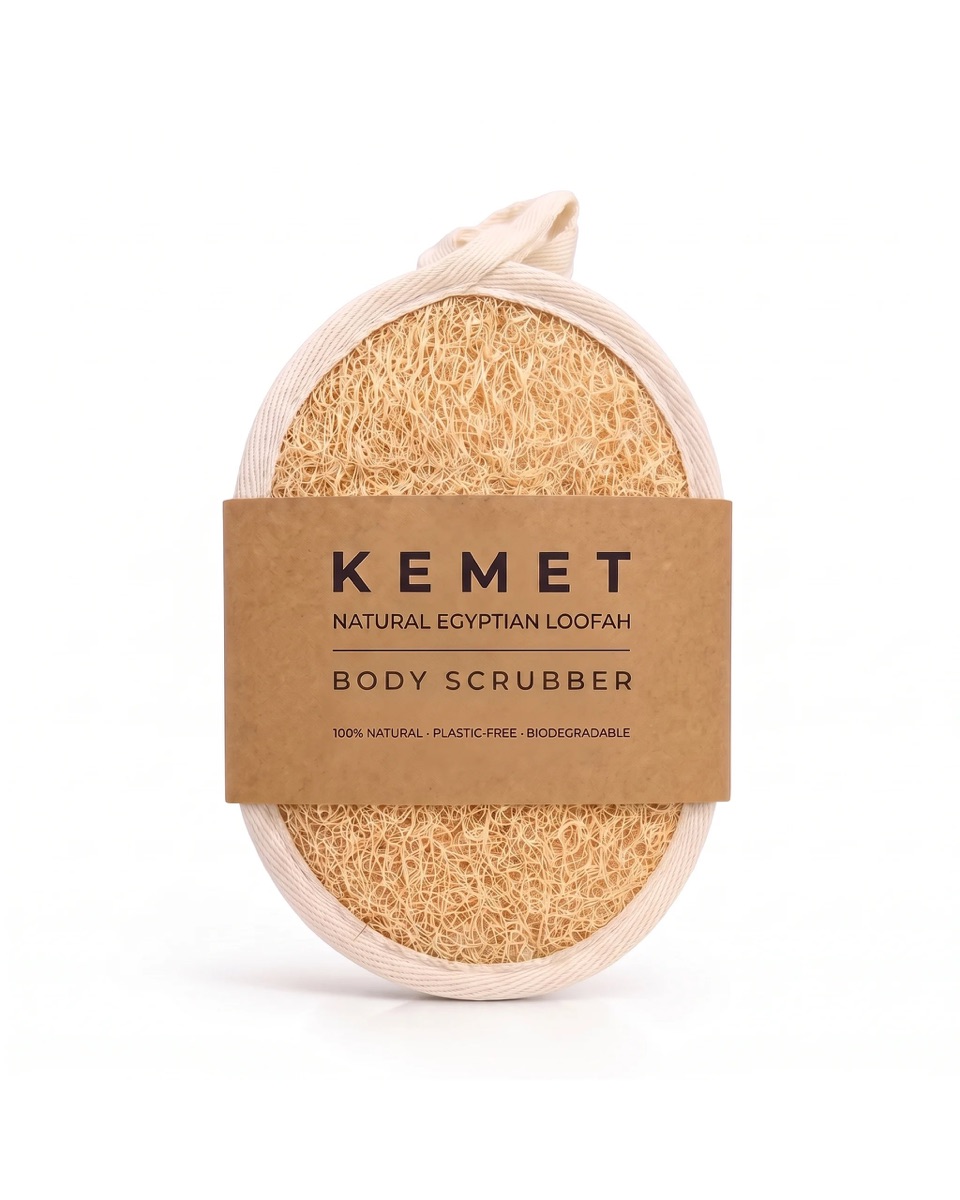
Kemet Cotton Egyptian Loofah Body Scrubber
A dual-sided pad that covers both halves of the KP routine: natural Egyptian loofah on the front for exfoliating days, soft cotton terry on the back for flare days, with a cotton loop so it actually dries between showers.
- Natural Luffa aegyptiaca face, cotton terry back, about 6 x 4.5 inches
- Grown, dried, and sewn in Egypt, no plastic anywhere in the pad
- Hanging loop for faster drying (the biggest hygiene win with a loofah)
- Compostable when it's done, plastic-free packaging
From $29.95, set of 4 for $59.95
Shop the Kemet Loofah Pad →The reason I like the Kemet pad for KP specifically is the two sides. I don’t have to keep two tools in the shower; loofah side on Monday and Thursday, terry side the rest of the week. The loofah fibre is also more uniform than the Amazon pads I’ve used, with fewer of those hard, knotty bits that dig in.
Fair warning, though: it’s new (launched September 2026, no long-term reviews yet), it’s only sold direct from Kemet, it comes in one natural colour, and $29.95 is a lot compared to a $6 Earth Therapeutics loofah pad from the drugstore. The set of 4 at $59.95 (about $15 each) is the sensible way to buy it if you’re going to stick with the routine: at a fresh pad every three to four weeks, four is two months for one person or a month for two. If you’re just trying loofah for the first time, honestly, start with the cheap one and see if your skin likes it.
The Towel and Washcloth Part Nobody Mentions
Here’s something I only figured out after years of fussing about scrubs: what you dry off with matters almost as much as what you scrub with.
Freshly exfoliated KP skin is delicate. If you then rub it hard with a towel that’s gone stiff and scratchy, you’re irritating the exact follicles you just cleared. My arms were noticeably redder for a while and it turned out the culprit was a load of towels that had been softened into scratchiness (yes, fabric softener makes towels rougher over time, our guide on why towels get rough explains it).
Two fixes. First, a genuinely soft, dense towel, patted rather than dragged. Second, for faces and flare days, a proper Egyptian cotton washcloth. A washcloth is the most hygienic exfoliating tool there is, because it goes in the washing machine at 60°C after every couple of uses, which no sponge or loofah can survive. For my daughter’s cheeks it’s the only thing I’ll use.
🏆 Soft skin needs a soft towel to land on. Our pick of the certified ones: Best Egyptian Cotton Towels of 2026 →
Mistakes That Make KP Worse
I’ve made every one of these.
Hot showers. Hot water strips the skin’s oils and KP loves dry skin. Warm, and under 20 minutes.
Scrubbing every day. The most common one. More friction doesn’t clear more plugs; it inflames the follicles so the bumps look angrier. Two or three times a week, maximum.
Pressing harder when it isn’t working. If three weeks of gentle exfoliation plus moisturiser hasn’t helped, the answer is a keratolytic cream or a dermatologist visit, not more force.
Skipping the moisturiser. Exfoliating without moisturising afterwards is worse than not exfoliating at all. The moisturiser is the treatment; the loofah just opens the door.
Sharing a loofah. Loofahs hold bacteria if they stay damp, and a loofah used on someone else’s skin (or on your own feet and then your arms) is asking for folliculitis on top of KP. One loofah per person, body only, and hung up to dry. Our are loofahs bad? guide goes into the research.
Fabric softener on towels. It coats the cotton, stops it absorbing, and makes it stiff. Skip it, or use white vinegar in the rinse instead.
Fragranced scrubs with big grit. Sugar and salt scrubs with essential oils are lovely on heels and bad on KP arms. Too abrasive, and the fragrance is another irritant.
When to See a Dermatologist
KP is one of the most common things a dermatologist sees, and it’s a quick appointment. Go if:
- The bumps are red, itchy, or inflamed rather than just rough.
- Home care hasn’t done anything after two or three months.
- You’re not sure it’s KP (folliculitis, eczema, and some fungal rashes can look similar).
- You want more than maintenance. Prescription-strength urea, retinoids, and in-office treatments exist, and a dermatologist can tell you whether they’re worth it for you.
Nothing in this guide is medical advice. It’s the routine the AAD describes, filtered through one mum’s bathroom.
The Bottom Line
A soaked natural loofah, used gently two or three times a week, is a perfectly good tool for keratosis pilaris. It’s the pressure and the follow-up that matter: light hands, soft towel, moisturiser within three minutes, cooler water. Skip the Italy towel, the dry brush, and the daily scrubbing.
If you want one pad that handles both scrub days and soft days, the Kemet Egyptian loofah pad does that neatly, and the set of 4 (two months of pads for one person, a month for two) is the sensible way to buy it. If you’d rather test the water for $6, an Earth Therapeutics pad from the drugstore is fine. And for faces, kids, and bad days, nothing beats a washcloth you can boil.
Related Reading
Get our reviews first on Google
Add Cotton With Love as a preferred source and Google will show you more of our towel and sheet reviews.
Add Cotton With Love as a preferred source on GoogleAdd us as a preferred source on Google
See more of our towel and sheet reviews in your Google results.
Frequently Asked Questions
Does a loofah get rid of keratosis pilaris?
No. Keratosis pilaris can't be cured, by a loofah or anything else. What gentle exfoliation does is lift the dead skin sitting over the plugged follicles, which makes the bumps less visible and helps moisturiser and keratolytic creams absorb. Stop the routine and the bumps come back, which is why dermatologists describe KP care as maintenance.
How often should I use a loofah on KP?
Two or three times a week is plenty, and the American Academy of Dermatology suggests as little as once a week for exfoliating KP. Daily scrubbing irritates the follicles and usually makes the bumps redder and more noticeable, not less.
Is a Korean exfoliating mitt good for keratosis pilaris?
For most people, no. Italy towels and Korean mitts are designed to roll off visible sheets of dead skin, which is far too aggressive for KP. The AAD specifically warns against scrubbing KP because irritation worsens it. A soaked natural loofah or a rough cotton washcloth with light pressure is the right level.
What's better for KP, a loofah or a washcloth?
Both work if you're gentle. A soaked natural loofah gives slightly more exfoliation and is better for thicker skin on the upper arms and thighs. A washcloth is gentler, can be machine washed hot, and is the safer choice on flare days or for kids. Plenty of people use a loofah two days a week and a washcloth the rest.
Should I moisturise after using a loofah on KP?
Yes, and quickly. KP flares when skin is dry, so pat (don't rub) dry with a soft towel and apply moisturiser within about three minutes while your skin is still slightly damp. Creams with urea, lactic acid, or salicylic acid do the most for KP, but any thick moisturiser is better than none.
When should I see a dermatologist about keratosis pilaris?
If the bumps are red, inflamed, itchy, or spreading, if home care hasn't changed anything after a couple of months, or if you're not sure it's KP at all. A dermatologist can confirm the diagnosis and prescribe stronger keratolytics or retinoids if you want more than maintenance.