Best Body Scrubbers and Exfoliating Tools (2026): Loofah vs Mitts, Nets, and Silicone
The Short Version
A body scrubber is any tool that takes dead skin off in the shower. The market has exploded, and now you’re choosing between a $5 Korean mitt, a $30 Egyptian loofah, a $50 Baiden Mitten, a nylon net from Ghana, and a silicone pad that promises to be antibacterial.
I went through the top sellers, the brand claims, and what people actually say after a few months of use. Here’s how they stack up.
| Tool | Material | Scrub Strength (1 to 5) | Lasts | Price | Natural? | Best For |
|---|---|---|---|---|---|---|
| Kemet Egyptian Loofah Shower Sponge | Whole loofah gourd, cotton rope | 4 | 3 to 4 weeks | From $29.95 | Yes | Strong natural scrub |
| Kemet Egyptian Loofah Body Scrubber | Loofah pad, cotton terry back | 3 | 3 to 4 weeks | From $29.95 | Yes | Daily use, plastic-free homes |
| Almooni Loofah Pads | Loofah pad, terry back | 3 | 3 to 4 weeks, flattens sooner | $10 to $15 for 2 | Yes | Budget natural |
| Korean Italy Towel | Viscose | 5 | 2 to 3 months | $5 for 5 | Semi | Deep exfoliation, KP |
| African Net Sponge (Sapo) | Nylon | 4 | Up to 18 months | $10 to $20 | No | Men, backs, longevity |
| Salux Cloth | Nylon and polyester | 3 | 6 to 12 months | $8 to $10 | No | Lather, backs |
| Baiden Mitten | Woven plant fibre | 5 | Up to 2 years | About $50 | Yes | Serious exfoliation |
| Kessa Glove | Viscose crepe | 5 | 3 to 6 months | $5 to $15 | Semi | Hammam scrub with black soap |
| Spongelle Buffer | Body-wash-infused foam | 2 | 14 to 20 washes | $30 to $40 for 3 | No | Travel, gifts |
| Silicone Scrubber (Sud Scrub, Tooletries) | Silicone | 1 | Years | $10 to $20 | No | Sensitive skin, hygiene |
| Exfoliating Gloves | Nylon | 3 | 2 to 3 months | $5 to $10 for 2 | No | Control, self-tan prep |
| Loofah on a Stick | Loofah, wooden handle | 3 | 3 to 4 weeks | $8 to $15 | Yes | Backs |
🏆 Scrubbing is half the routine. What you dry off with matters too: Best Egyptian Cotton Towels of 2026 →
Kemet Cotton Egyptian Loofah Shower Sponge
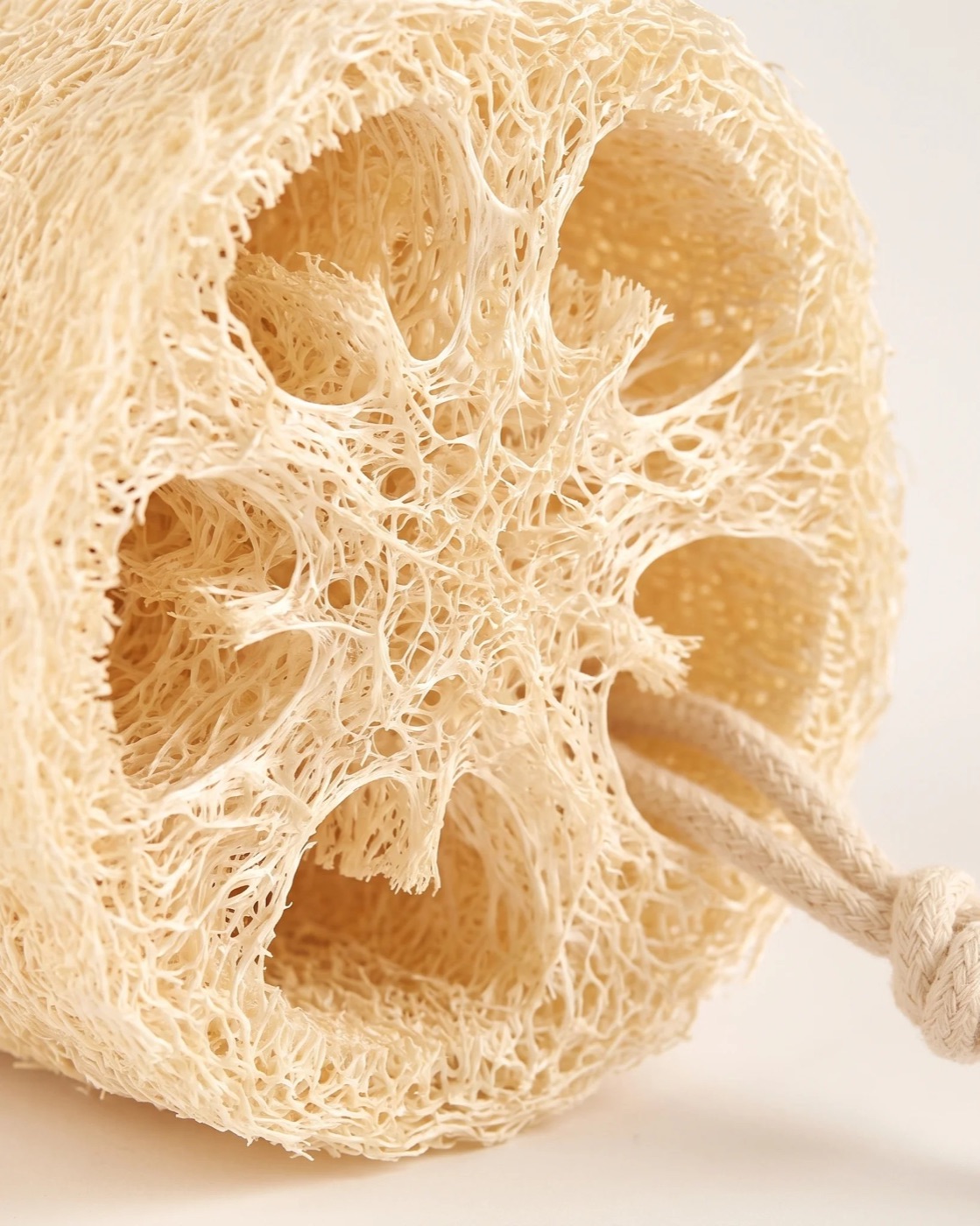
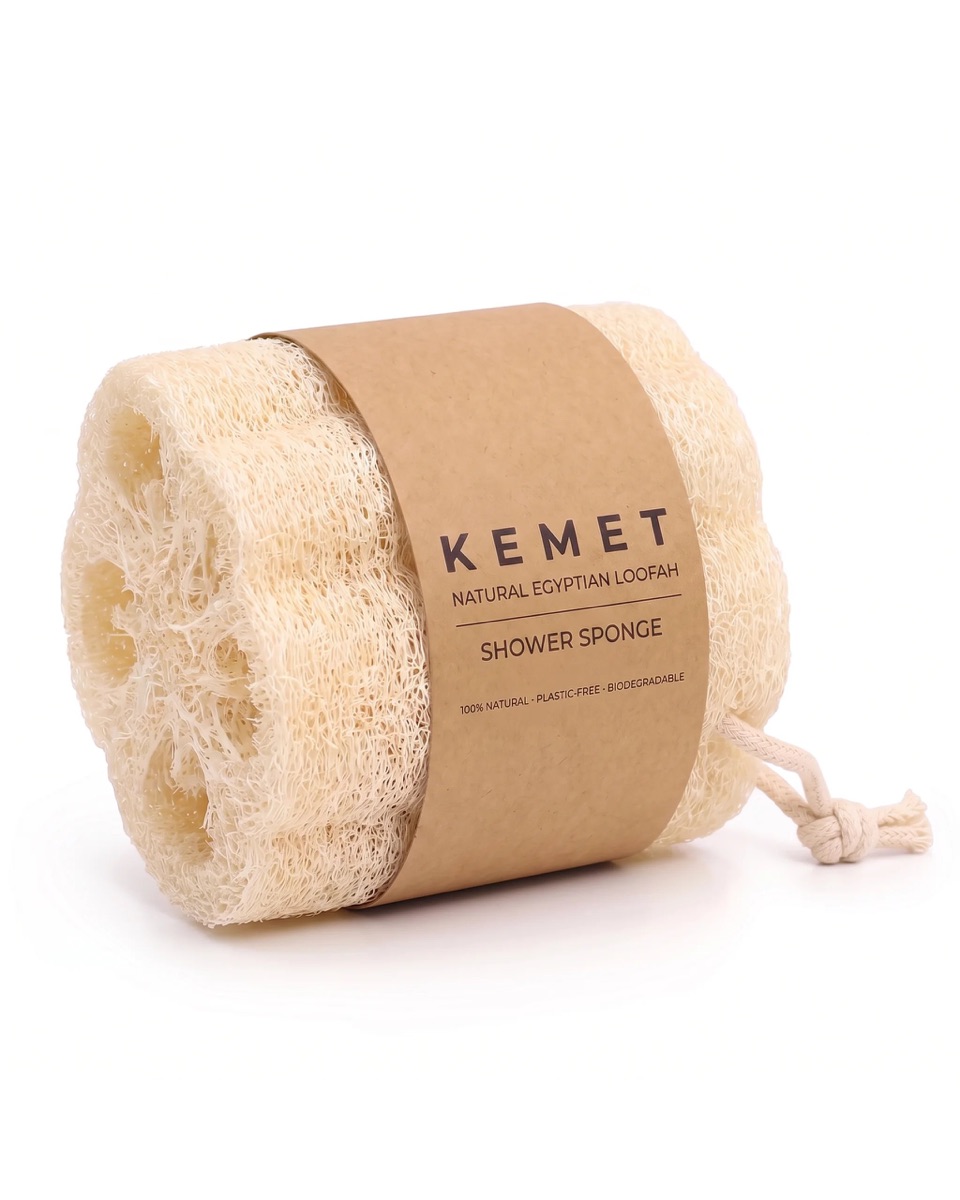
One whole, uncut loofah cone from Nile Delta farms with a braided cotton rope. The strongest natural scrub on this list, with no plastic anywhere, and the only one that states where the plant was grown.
- Whole Luffa aegyptiaca cone, about 5.5 x 4 inches, sun dried in Egypt
- Braided cotton rope for hanging, so it dries between showers
- 100% plant fibre, compostable, plastic-free packaging
- Sets of 4 and 12 bring the price to about $15 and under $10 each
$29.95 single · $59.95 set of 4 ($14.99 each) · $119.95 set of 12 ($9.99 each, ships free)
Shop the Kemet Shower Sponge →30-day returns · duties included · grown, sun dried and sewn in Egypt
Natural Loofah: Kemet and Almooni
A natural loofah is the dried inside of a gourd, and it’s the middle ground on this list. Real texture, real exfoliation, no plastic, but the fibre holds water and skin cells, so it needs replacing every three to four weeks, and every two if you scrub daily.
Kemet Cotton launched two in September 2026. The Shower Sponge is a whole cone with a cotton rope, and it scrubs about as hard as a natural tool gets. The Body Scrubber is a 6 by 4.5 inch pad with loofah on one side and cotton terry on the other, gentler and easier to lather with. Both are $29.95 single, $59.95 for 4, $119.95 for 12, and both state Nile Delta origin, which nobody else on Amazon does.
Almooni is the budget version. A 2-pack of dual-sided pads runs $10 to $15. The loofah is thinner and flattens sooner, and origin isn’t stated. Perfectly fine as a first loofah.
Who it’s for: anyone who wants a proper scrub without plastic. Who should skip it: anyone who won’t hang it up to dry.
I compare all the natural options in Best Natural Loofah Sponges.
Korean Italy Towel (Exfoliating Mitt)
If you’ve never used one, you’re not ready for what comes off. The Italy towel is a small, scratchy viscose mitt, usually green, used at Korean bathhouses for seshin. You soak in a hot bath for 15 or 20 minutes, then rub the mitt over your skin and dead skin rolls off in grey worms.
It’s about $5 for a pack of five on Amazon (Modu, Goldsangsa and dozens of no-name sellers), and it’s the strongest exfoliation on this list per dollar by a mile.
The catch is that it’s easy to overdo. Once a week, max, and never on your face, never over a fresh shave, and never if you have eczema. Viscose is made from plant cellulose but it’s chemically processed, so it’s not compostable in the way loofah is.
Who it’s for: keratosis pilaris, ingrown hairs, anyone who wants to see results the first time. Who should skip it: sensitive or inflamed skin.
Shop Korean exfoliating mitts on Amazon →
African Net Sponge (Sapo)
The African net sponge comes from Ghana, where it’s called sapo. It’s a long knotted nylon net, around 45 inches, that you pull taut across your back or bunch up in your hand.
Two things make it different. It dries in minutes because there’s nothing for water to sit in, so the bacteria problem that plagues loofahs mostly disappears. And it lasts. Brands like SubSahara, Nubiana and Cee Cee’s Closet quote up to 18 months, and users back that up. Expect $10 to $20 for one or two.
It’s 100% nylon, so it’s not natural and it’s not going in the compost. But if you want a hard scrub that reaches your back and you’ll replace it once a year, it’s hard to argue with.
Who it’s for: men, backs, people who forget to replace things. Who should skip it: plastic-free households.
Shop African net sponges on Amazon →
Salux Cloth
Salux is a 35-inch Japanese wash cloth, 60% nylon and 40% polyester, with a slightly nubby weave. It won a Japanese Invention Award decades ago and people have been buying the same blue, pink and white cloths ever since.
It’s a lather machine. Wet it, add a little body wash, and you get more foam than any loofah. The exfoliation is moderate, gentler than an Italy towel and about even with a loofah pad. The length means you can pull it across your back like a towel.
About $8 to $10 for one, and it lasts six months to a year. There’s a “Super Hard” version if the regular one isn’t rough enough. Synthetic, so it dries fast and rinses clean.
Who it’s for: people who care about lather and want to wash their back. Who should skip it: anyone wanting strong exfoliation.
Baiden Mitten
The Baiden Mitten is a woven plant-fibre mitt made in the style of Turkish hammam mitts, and it costs about $50. That price has been the argument about it for a decade. Refinery29 and StyleCaster love it. Lab Muffin tested it against an $8 exfoliating glove and found the difference was smaller than the price gap.
Here’s the honest read. It exfoliates about as hard as a Korean Italy towel, it’s made from natural fibre rather than viscose, and it genuinely lasts. The brand quotes around 100 uses or two years. Used once a week, that’s $0.50 a session. Users with keratosis pilaris and ingrown hairs report calmer skin, which lines up with what strong physical exfoliation does.
Is it ten times better than an Italy towel? No. Is it the best natural, long-lasting, hard exfoliation tool? Probably, yes.
Who it’s for: people who want an Italy-towel level scrub from natural fibre and will keep it for years. Who should skip it: anyone who wants to try strong exfoliation before committing $50.
Shop Baiden Mitten on Amazon →
Kessa Glove
The Kessa is the Moroccan hammam mitt. It’s a crepe-textured viscose glove, used after you’ve sat in steam and applied black soap (beldi) for ten minutes. The soap softens the skin, the Kessa takes it off.
It’s $5 to $15, it works like an Italy towel with a slightly different texture, and it’s the tool if you want to recreate a hammam at home. Without the steam and the black soap, it’s just a rough glove. With them, it’s one of the best exfoliations you can do.
Who it’s for: hammam fans, people who’ll do the full ritual. Who should skip it: quick showerers.
Spongelle
Spongelle sells synthetic foam buffers pre-loaded with body wash. Wet it, squeeze, and it lathers for 14 or more showers (the back buffer version claims 20 plus). A trio set runs $30 to $40.
It’s clever, it smells nice, and it’s the perfect travel or gift product. But as a body scrubber it barely rates. The foam is soft, the exfoliation is minimal, and the whole thing is disposable plastic. You’re buying convenience, not a scrub.
Who it’s for: gifts, travel, guest bathrooms. Who should skip it: anyone reading this to exfoliate.
Silicone Body Scrubbers (Sud Scrub, Tooletries)
Silicone scrubbers are the dermatologist’s favourite because they solve the hygiene problem. Sud Scrub and Tooletries both make pads covered in soft silicone bristles. They dry in minutes, they can be boiled or put in the dishwasher, and they last for years. $10 to $20.
The trade-off is that they don’t exfoliate much. The bristles are soft. You get a clean and a light massage, and that’s about it. Reviewers who bought one expecting a loofah replacement tend to be disappointed. Reviewers who bought one because their loofah kept smelling are happy.
Silicone isn’t biodegradable, but a scrubber you keep for five years is a better footprint than 60 loofahs.
Who it’s for: sensitive skin, anyone who’s had a loofah-related breakout. Who should skip it: people who want dead skin gone.
Shop silicone body scrubbers on Amazon →
Exfoliating Gloves
The nylon exfoliating glove is the simplest tool here. $5 to $10 for a pair, moderate scrub, and because it’s on your hand you control the pressure precisely. That’s why self-tan users swear by them for prepping skin before application.
They wear out in two or three months, they’re synthetic, and the cheap ones shed. Earth Therapeutics makes a decent pair if you want a name you recognise.
Who it’s for: self-tan prep, people who want control. Who should skip it: plastic-free households.
Shop exfoliating gloves on Amazon →
Back Scrubbers with a Handle
If you can’t reach your back, none of the above helps unless it’s long. Your options are a loofah on a wooden stick ($8 to $15, natural, replace every three to four weeks), the African net sponge (long enough on its own), or the Salux cloth pulled taut.
I’d go loofah on a stick if you want natural, net sponge if you want it to last. Skip the plastic-handled bath brushes with synthetic bristles. They shed and they don’t scrub.
Shop loofah back scrubbers on Amazon →
Pick by Skin Type and Goal
Keratosis pilaris (bumpy arms and thighs). The American Academy of Dermatology says gentle removal of dead skin with a loofah or rough washcloth helps, and scrubbing hard makes it worse. Start with a loofah pad two or three times a week, and consider an Italy towel once a week if your skin tolerates it. I wrote a whole guide on loofah for keratosis pilaris.
Ingrown hairs. Korean Italy towel or Baiden Mitten once a week, plus a loofah between sessions. Never scrub the day you shave.
Sensitive skin. Silicone scrubber or an Egyptian cotton washcloth. Skip anything rated 4 or 5 in the table.
Men who want a harder scrub. African net sponge or a whole loofah cone. Both hit hard and both reach your back.
Plastic-free households. Kemet or Almooni loofah, Baiden Mitten, or a natural sea sponge (which barely exfoliates but is lovely). See the natural bath sponge guide for the sea sponge and konjac options.
Travel. Spongelle or a Korean mitt. Both are light, both are cheap enough to leave behind.
A Quick Word on Hygiene
Every tool that stays wet in the shower grows bacteria. Loofahs are the worst offenders because they’re porous and slow to dry, and there’s a 1994 study that traced Pseudomonas skin infections back to contaminated loofahs. Nets, Salux cloths and silicone dry fast and are much safer. Mitts and gloves sit in the middle.
Whatever you buy, rinse it, hang it, and replace it on schedule. The full breakdown, including how a washcloth compares, is in Are Loofahs Bad for You?.
The Bottom Line
For most people, a natural loofah is the right body scrubber. It exfoliates properly, it’s compostable, and if you hang it up it stays clean long enough to be worth it. Kemet’s Shower Sponge is the strong version, the Body Scrubber pad is the everyday version, and Almooni is the $10 version.
If you want serious exfoliation, buy a $5 pack of Korean Italy towels first. If you love it and want it in natural fibre that lasts years, upgrade to the Baiden Mitten.
If you want zero fuss and zero smell, buy a silicone scrubber and accept that it’s a cleaner, not a scrubber.
And if you can’t reach your back, get the net sponge.
Related Reading
Get our reviews first on Google
Add Cotton With Love as a preferred source and Google will show you more of our towel and sheet reviews.
Add Cotton With Love as a preferred source on GoogleAdd us as a preferred source on Google
See more of our towel and sheet reviews in your Google results.
Frequently Asked Questions
What is the best body scrubber for exfoliating?
It depends on how hard you want to scrub. For a strong, visible exfoliation, a Korean Italy towel or a Baiden Mitten wins. For daily use with real texture but less aggression, a natural loofah is the best balance. For sensitive skin, a soft washcloth or a silicone scrubber is the safest. There isn't one best tool, there's a best tool for your skin and your goal.
Is a natural loofah or a silicone body scrubber better?
A natural loofah exfoliates far more than silicone. Silicone scrubbers have soft nubs that mostly clean and lather, and they win on hygiene because they dry in minutes and can go in the dishwasher. If you want dead skin off, loofah. If you want something you'll never have to replace and never worry about, silicone.
What is a Korean Italy towel?
It's a small, rough viscose mitt used at Korean bathhouses for seshin, the full-body scrub. You soak in warm water first, then rub the mitt over your skin and dead skin rolls off in visible grey bits. It's about $5 for a pack of five and it's the most aggressive exfoliating tool on this list.
How often should I use an exfoliating body scrubber?
Two or three times a week for a loofah or a net sponge, once a week or less for a Korean mitt or a Baiden Mitten. If your skin looks red or feels tight afterwards, you're scrubbing too hard or too often. Daily use is fine only for gentle tools like silicone or a plain washcloth.
What body scrubber is best for men?
Men tend to ask for a harder scrub, and the African net sponge is the tool most men stick with. It's long enough to reach your back, it dries fast, and it lasts over a year. If you want something natural, a whole loofah cone gives a similar level of scrub.
Which body scrubbers are plastic-free?
Natural loofah (Kemet, Almooni, Crafts of Egypt), sea sponges, konjac sponges, and plant-fibre mitts like the Baiden Mitten. Korean Italy towels and Kessa gloves are viscose, which is plant-derived but chemically processed. African net sponges, Salux cloths, Spongelle buffers and silicone scrubbers are all synthetic.