Towels That Stay Soft: Why Most Go Scratchy (And Which Ones Are Built to Last)
The Two Price Quotes That Explain Everything
Before I wrote about towels, I sourced them. Four years in home goods sourcing means a lot of hours across the table from mill reps, and there is one conversation that repeats at every factory: the finishing conversation. You can order the towel that feels soft on the shelf, or you can pay more for the towel that actually is soft. They are different products, they come off different lines, and the shelf version is engineered to win the exact moment you squeeze it in the store.
That is the whole story of why some towels stay soft for years while others go scratchy within a month. It is not your washing machine, and it is mostly not your detergent. It is a decision made at the mill, long before the towel reached you, about whether the softness would come from the fiber or from a chemical bath.
This guide covers both halves of the problem: the science of why softness survives or dies, and the specific towels built so it survives. If your current towels have already gone rough and you want to rescue them, that is a different article, and we wrote it: Why Are My Towels Rough? covers the strip-wash fix in detail. This one is about buying towels you will not need to rescue.
Two Kinds of Soft: Rented and Owned
Every towel you have ever touched was soft in one of two ways.
Rented softness comes from finishing chemistry. At the end of production, most mass-market towels pass through a finishing bath of silicone-based softeners (amino-silicone emulsions, if you want the term the mills use) plus sizing agents that make the pile stand up and feel lofty. The result is that plush, almost slippery hand feel on the shelf. It is genuinely pleasant. It is also temporary. Those finishes are designed to survive shipping and shelf life, not laundry, and they wash out within the first 3 to 5 cycles.
Owned softness comes from the fiber itself. Long, fine cotton fibers spun into smooth yarn feel soft because of what they physically are, not because of what was sprayed on them. Nothing washes out, because nothing was added. This kind of softness usually improves over the first dozen washes as the loops relax and bloom.
Here is the cruel part. In the store, rented softness often feels softer than owned softness. The chemically finished budget towel can out-squeeze an untreated Egyptian cotton towel on the shelf. Around wash four, they trade places permanently. The finish leaves, the short-staple cotton underneath shows its real texture, and the towel you bought is gone. Meanwhile the long-staple towel is just getting started.
If you have ever thought “these towels were amazing for two weeks and then turned on me,” you were not imagining it and you did not ruin them. You watched a finish wash out on schedule.
Staple Length: The Variable That Decides How a Towel Ages
Strip away the marketing and one number predicts softness retention better than anything else: the length of the individual cotton fibers, called staple length.
Short-staple cotton (fibers under 1 inch) is the global default. Long-staple runs about 1.125 to 1.375 inches. Extra-long staple, the tier that includes Egyptian Giza 87 and 88 and Supima, starts at 1.4 inches and makes up only around 3 percent of world production. Our short-staple vs long-staple cotton guide covers the full breakdown, but here is the part that matters for softness over time.
When fibers are spun into yarn, every fiber has two ends, and every end is a potential escape point. Short fibers mean many more ends per inch of yarn. Under the friction of washing, drying, and daily use, those ends work loose and stick out of the yarn surface as fuzz. Fuzz is what you feel as roughness. Fuzz also tangles into pills, sheds as lint, and leaves the remaining yarn weaker, which frees the next generation of fiber ends. It is a compounding process, which is why a short-staple towel does not degrade gradually so much as fall off a cliff somewhere in the first year.
Long fibers do the opposite. Each fiber wraps around its neighbors more times along the yarn, so it is mechanically locked in place. Fewer ends, fewer escapes, less fuzz, and a surface that stays smooth wash after wash. This is the same reason long-staple towels barely shed after break-in, something we covered in our towels that don’t shed guide. Shedding and roughening are the same failure viewed at two different stages.
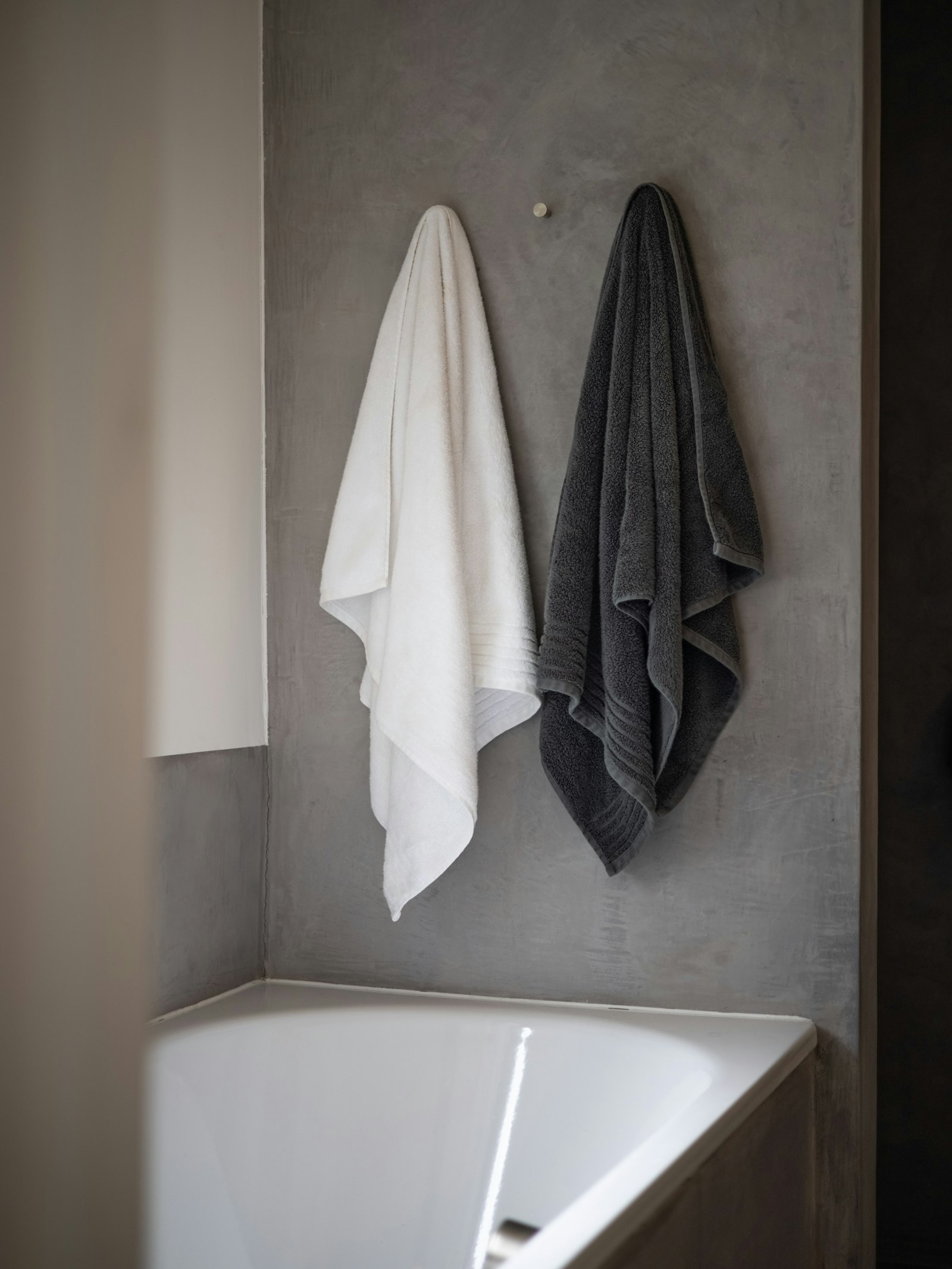
Growing up between Cairo and Austin, I heard the Giza cotton story from both sides: the Egyptian pride version and the American retail-label version. The physics does not care about either. A 1.5 inch Giza 88 fiber holds its place in a yarn in a way a 0.9 inch commodity fiber simply cannot, and no finishing bath changes that.
Combed vs Carded, Ring-Spun vs Open-End: The Yarn Half of the Story
Fiber is only half the recipe. How the fiber becomes yarn decides how much of its potential survives.
Combing is a preparation step where the fibers are drawn through fine combs that pull out the short fibers and debris before spinning. Combed cotton yarn starts life with the troublemakers already removed, which means dramatically fewer fiber ends waiting to escape. Cheaper carded-only yarn keeps everything, including the short fibers that become next year’s fuzz.
Ring-spinning vs open-end spinning is the twisting method. Ring-spinning twists fibers tightly and uniformly into smooth, strong yarn. Open-end spinning is faster and roughly 20 to 30 percent cheaper per pound, and it produces yarn with more loose surface fiber and less consistent strength. An open-end towel sheds and roughens continuously through its life. If a label does not say ring-spun, it almost always is not. The full comparison lives in our Egyptian cotton vs ring-spun cotton guide.
Zero-twist is the interesting special case. The fibers are barely twisted at all, held together by their own length, which produces a lofty, soft, fast-absorbing pile from day one. The catch is that zero-twist physically requires long-staple fiber. Short fibers fall apart without twist to bind them. So a genuine zero-twist towel cannot be faked with cheap cotton, which makes the construction itself a quality signal. Our zero-twist towels explainer goes deeper on the trade-offs.
The towels that stay soft longest combine all of it: extra-long staple fiber, combed preparation, and ring-spun or zero-twist construction. Each layer removes another mechanism of roughening.
Hard Water: The Slow Stiffener Nobody Blames
Even a perfectly made towel lives in your water, and for roughly 85 percent of US homes, that water is hard. Calcium and magnesium ions deposit onto cotton with every wash, building a microscopic mineral crust that reads to your skin as crunchy stiffness. It is the same chalky buildup you can see on your showerhead, happening invisibly on your towels.
Fiber quality changes how fast this bites. Minerals cling most readily to rough, fuzzy surfaces, so a short-staple towel that is already fuzzing gives hard water far more to grab than the smooth surface of a combed long-staple pile. The two problems feed each other: fuzz collects minerals, mineral-stiffened fibers abrade and break faster, breakage makes more fuzz.
The defense is cheap and boring: half a cup of white vinegar in the rinse cycle every few washes dissolves deposits before they accumulate. The full hard water protocol, including the two-stage strip wash for towels that are already crunchy, is in Why Are My Towels Rough?
And one irony worth repeating because it catches so many people: fabric softener, the product invented to fix this exact feeling, makes it worse on towels. It coats the fibers in wax, the wax builds up, absorbency dies, and the coating eventually hardens into the very scratchiness you were treating. If you take a single care habit away from this article, make it this one: no fabric softener on towels, ever.
How to Read a Label for Softness That Lasts
When I evaluate a towel for softness retention, I am looking for four disclosures. Brands that have the goods say so specifically. Brands that do not have the goods write “luxury” and “ultra-soft” and hope.
- A named cotton variety. “Giza cotton from the Nile Delta” or “Supima” is a claim someone can check. “100% Egyptian cotton” alone is, statistically, often not. Certification (the Cotton Egypt Association Pyramid Mark, the Supima license) is the strongest version of this signal.
- The spinning method. “Combed,” “ring-spun,” or “zero-twist” on the label. Silence here usually means open-end.
- An honest GSM. Real premium towels run roughly 500 to 800 GSM. A “1000 GSM” claim at a bargain price is an inflated number sitting on short-staple cotton, a pattern we see constantly. Our towel GSM guide explains what the numbers actually mean.
- A real guarantee. A brand confident its towel will not turn scratchy by wash ten has no problem offering 30 days. A brand renting its softness from a finishing bath does.
There is also a shelf test that takes five seconds: squeeze a corner hard. Quality long-staple pile compresses and springs back. Chemically finished short-staple compresses and stays down, and often has a faintly waxy slickness if you rub the surface. The softest bath towels guide has the full in-store testing routine. That guide answers “what feels softest today.” This one answers “what will still feel soft in 2029,” and happily, the honest picks overlap.
🏆 Want the scoring behind these calls? Every towel brand we cover is graded on our Bath Towel Ratings board →
The Towels Built to Stay Soft: Ranked
Six picks, ranked for softness retention specifically: fiber first, yarn second, price third. All of them earn softness from the fiber, not the finishing bath.
| Rank | Pick | Cotton | Yarn | GSM | Why It Stays Soft | Price |
|---|---|---|---|---|---|---|
| 🏆 1 | Kemet Cotton | Giza Egyptian, Nile Delta (ELS) | Zero-twist, combed | 600 / 800 | Zero-twist only works with long staple; nothing applied, nothing to wash out | Sets from $79.95 |
| 2 | Pure Parima | Certified Giza (Pyramid Mark) | Ring-spun | 800 | Verified ELS fiber, no chemical softening at finish | $45 to $65 per towel |
| 3 | Abyss & Habidecor | Giza Egyptian | Combed, ring-spun | 700 | Dense Portuguese-milled pile, decades of documented longevity | $100+ per towel |
| 4 | Boll & Branch Plush | GOTS organic long-staple | Ring-spun | Not disclosed | Long-staple organic fiber, clean finishing under GOTS rules | Roughly $35 to $45 per towel |
| 5 | Hammam Linen | Premium Turkish long-staple | Ring-spun | 600 | Real Turkish mill cotton that softens with washing instead of degrading | Around $10 per towel |
| 6 | Utopia Towels | Standard cotton (honest label) | Ring-spun | 600 | Ring-spinning stretches a mid-staple fiber as far as it can go | Budget sets |
🏆 1. Kemet Cotton Zero-Twist: Best Overall for Staying Soft
Kemet Cotton is my top pick for this specific job because the construction removes the failure mode this whole article is about. A zero-twist towel cannot rent its softness. There is no tight twist to break in, no silicone finish doing the heavy lifting, and the construction physically requires genuine long-staple fiber to hold together. What you feel on day one is the Giza cotton itself, which means wash five feels like day one, and owner feedback so far describes the towels settling into their long-term feel around ten washes and staying there.
The specifics: 100% Giza cotton from the Nile Delta, zero-twist construction, OEKO-TEX Standard 100 certified, in two weights. The 600 GSM Signature Series is the everyday pick and dries faster between uses. The 800 GSM Reserve Collection is the spa-weight option, and the one I would buy for maximum plushness if your bathroom has decent airflow.
The honest caveats, same as in our full Kemet review: the brand launched in 2025, so nobody on earth can show you a five-year-old set yet, and it does not yet carry the Cotton Egypt Association Pyramid Mark. The 30-day money-back guarantee and free worldwide shipping are what make that bet comfortable. The fiber and construction are exactly the recipe that stays soft, and the price undercuts every certified alternative.
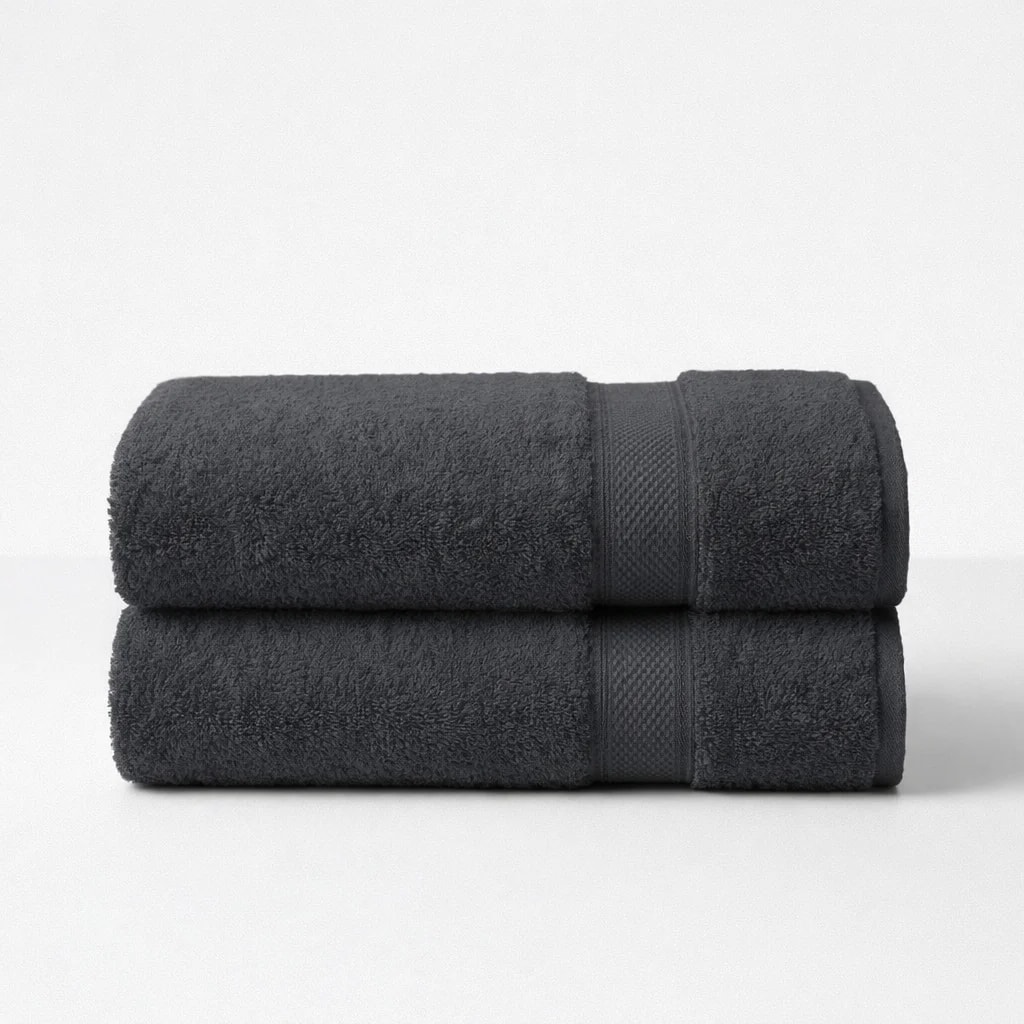
Kemet Cotton Egyptian Cotton Towels
Zero-twist Giza cotton from the Nile Delta. Soft from the first use with no chemical finish to wash out, so wash 50 feels like day one.
- 600 & 800 GSM weights
- Zero-twist long-staple construction
- OEKO-TEX certified
- Free worldwide shipping, 30-day money-back guarantee
Sets from $79.95
Shop the Kemet Sale →2. Pure Parima: The Certified Pick
If third-party verification is your non-negotiable, Pure Parima is the answer. It is the rare brand carrying the Cotton Egypt Association Pyramid Mark, which means DNA testing and supply chain audits stand behind the Giza claim. The 800 GSM ring-spun towels arrive soft without feeling waxy, then develop that distinctive silky long-staple hand through the break-in washes. Owner feedback consistently describes them getting better, not worse, deep into their lifespan. You pay for the certification: expect $45 to $65 per bath towel. Worth it for buyers who want the strongest paper trail in the category.
3. Abyss & Habidecor Super Pile: The Buy-Once Luxury Pick
Abyss & Habidecor has been making the Super Pile in Portugal for decades from Giza Egyptian cotton, and it is the towel other luxury towels get compared to. The 700 GSM combed pile is dense to the point of feeling almost suede-like, and this is a brand with a genuinely long public track record of towels aging gracefully. At $100 and up per towel, it is the most expensive way to solve the scratchy towel problem, but it is also the pick with the most years of evidence behind it. If the budget allows and you never want to think about towels again, this is that purchase.
4. Boll & Branch Plush: The Organic Pick
Boll & Branch takes the clean-finishing angle furthest. The Plush towels are GOTS-certified organic long-staple cotton, and GOTS certification restricts exactly the class of finishing chemistry this article warns about, so the softness you feel is fiber, not coating. My gripe, consistent with our watchdog stance: the brand does not publish a GSM figure, which I would like to see from a towel at this price (roughly $35 to $45 per towel). The pile is substantial in hand and the fiber quality is real. For buyers prioritizing organic certification alongside longevity, this is the pick.
5. Hammam Linen: The Budget Pick That Actually Lasts
At around $10 per towel, Hammam Linen is the honest budget answer. The 600 GSM Turkish cotton is ring-spun at a real Turkish mill, OEKO-TEX certified, and refreshingly free of fake plushness: it arrives slightly stiff, then genuinely softens over the first 5 to 10 washes as Turkish cotton does. That is the aging curve you want, softness earned rather than rented. The ceiling is lower than Egyptian ELS and the pile will eventually compress sooner, but retention through years of normal use is well documented by owners. Best value on this list per year of softness.
6. Utopia Towels: The Honest Backup Budget Pick
Utopia Towels makes the list for truth in labeling. No Egyptian cotton claim, no inflated GSM, just standard cotton, ring-spun, at an accurate 600 GSM. Ring-spinning stretches mid-staple fiber about as far as it can go, so these hold their feel noticeably longer than the open-end bargain sets they share a price bracket with. Go in with calibrated expectations: this is a one-to-two-year towel, not a five-year towel. For a guest bath, a gym bag, or a tight budget, that is a fair and honest trade.
Keeping Them Soft: The Five Habits
Even the best fiber can be coated into scratchiness, so protect your investment with five habits. First, no fabric softener and no dryer sheets, ever. Second, use about three-quarters of the detergent you think you need. Third, if your water is hard, run half a cup of white vinegar in the rinse every few washes. Fourth, dry on medium with wool dryer balls and pull the towels out when they are just dry, not baked. Fifth, hang them spread out between uses so they dry fully.
That is the whole routine. For the complete protocol, including water temperatures and the break-in washes for a new set, see our Egyptian cotton towel washing guide. And if an older set has already gone stiff, the two-stage vinegar and baking soda strip wash in Why Are My Towels Rough? will tell you within two cycles whether the problem was buildup or fiber.
The Bottom Line
Towels that stay soft are not lucky. They are long-staple, combed, and ring-spun or zero-twist, and their softness was never sprayed on in the first place. Towels that go scratchy in a month were soft the way a rental car is yours: temporarily, and with the meter running from wash one.
Buy the fiber, not the finish. Check the label for a named variety and a spinning method, treat “ultra-soft” with no specifics as a warning, and keep fabric softener away from whatever you buy. If you want my one-line answer after all the sourcing meetings and all the label reading: the Kemet Cotton zero-twist towels are the best staying-soft value on the market right now, with a 30-day guarantee that makes trying them a no-risk decision. Your wash-50 self will thank you.
Related Reading
Get our reviews first on Google
Add Cotton With Love as a preferred source and Google will show you more of our towel and sheet reviews.
Add Cotton With Love as a preferred source on GoogleAdd us as a preferred source on Google
See more of our towel and sheet reviews in your Google results.
Frequently Asked Questions
Why do towels get scratchy after washing?
There are two separate causes. If a cheap towel roughened within the first month, the silicone softener finish applied at the mill washed out and exposed short-staple cotton underneath. That change is permanent. If a good towel roughened gradually over months or years, the cause is usually buildup: fabric softener wax, excess detergent, or hard water minerals coating the fibers. Buildup is fixable with a vinegar strip wash. Fiber quality is not.
Which towels stay soft the longest?
Towels made from extra-long staple cotton spun into combed, ring-spun, or zero-twist yarn. The long fibers stay locked inside the yarn, so the surface stays smooth instead of fuzzing, pilling, and roughening. Kemet Cotton and Pure Parima, both made from Giza Egyptian cotton, are the strongest current picks. Owner feedback for both consistently describes softness holding through years of regular washing with basic care.
Does fabric softener ruin towels?
Over time, yes. Fabric softener deposits a waxy, usually silicone-based film on cotton fibers. Each wash adds another layer. The coating blocks absorbency first, then hardens into the stiff, slick feel people describe as scratchy. It is the single most common reason good towels go rough. Skip it entirely and use half a cup of white vinegar in the rinse cycle every few washes instead.
Why are new towels soft in the store but rough at home?
Most mass-market towels are treated with silicone softeners and sizing chemicals at the mill so they feel plush on the shelf. Those finishes wash out within the first 3 to 5 laundry cycles, revealing the actual cotton underneath. If that cotton is long-staple, the towel stays soft. If it is short-staple, the towel turns rough. The store feel tells you about the finishing chemistry, not the fiber.
Does hard water make towels stiff?
Yes. Calcium and magnesium minerals in hard water deposit onto cotton fibers with every wash, and roughly 85 percent of US homes have hard water to some degree. The minerals build a faint crust that makes towels feel crunchy. Short-staple towels stiffen faster because the fuzzy fiber ends give minerals more surface to cling to. A regular white vinegar rinse dissolves the deposits.
How long should a good towel stay soft?
A well-made long-staple cotton towel should stay soft for three to five years of regular use, often longer, provided you skip fabric softener and avoid over-drying. Owner feedback on brands like Pure Parima and Abyss & Habidecor routinely describes towels that feel better in year two than they did new. Short-staple towels typically roughen within six to eighteen months no matter how carefully you wash them.
Are zero-twist towels better at staying soft?
Yes, and for an underrated reason. Zero-twist yarn skips the tight twisting step, so the towel is soft from the first use without any chemical finish doing the work. The construction only holds together with genuine long-staple fiber, which means a zero-twist label is itself a quality signal. Because the softness was never rented from a finishing bath, there is nothing to wash out later.
Can I make a cheap towel stay soft?
You can slow the decline, but you cannot change the fiber. Less detergent, no fabric softener, a vinegar rinse for hard water, and medium-heat drying will stretch a budget towel's soft phase. Once the factory finish washes out, though, short-staple cotton reveals its actual texture, and strip washes only fix roughness caused by buildup. If the fiber itself is coarse, that is the towel's ceiling.