Best Sheets for Night Sweats: What I've Learned After Years of Trying
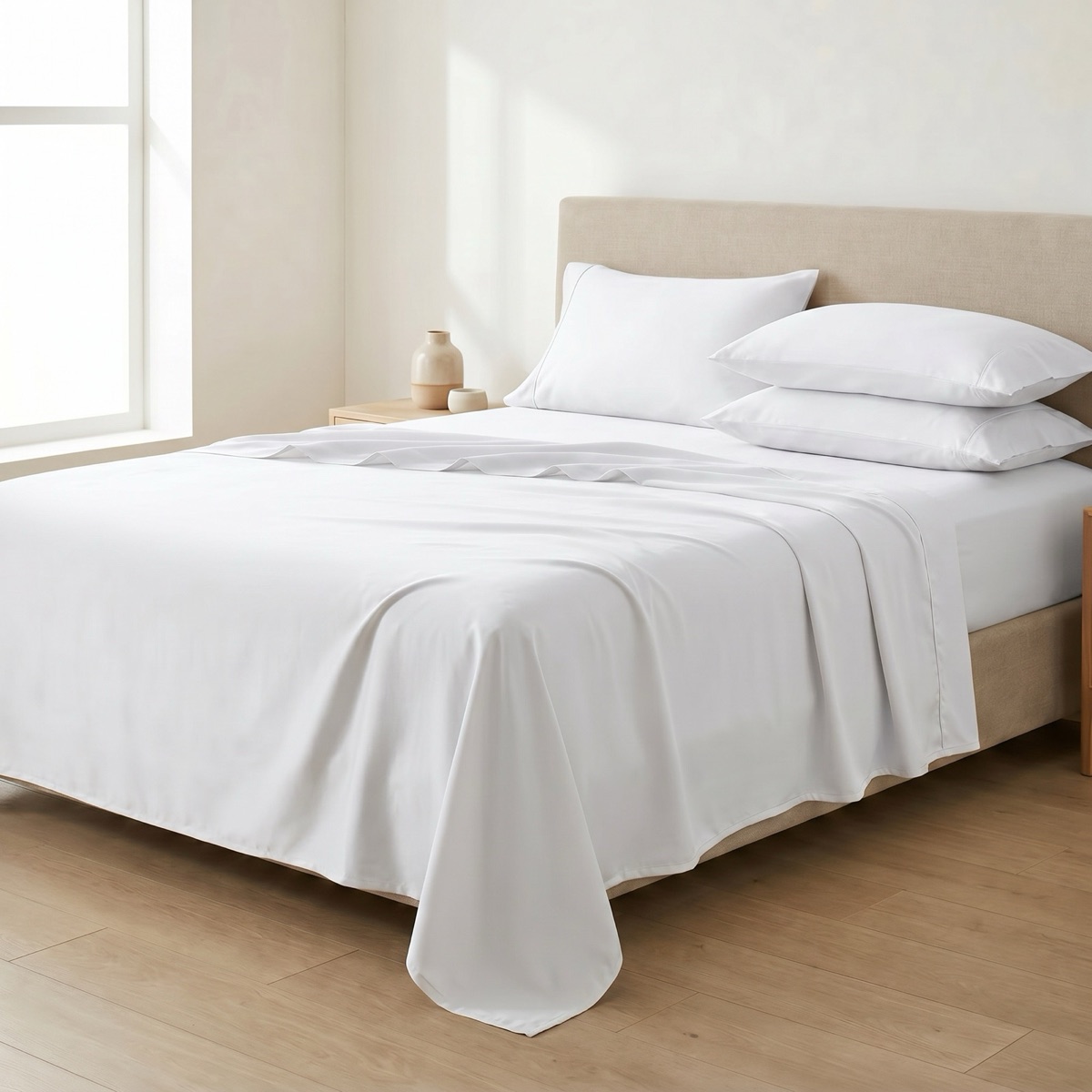
Kemet Cotton Egyptian Sateen Sheet Set
100% extra-long staple Giza cotton from Egypt's Nile Delta, woven into a smooth 600 thread count sateen. Ten colors, all standard sizes.
- 600 thread count sateen weave
- Extra-long staple Giza cotton
- Deep 16-inch pockets
- 30-day money-back guarantee
Sets from $149.95
Shop Kemet Sheets →Night Sweats Are Not the Same as Sleeping Warm
I need to say this upfront because it changes everything about which sheets you should buy. If you just sleep a little warm and kick off the blanket sometimes, you’re a hot sleeper. Our best sheets for hot sleepers guide has you covered.
Night sweats are different. You’re waking up with damp hair. Your pillowcase is wet. You’re changing your shirt at 3 AM. It’s not just uncomfortable. It disrupts your entire sleep cycle, and it can make you dread going to bed.
I’ve dealt with this personally (perimenopause is something nobody warns you about enough), and I’ve spent a lot of time figuring out which sheets make the difference between “I woke up twice” and “I slept through it.” The answer isn’t just about buying sheets that feel cool. It’s about moisture management.
Why Moisture Wicking Matters More Than Cooling
Here’s what most sheet marketing gets wrong about night sweats. They focus on cooling. They’ll talk about temperature-regulating fabrics, phase-change materials, cooling gel infusions. All of that addresses heat, but night sweats produce a lot of moisture. That’s the actual problem.
When you’re producing enough sweat to soak through a t-shirt, you need sheets that can:
- Absorb moisture quickly so it’s not pooling against your skin
- Release that moisture into the air (evaporate it) so the sheet doesn’t become a wet compress
- Dry relatively fast so you’re not lying in dampness for the rest of the night
This is fundamentally different from just “sleeping cool.” A sheet can feel perfectly cool to the touch and still be terrible at managing moisture. That’s why so many people with night sweats buy “cooling” sheets and end up disappointed.
The Best Fabrics for Night Sweats
1. Cotton Percale (Especially Egyptian Cotton)
Cotton percale is my number-one recommendation for night sweats, and it’s what I personally use. Here’s why it works so well.
Cotton is naturally absorbent. It can hold about 7% of its weight in moisture before it feels damp. That’s not as impressive as linen (which can handle 20%), but cotton has an advantage that linen doesn’t: it releases moisture evenly through evaporation, and it does so while still feeling relatively smooth and comfortable.
The percale weave is critical here. The one-over, one-under pattern creates an open structure that allows airflow through the fabric. More airflow means faster evaporation. A percale sheet vs a sateen sheet made from the same cotton will dry dramatically faster.
Egyptian cotton percale is the best of the best for this because the extra-long staple fibers produce a smoother, more consistent fabric that wicks more efficiently. It also gets softer with every wash without losing its moisture-wicking ability. For more on why the fiber length matters, see our Egyptian cotton guide.
Thread count sweet spot: 300 to 400TC. Higher than that and the weave gets too dense, reducing airflow. Lower and the fabric can feel rough. The thread count guide explains why more isn’t always better.
2. Linen
Linen is exceptional at moisture management. It absorbs up to 20% of its weight before feeling wet (nearly three times what cotton can handle), and it dries incredibly fast. If absorption capacity is your top priority, linen wins.
But I’ll be honest about the downsides. Linen has a nubby, textured feel that takes getting used to. When you’re already uncomfortable from night sweats, lying on something rough might not feel great. New linen is especially crisp. It softens beautifully over time, but the first dozen washes are an investment in patience.
Linen also wrinkles like nothing else. If that bothers you (it bothers me, I won’t pretend otherwise), factor that in.
For pure performance with night sweats, linen is arguably the best. For overall sleeping experience, I still prefer cotton percale.
3. Tencel (Lyocell)
Tencel is made from eucalyptus wood pulp, and it’s remarkably good at moisture wicking. It absorbs moisture 50% more efficiently than cotton and has a smooth, cool-to-the-touch surface. If you want the moisture management of linen without the rough texture, Tencel is the answer.
The fabric feels silky and light. It drapes well. It doesn’t wrinkle as badly as linen. On paper, it sounds perfect.
In practice, I find that Tencel can feel a bit slippery when you’re sweating, and it doesn’t have quite the same crisp, fresh feel as percale. This is personal preference, but I reach for my cotton percale sheets more often. That said, several people I know with night sweats swear by Tencel and wouldn’t switch back. Your mileage may genuinely vary on this one.
4. Cotton-Linen Blend
If you want linen’s moisture absorption without the full linen texture experience, cotton-linen blends (usually 55% linen, 45% cotton) give you a middle ground. You get better moisture wicking than pure cotton with a smoother feel than pure linen. They’re a good compromise if you’re not sure which direction to go.
Fabrics to Avoid with Night Sweats
Polyester and Microfiber
These are the worst possible choice for night sweats. Synthetic fibers don’t absorb moisture at all. When you sweat, the moisture has nowhere to go. It sits on the surface of the fabric, creating that awful clammy, sticky feeling. No amount of “cooling technology” printed on the packaging changes this fundamental property of polyester.
Sateen Weave (Even in Good Cotton)
I know sateen feels luxurious. That silky smoothness is hard to resist. But sateen’s dense weave structure (four yarns over, one under) traps moisture against your body. Even Egyptian cotton sateen won’t wick as effectively as percale. If you have night sweats, choose percale. It makes a real difference.
Bamboo Viscose
Bamboo sheets feel cool initially, but they don’t handle heavy moisture well. The fabric can get clammy when saturated, and it takes a long time to dry. For occasional warm sleeping, bamboo is fine. For actual night sweats, it’s not absorbent enough where it counts.
Beyond Sheets: The Full Sleep Setup
Sheets alone won’t solve night sweats (I wish), but the right combination of bedding can make a significant difference.
Mattress Protector
Use a breathable waterproof mattress protector. This protects your mattress from moisture damage without creating a heat-trapping barrier. Look for protectors made with a polyurethane membrane rather than vinyl, which tends to trap heat and crinkle.
Pillowcase
Your face and neck produce a lot of sweat. Switch your pillowcase to the same material as your sheets (cotton percale or linen). A damp pillow against your face is one of the most uncomfortable parts of night sweats.
Duvet and Blankets
Heavy comforters make everything worse. Consider a lightweight cotton or linen duvet cover with a low-weight fill, or skip the duvet entirely in warmer months and use a cotton blanket. Layers you can easily kick off are better than one thick comforter.
Brands That Work Well for Night Sweats
Based on our research, these brands offer sheets well-suited for managing night sweats.
Pure Parima makes Egyptian cotton percale sheets in the ideal thread count range. They’re OEKO-TEX certified, which also matters if your night sweats are hormonally driven and your skin is more reactive than usual (this is a real thing that nobody talks about enough).
Brooklinen offers both percale and linen options. Their classic percale is a solid choice for night sweats at a reasonable price point.
Riley Home uses long-staple cotton in their percale sheets and keeps the thread count in the sweet spot for breathability.
For a budget-friendly option, California Design Den offers OEKO-TEX certified cotton percale at a lower price point than the premium brands.
Washing and Care Tips for Night Sweat Sheets
When you’re sweating through sheets regularly, your care routine needs adjusting.
Wash every 3 to 4 days. I know that sounds like a lot of laundry. Having two sets of sheets and rotating them makes this manageable. Night sweat residue breaks down fabric faster and can develop odor quickly.
Use warm water, not hot. Hot water can set sweat stains and break down cotton fibers faster. Warm water with a gentle detergent gets sheets clean without accelerating wear.
Skip the fabric softener. It coats fibers and dramatically reduces their ability to absorb moisture. This is the last thing you want with night sweats. Use half a cup of white vinegar in the rinse cycle every few washes to keep fabric absorbent and odor-free.
Tumble dry on low or line dry. Over-drying makes cotton stiff and can reduce its moisture-wicking capacity. Pull sheets out while they’re still slightly cool to the touch.
For detailed care instructions, our Egyptian cotton care guide covers everything.
The Honest Truth
I’m not going to tell you that the right sheets will cure night sweats. They won’t. If you’re dealing with severe or persistent night sweats, please talk to your doctor (hormonal changes, medications, and medical conditions can all be underlying causes).
But the right sheets can take you from “I’m miserable and dreading bedtime” to “I woke up once but went back to sleep.” That difference matters. It really does.
Cotton percale in the 300 to 400TC range is where I’d start. It’s effective, widely available, gets better with washing, and doesn’t require a massive investment. If you try it and want more absorption, move up to linen or a cotton-linen blend. But for most people with night sweats, good percale is the sweet spot.
Get our reviews first on Google
Add Cotton With Love as a preferred source and Google will show you more of our towel and sheet reviews.
Add Cotton With Love as a preferred source on GoogleAdd us as a preferred source on Google
See more of our towel and sheet reviews in your Google results.
Frequently Asked Questions
What sheets are best for night sweats?
Cotton percale sheets (especially Egyptian cotton percale in the 300 to 400 thread count range) and linen are the best options for night sweats. They absorb moisture quickly and release it through evaporation. Tencel is another strong choice because of its exceptional moisture-wicking properties.
How are night sweats different from sleeping hot?
Sleeping hot means you tend to feel warm during the night. Night sweats involve actually waking up damp or soaked, often from hormonal changes, medications, or medical conditions. Night sweats produce much more moisture, so you need sheets that can absorb and release large amounts of sweat, not just sheets that feel cool.
Are cooling sheets good for night sweats?
Sheets marketed as 'cooling' with phase-change materials or cooling gel technology don't help much with night sweats. The cooling effect fades within minutes, and these sheets typically don't absorb moisture well. You need moisture management, not surface-level cooling.
Is sateen or percale better for night sweats?
Percale is significantly better for night sweats. Sateen's denser weave traps more heat and moisture against your skin. Percale's open one-over, one-under weave allows moisture to evaporate much faster, which is exactly what you need when dealing with night sweats.
Should I use waterproof sheets for night sweats?
Waterproof mattress protectors are helpful for protecting your mattress, but waterproof sheets would make sweating worse by trapping moisture against your body. Use a breathable waterproof protector underneath and moisture-wicking sheets on top.
How often should I wash sheets if I have night sweats?
Every three to four days is ideal. Night sweats leave behind moisture, salts, and oils that break down fabric faster and can create odor. Frequent washing in warm water with a gentle detergent keeps sheets fresh and maintains their absorbency.