The Most Absorbent Bath Towels of 2026: 6 Picks Ranked by What Actually Soaks Up Water
The Short Answer
If you just want the ranking, here it is. These are the six most absorbent bath towels I’d actually buy in 2026, ordered by how much water they pull off your skin per pass:
- 🏆 Best Overall: Kemet Cotton Reserve Collection (800 GSM). Zero-twist Giza Egyptian cotton, sets from $99.95 to $129.95. Check price →
- Best Certified: Pure Parima (800 GSM). Pyramid Mark verified Egyptian cotton, around $50 per towel. Check price →
- Heaviest Turkish Pick: Brooklinen Super-Plush (820 GSM). Honest Turkish cotton, $24 to $35 per towel. Check price →
- Best Oversized: Frontgate Resort Collection (~700 GSM). Huge 35 by 68 inch towels, $40 to $80 each. Check price →
- Best Budget: Hammam Linen (600 GSM). Turkish cotton 4-packs around $40. Check price →
- Cheapest That Works: Utopia Towels (600 GSM). Ring-spun cotton 8-piece sets around $35. Check price →
The rest of this guide explains why these six, what actually determines absorbency (it’s not just weight), and which unverified claims to watch for. I spent four years on the sourcing side of home textiles, and absorbency is one of the few towel qualities you can predict almost entirely from the spec sheet, if you know which specs matter.
First, Make Sure This Is the Guide You Need
Quick distinction, because these two searches get mixed up constantly and they lead to opposite purchases.
This guide is about maximum absorbency. The towel that drinks the most water per pass: heavy, plush, spa-weight terry in the 600 to 900 GSM range. These towels dry you almost instantly, and in exchange they take longer to dry on the bar afterward.
If what you actually want is a towel that dries you fast AND dries itself fast between uses, you want a lighter, quicker-turnaround towel. That’s a different set of picks, and we cover it in our best fast-absorbing bath towels guide. Humid bathroom, no exhaust fan, towels on hooks instead of bars? Go read that one instead. A maximum-absorbency towel in a bathroom that can’t dry it becomes a musty towel by Thursday.
Still here? Good. You want the heavy stuff. Let’s talk about what makes it work.
What Actually Makes a Towel Absorbent
Cotton absorbs water because cellulose is hydrophilic: water molecules bind to the fiber itself and get held in the spaces between fibers. Everything about towel absorbency flows from that fact. More quality cotton, arranged so water can reach it, equals more absorbency. Five specs control it.
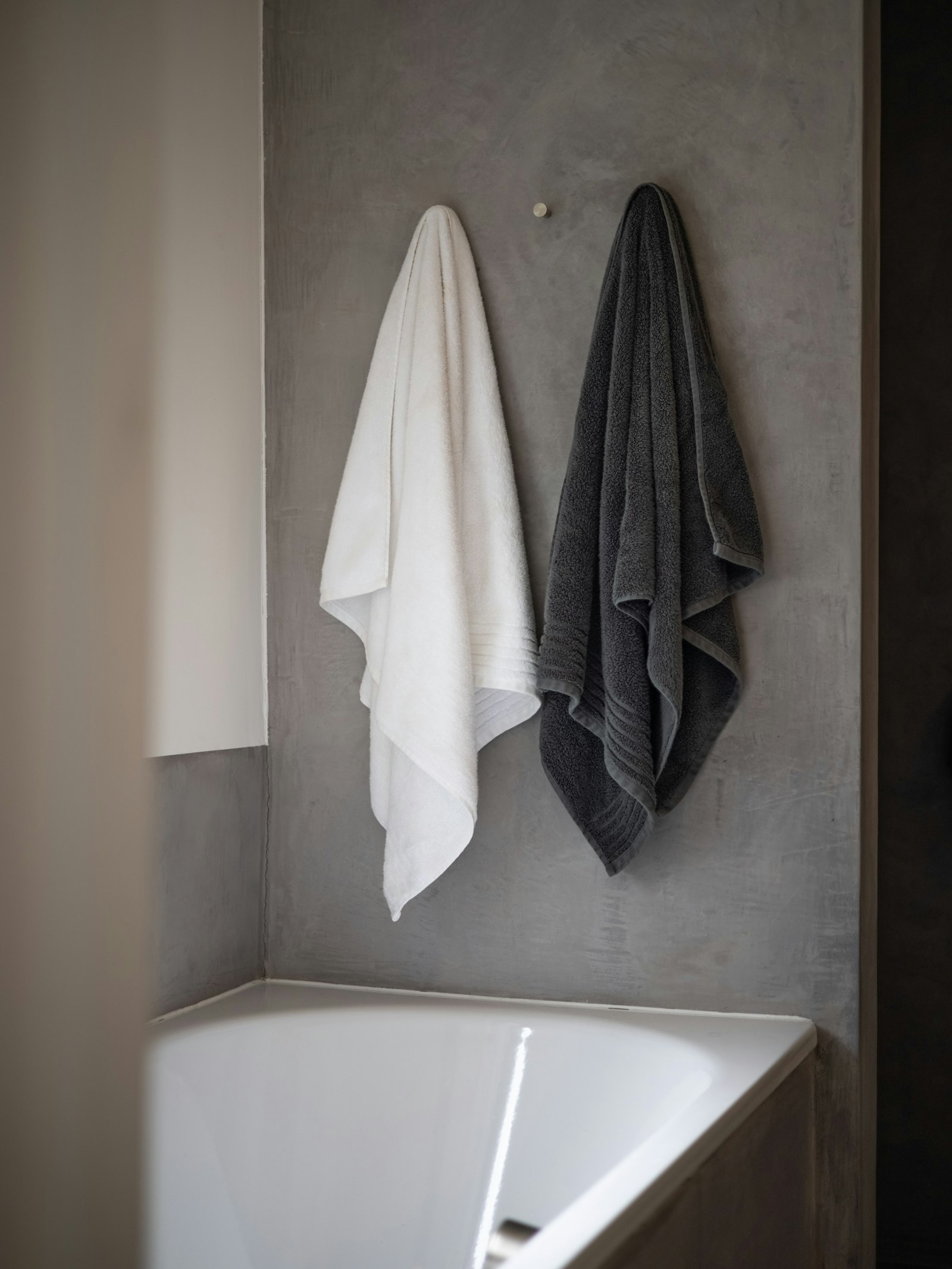
GSM, the capacity number. GSM is grams of fabric per square meter, and it’s the closest thing towels have to an honest spec (unlike thread count in sheets, it’s hard to fake a weight). More grams means more cotton available to hold water. The maximum-absorbency zone is 600 to 900 GSM, and an 800 GSM towel holds roughly a third more water than a 600 GSM one. Past 800, returns diminish. Past about 900, the pile is so compressed that water struggles to move into the towel at all. Full breakdown in our towel GSM explained guide.
Fiber staple length, the quality multiplier. Long-staple and extra-long staple cotton (Egyptian Giza, Supima) spins into finer, smoother, more uniform yarn. Finer yarn means more capillary channels per loop, which means water gets pulled in faster and held more completely. This is why a well-made 600 GSM Egyptian cotton towel routinely out-absorbs a short-staple 800 GSM towel. GSM tells you how much cotton is there; staple length tells you how well that cotton works.
Loop density and pile height. Terry loops are the working surface of a towel. Each loop is a little wick. More loops per square inch means more surface area collecting water, and taller loops hold more water per loop. The trade-off is drying time: tall dense pile releases moisture slowly. This is the physical reason “most absorbent” and “quick-drying” are different categories.
Yarn construction: zero-twist, combed, ring-spun. Conventional yarn is twisted tightly for strength, which closes off the interior of the yarn bundle. Zero-twist construction leaves the fibers parallel and open, so water penetrates the core of the yarn instead of just wetting the surface. It absorbs faster and feels lofty from the first use, and it only works with long-staple cotton, because short fibers need the twist to hold together. That makes zero-twist a built-in authenticity check: a real zero-twist towel can’t be made from junk cotton. We break down the construction in detail on our zero-twist towels page. Below zero-twist, look for “combed” (short fibers and debris removed before spinning) and “ring-spun” (denser, smoother yarn than budget open-end spinning). Both improve absorption uniformity.
100% cotton, no blends. Polyester is hydrophobic. Every percentage point of poly in a “cotton-rich blend” is fiber that actively repels water. Even an 80/20 blend absorbs noticeably less than pure cotton. For a maximum-absorbency towel, 100% cotton is non-negotiable.
One more thing the spec sheet won’t tell you: no towel performs on day one. Mills apply sizing and softening finishes so towels look and feel good on the shelf, and those coatings repel water. Expect two to three washes before any new towel reaches full absorbency, and add a half cup of white vinegar to the first wash to speed the strip-down. If your towels at home stopped absorbing, the culprit is almost always fabric softener or detergent residue, not the cotton. More on that at the end.
The 6 Most Absorbent Bath Towels, Ranked
Every pick below is a brand we’ve already reviewed in depth on this site. Specs come from the brands’ published claims cross-checked against our own reviews and documented owner feedback, and I’ve flagged exactly which Egyptian cotton claims are verified and which are brand assurance only. You can see how all our towel brands score on our bath towel ratings page.
1. Kemet Cotton Reserve Collection (800 GSM) 🏆 Best Overall
| Spec | Detail |
|---|---|
| GSM | 800 (Reserve Collection); 600 GSM Signature also available |
| Cotton | Giza Egyptian cotton, Nile Delta |
| Construction | Zero-twist |
| Certification | OEKO-TEX Standard 100 |
| Price | $99.95 to $129.95 per bath towel set |
| Guarantee | 30-day money-back, free worldwide shipping |
This is the towel where all five absorbency drivers show up at once, and that’s why it’s the number one pick. You get spa-weight 800 GSM density, extra-long staple Giza cotton from the Nile Delta, and zero-twist construction in the same towel, at a set price that undercuts every comparable Egyptian cotton competitor. The zero-twist part matters most here: at 800 GSM, conventional twisted-loop towels can feel dense and almost stiff out of the box. Kemet’s Reserve towels absorb from the first use and stay lofty, because the open yarn lets water reach the entire fiber bundle instead of just the loop surface.
I reviewed this brand in depth earlier this year, and my take hasn’t changed: the feel-to-price ratio is the best I’ve found in Egyptian cotton. Full breakdown in my Kemet Cotton towels review, including the sourcing claims I checked.
Pros: All three top absorbency drivers in one towel. Soft and absorbent from first use, no break-in period. Specific, checkable sourcing (Giza variety, Nile Delta region) rather than a vague “Egyptian cotton” label. OEKO-TEX certified. The 30-day guarantee removes the risk of trying an 800 GSM towel at home.
Cons: Launched in 2025, so there’s no decade-long durability record yet. No Cotton Egypt Association Pyramid Mark (the formal third-party origin certification) so far. Like every 800 GSM towel, it needs a ventilated bathroom or a towel rotation to dry between uses.
Who it’s for: Anyone whose goal is the single most absorbent towel their money can buy. If your bathroom can dry a heavy towel, this is the buy.
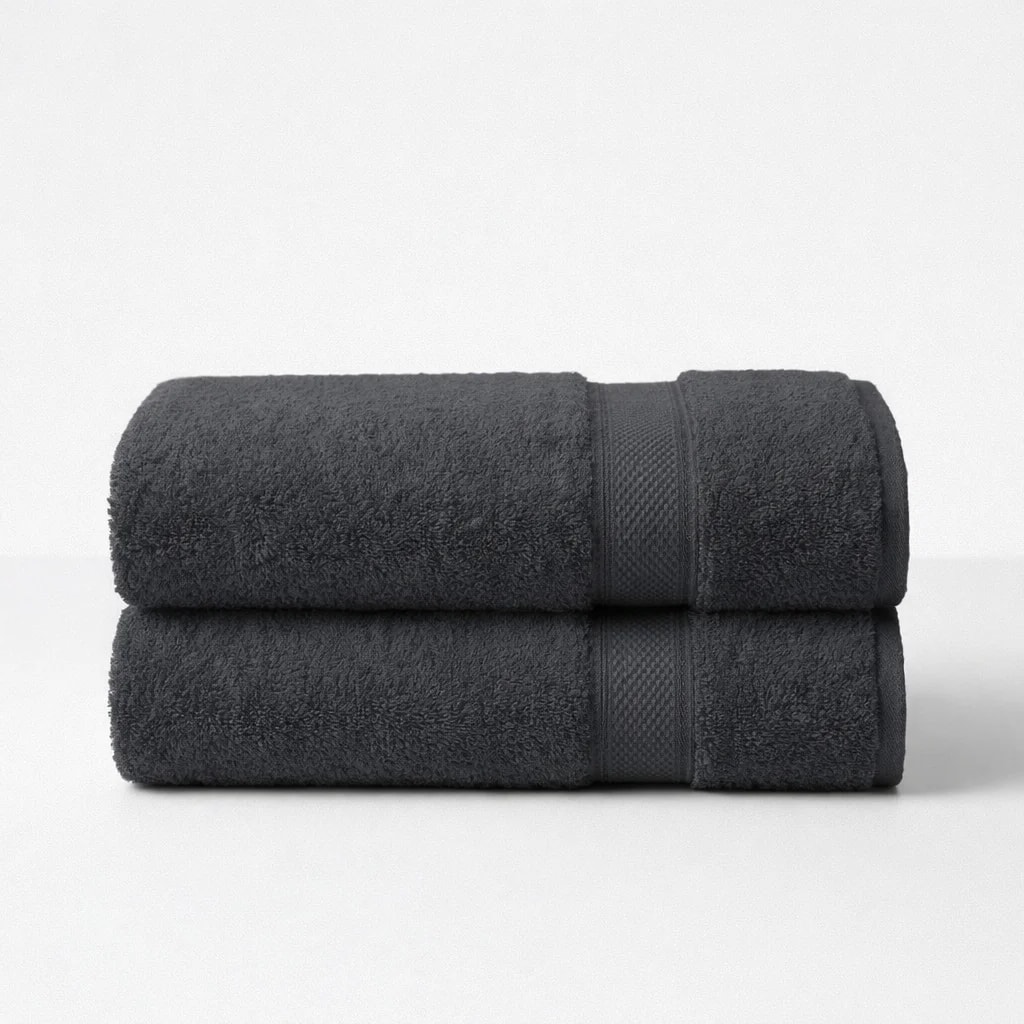
Kemet Cotton Reserve Collection (800 GSM)
The most absorbent towel we recommend: spa-weight Giza Egyptian cotton from the Nile Delta with zero-twist construction that pulls in water from the very first use.
- 800 GSM spa weight (600 GSM Signature also available)
- Zero-twist Giza Egyptian cotton
- OEKO-TEX Standard 100 certified
- 30-day money-back guarantee, free worldwide shipping
Sets from $99.95
Shop Kemet Towels →2. Pure Parima 800 GSM: Best Certified Egyptian Cotton
| Spec | Detail |
|---|---|
| GSM | 800 |
| Cotton | Giza Egyptian cotton, Nile Delta |
| Construction | Ring-spun |
| Certification | Cotton Egypt Association Pyramid Mark |
| Price | Around $50 per bath towel |
Pure Parima is the verification gold standard in this category. It’s the rare brand whose Egyptian cotton claim is backed by the Cotton Egypt Association Pyramid Mark, which involves DNA testing and supply chain audit. At 800 GSM in ring-spun extra-long staple cotton, the absorbency is right at the top of the category: dense, uniform loops that pull water off skin in a single pass and a silkier hand feel than zero-twist construction produces.
The reason it sits at number two instead of number one is price and construction. Per towel, you’ll pay roughly double Kemet’s per-piece set math for comparable absorbency, and the conventional ring-spun loops take a few washes to reach the immediate absorbency a zero-twist towel has on day one.
Pros: The only pick here with third-party certified Egyptian cotton origin. Top-tier absorbency at 800 GSM. Established brand with a longer track record and consistent customer service.
Cons: Premium per-towel pricing. Slow to dry on the bar, like all 800 GSM towels. Needs a short break-in before peak absorbency.
Who it’s for: Buyers for whom independent verification is non-negotiable: gifts, registries, or anyone burned by a fake Egyptian cotton purchase before.
3. Brooklinen Super-Plush (820 GSM): Heaviest Turkish Cotton Pick
| Spec | Detail |
|---|---|
| GSM | 820 |
| Cotton | Turkish cotton, Denizli region mills |
| Construction | Plush twisted terry |
| Certification | None (origin disclosed honestly) |
| Price | $24 to $35 per bath towel |
The Brooklinen Super-Plush is the heaviest towel in this roundup by measured weight, and independent measurements have confirmed the 820 GSM claim is honest, which is more than most “luxury weight” listings can say. Turkish cotton isn’t extra-long staple like Giza, so gram for gram it holds slightly less water than the Egyptian picks above it. But at 820 GSM there are a lot of grams, and the real-world absorbency is excellent: one wrap and you’re dry.
What I respect about Brooklinen is the transparency. They say Turkish cotton, they name the Denizli manufacturing region, and they don’t slap “Egyptian” on the label for the markup. In a category full of unverifiable fiber claims, honest labeling counts.
Pros: Genuinely heavyweight, with an independently confirmed GSM. Best cotton-mass-per-dollar in the premium tier. Transparent sourcing. Wide color range.
Cons: Turkish cotton absorbs slightly less per gram than extra-long staple Egyptian. Heavy and slow to dry between uses. No certification program behind it.
Who it’s for: Buyers who want maximum plushness and absorbency from a familiar DTC brand at a mid-tier per-towel price.
4. Frontgate Resort Collection (~700 GSM): Best Oversized
| Spec | Detail |
|---|---|
| GSM | Around 700 |
| Cotton | Egyptian cotton (brand claim, not third-party verified) |
| Construction | Dense combed terry, oversized cut |
| Certification | OEKO-TEX on some products |
| Price | $40 to $80 per bath towel |
Absorbency isn’t only about density. Total water capacity is density times surface area, and the Frontgate Resort Collection wins on area: these run 35 by 68 inches and larger, dramatically bigger than a standard 30 by 56 bath towel. A 700 GSM towel with 40% more fabric holds more total water than a smaller towel at 800 GSM, which is exactly why this is the pick for tall people, post-swim wraps, and anyone who finds standard towels skimpy.
The watchdog note: Frontgate labels these Egyptian cotton, but there’s no Pyramid Mark, so the origin claim rests on the brand’s own representation. The towels are physically excellent either way. Just know what you’re paying for: construction and size, not verified fiber origin.
Pros: Huge surface area equals huge total capacity. Genuinely plush hospitality-grade construction. Slightly faster bar-drying than the 800 GSM picks. Frequent sale events soften the price.
Cons: Egyptian cotton claim is unverified. Expensive at full retail. Oversized towels need oversized bar space to dry properly.
Who it’s for: Anyone who wants full-body coverage plus top-tier absorbency, and buyers who prioritize how the towel performs over certification paperwork.
5. Hammam Linen (600 GSM): Best Budget Absorbency
| Spec | Detail |
|---|---|
| GSM | 600 |
| Cotton | Turkish cotton, Denizli region |
| Construction | Ring-spun terry |
| Certification | OEKO-TEX Standard 100 |
| Price | Around $40 for a 4-pack |
At roughly $10 per towel, Hammam Linen is where maximum absorbency meets a real-world budget. The Turkish cotton is honest, the 600 GSM weight is real, and the ring-spun construction absorbs evenly once broken in. It won’t match the water capacity of the 800 GSM picks above, but it comfortably out-absorbs the department store towels most people actually own, and it dries faster on the bar than anything ranked above it.
The catch is the break-in. These shed noticeably for the first three to five washes and need those cycles to hit full absorbency. That’s universal at this price, not a Hammam-specific flaw. Wash them a few times before judging.
Pros: Exceptional absorbency per dollar. Honest fiber labeling and OEKO-TEX certification at a budget price. Practical weight that dries overnight in most bathrooms.
Cons: Sheds heavily during break-in. Turkish cotton at 600 GSM can’t equal the total capacity of the 800 GSM tier. Amazon-only availability.
Who it’s for: Outfitting a guest bath, a first apartment, or a whole house without giving up genuine absorbency.
6. Utopia Towels (600 GSM): The Cheapest That Still Works
| Spec | Detail |
|---|---|
| GSM | 600 |
| Cotton | Standard ring-spun cotton |
| Construction | Ring-spun terry |
| Certification | None |
| Price | Around $35 for an 8-piece set |
Utopia Towels is the floor: the least you can spend and still get a towel that meaningfully absorbs water. The cotton is short-staple, so per gram it holds less than everything above it, but the ring-spun construction (genuinely better than the open-end spinning most budget towels use) and honest 600 GSM weight put it far ahead of typical bargain-bin terry. Crucially, Utopia doesn’t fake an Egyptian cotton claim, which automatically ranks it above half the listings on Amazon in my book.
Pros: Absurd value: 2 bath towels, 2 hand towels, and 4 washcloths for about $35. Honest specs with no inflated fiber claims. Solid absorbency for everyday use.
Cons: Short-staple cotton means lower absorbency per gram and a shorter lifespan. Rougher hand feel than every pick above. Limited plushness.
Who it’s for: Rentals, kids’ bathrooms, gym bags, and anyone who needs functional absorbency at the absolute lowest spend.
Every Pick Compared
| Pick | GSM | Cotton | Origin Verified? | Price | Best For |
|---|---|---|---|---|---|
| 🏆 Kemet Cotton Reserve | 800 | Giza Egyptian, zero-twist | Specific sourcing claims, OEKO-TEX; no Pyramid Mark yet | $99.95-$129.95 per set | Maximum absorbency overall |
| Pure Parima | 800 | Giza Egyptian, ring-spun | Yes, Pyramid Mark certified | ~$50 per towel | Certified Egyptian cotton |
| Brooklinen Super-Plush | 820 | Turkish, Denizli | Honest Turkish labeling | $24-$35 per towel | Heaviest honest weight |
| Frontgate Resort | ~700 | Egyptian (brand claim) | No | $40-$80 per towel | Oversized total capacity |
| Hammam Linen | 600 | Turkish, Denizli | Honest Turkish labeling, OEKO-TEX | ~$40 per 4-pack | Budget absorbency |
| Utopia Towels | 600 | Standard ring-spun | No claim made | ~$35 per 8-piece set | Lowest workable spend |
If you’re deciding between the top two: Kemet wins on price, zero-twist first-use absorbency, and plushness; Pure Parima wins on certification and track record. I walked through that trade-off in more detail in the Kemet review. And if the heavy end of this table appeals to you, our best 800 GSM towels guide goes deeper on that weight class, including the 900 GSM upgrades and the drying-time math most guides skip.
Getting the Absorbency You Paid For
A maximum-absorbency towel can be ruined by laundry habits in about two months. Three rules protect the investment.
Wash new towels two or three times before judging them. Mill sizing repels water. A half cup of white vinegar in the first wash strips it faster. If a brand-new premium towel seems to push water around, this is almost always why.
Never use fabric softener. Ever. Softener deposits a waxy coating on exactly the fiber surfaces that are supposed to bind water. It’s the single biggest absorbency killer in American laundry rooms. If you want softer towels, use less detergent and add wool dryer balls.
Halve your detergent dose. Dense high-GSM pile traps detergent residue, and residue buildup reads as “my towels stopped absorbing” about six months in. Warm water, half dose, and an occasional hot vinegar wash keeps the loops working. Our how to wash Egyptian cotton towels guide has the full routine.
And the honest structural note: every towel in the top four of this ranking takes real time to dry on a bar. Spread it fully after use, run the exhaust fan, or rotate two towels. A heavy towel that never fully dries turns musty, and no amount of cotton quality fixes that.
What I’d Skip
Generic “1,000 GSM luxury” listings. The weight is usually rounded up, the cotton is usually short-staple, and past 900 GSM real towels start rejecting water anyway because the pile compresses. A big number on a listing is not a spec.
Cotton-poly blends marketed as plush. Polyester repels water. A blend can look thick and absorb poorly at the same time.
Unverified “Egyptian cotton” at bargain prices. If a towel claims Egyptian cotton for $8, the claim is the most absorbent thing about it. Genuine extra-long staple cotton costs real money at every step of the supply chain.
Microfiber for daily bathing. Fine for the car and the gym bag. Against your skin after a shower, it feels like drying off with a screen protector.
The Bottom Line
Maximum absorbency is a solved equation: 700 to 900 GSM, extra-long staple cotton, dense loops, and either zero-twist or combed ring-spun construction, in 100% cotton with no softener coating. The Kemet Cotton Reserve Collection is the only towel I’ve found that checks every one of those boxes at a set price under $130, which is why it holds the top spot. Pure Parima is the certified alternative, Brooklinen the heaviest honest Turkish option, and Hammam Linen the proof that real absorbency doesn’t require a luxury budget.
Match the towel to your bathroom, strip the sizing, ban the fabric softener, and any pick on this list will do the one thing a towel exists to do: get you dry in one pass.
Related Reading
Get our reviews first on Google
Add Cotton With Love as a preferred source and Google will show you more of our towel and sheet reviews.
Add Cotton With Love as a preferred source on GoogleAdd us as a preferred source on Google
See more of our towel and sheet reviews in your Google results.
Frequently Asked Questions
What is the most absorbent bath towel?
Based on construction and fiber quality, the most absorbent bath towel we recommend is the Kemet Cotton Reserve Collection at 800 GSM. It combines the three biggest absorbency drivers in one towel: heavyweight density, extra-long staple Giza Egyptian cotton, and zero-twist construction that lets water penetrate the yarn core. Pure Parima's 800 GSM line is the closest competitor and carries third-party Egyptian cotton certification, at a higher per-towel price.
What GSM is most absorbent?
700 to 900 GSM is the maximum-absorbency range. More grams of cotton per square meter means more fiber available to hold water. Returns diminish past 800 GSM, and above roughly 900 the pile becomes so dense that the loops compress when wet and the towel starts pushing water around instead of soaking it up. For pure water capacity with usable drying times, 800 GSM is the practical ceiling for home use.
Are Egyptian cotton towels more absorbent?
At the same GSM, yes. Genuine Egyptian cotton is an extra-long staple fiber that spins into finer, more uniform yarn with better capillary action, so it pulls in and holds more water per gram than short-staple cotton. A 600 GSM Egyptian cotton towel often out-absorbs a heavier short-staple towel. The caveat: many 'Egyptian cotton' labels are unverified, so look for specific sourcing claims or third-party certification before paying the premium.
Why are my towels not absorbent?
New towels arrive coated in mill sizing and silicone softeners that repel water, and two or three washes strip most of it out. Older towels lose absorbency to fabric softener and detergent residue, which coat the cotton fibers over time. Wash with half the usual detergent dose, skip fabric softener permanently, and run an occasional hot wash with a cup of white vinegar to strip buildup and restore absorbency.
Do zero twist towels absorb more?
Yes, and they absorb faster. In conventional yarn the fibers are twisted tightly for strength, which closes off the yarn's core. Zero-twist yarn leaves the fibers parallel and open, so water penetrates the whole bundle instead of just the surface. The trade-off is that zero-twist only works with long-staple cotton, because short fibers fall apart without the twist. That's why zero-twist doubles as a quality signal when a brand uses it.
Is a 1,000 GSM towel more absorbent than an 800 GSM towel?
Rarely in practice. Past about 900 GSM, the pile is packed so densely that the loops compress under their own wet weight and water stops moving into the towel efficiently. Many '1,000 GSM' listings are also rounded-up marketing rather than measured weight. If a heavy towel is the goal, a verified 800 GSM towel from quality long-staple cotton will out-absorb a generic towel with a bigger number on the listing.
Are bamboo or microfiber towels more absorbent than cotton?
Microfiber technically holds a lot of water fast, but it feels synthetic against skin and doesn't launder or wring out like cotton, which is why it stays in gym bags and car kits. Bamboo viscose absorbs well in its first year but degrades faster than cotton under repeated washing, and the absorbency declines with it. For daily bath towels that stay absorbent for five or more years, 100% long-staple cotton is still the best material.
How is a most-absorbent towel different from a fast-drying towel?
They sit at opposite ends of the same trade-off. Maximum-absorbency towels are heavy, usually 700 to 900 GSM, with tall dense loops that hold a lot of water and take longer to dry on the bar. Fast-drying towels are lighter, often 400 to 600 GSM Turkish cotton, and prioritize quick turnaround between uses. If your bathroom is humid or poorly ventilated, a fast-drying towel is the smarter buy.