Sand Cloud Towels Review: Are They Actually Worth It?
Quick Verdict
Our rating: 3.9 / 5. Good at the one job they are built for, and a common disappointment for buyers who expected a plush bath towel.
Sand Cloud towels are a good buy for exactly one kind of buyer: someone who wants a light, fast-drying, sand-shedding towel for the beach, the pool, or a suitcase, and who buys during one of the brand’s near-permanent discount windows. The Turkish cotton is real, the OEKO-TEX certification is real, and the Shark Tank story checks out in every detail I could verify.
They are the wrong buy if you want a thick, plush towel. That is not a quality failure, it is the entire design. But it is the single most common source of buyer disappointment, and Sand Cloud’s marketing does not go out of its way to prevent the misunderstanding.
The marine conservation mission is genuine but softer than the branding implies. I will walk through exactly what I could and could not verify below, because that gap is where a review needs to earn its keep.
For our scored brand profile with ratings and pros and cons, see the Sand Cloud brand review. This guide is the deep version.
What Sand Cloud Actually Sells in 2026
Sand Cloud started in 2014 as three roommates in San Diego selling beach towels with a sewn-in pillow. The pillow is long gone. The core product today is a flat-woven Turkish cotton beach towel in a very large range of prints, and the catalog around it has expanded a lot further than most people realize.
As of this writing, the lineup includes:
- Beach towels, the core product. Regular size runs about 38 by 64 inches at a $54 list price. Large and XL sizes, up to roughly 60 by 68 inches, list between $68 and $78.
- Bath towels and bundles, a newer category. A four-piece bundle with two bath and two hand towels runs around $80.
- Blankets, ponchos, and cover-ups, built on the same flat-weave fabric idea.
- Bedding, apparel, and accessories, including water bottles and towel bags.
- Licensed collaborations, including Harry Potter and Bluey prints, which tells you how far the brand has moved from its surf-shop roots.
Two things stood out from my time in retail sourcing when I mapped this catalog. First, the product line has diluted. A company that made one towel in 2016 now sells resort wear and children’s TV tie-ins, and broad catalogs are usually where material consistency starts to slip. Second, the discounting is structural. During the weeks I researched this review, the site simultaneously ran a 20 percent off sitewide code, a clearance section at up to 40 percent off, and a 20 percent first-order signup offer. When a discount never ends, it is not a sale, it is the actual price. Budget accordingly and never pay list.
The Shark Tank Story, Fact-Checked
Brand origin stories tend to grow flattering embellishments over time, so I checked this one against the aired episode and contemporaneous press rather than the company’s own retelling.
The verifiable version: founders Steven Ford, Brandon Leibel, and Bruno Aschidamini pitched Sand Cloud on Season 8 of Shark Tank in an episode that aired in February 2017. They took $200,000 for 15 percent from Robert Herjavec, choosing him over competing interest from Mark Cuban, Daymond John, and Kevin O’Leary. The deal closed, which matters because a meaningful share of on-air Shark Tank deals quietly fall apart in due diligence. CNBC reported the company did $2.7 million in sales in the four months after airing, and coverage the following year put cumulative sales around $20 million.
One on-air moment is worth keeping. Herjavec, holding the towel: “It’s very thin.” That line, from the man who then invested, is the most honest one-sentence review of this product ever delivered. The thinness was true in 2017 and it is true now. Whether it is a flaw depends entirely on what you think a towel is for, which brings us to the part most Sand Cloud reviews skip.
Thin Does Not Mean Cheap: The Pestemal, Explained
Sand Cloud towels are pestemals (you will also see peshtemal or fouta), the traditional flat-woven towel of Turkish hammam culture. This style has been produced around the Aegean for centuries, and it is engineered around a completely different set of priorities than the terry towel hanging in your bathroom.
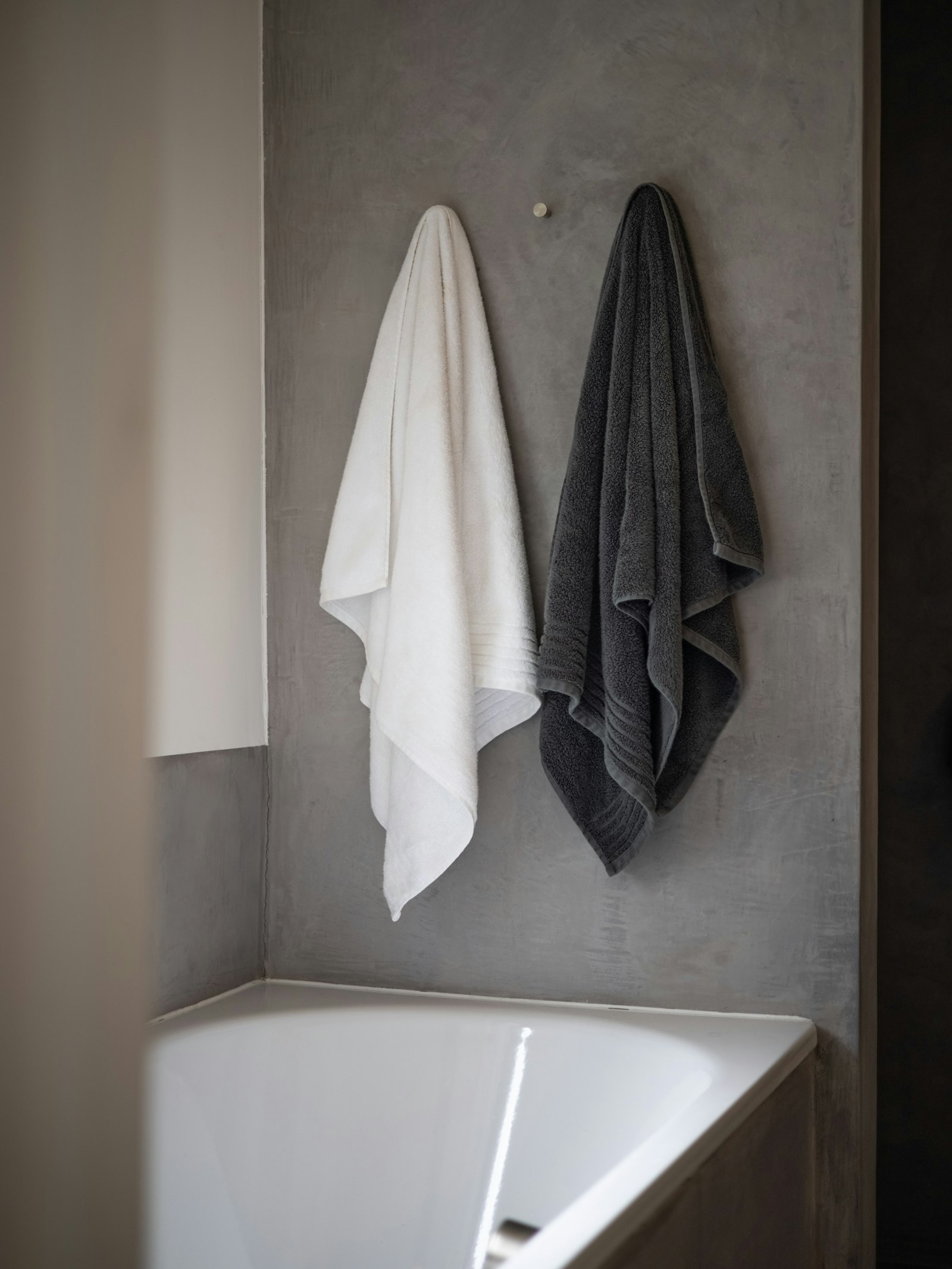
A terry towel is a loop-pile fabric. Thousands of small cotton loops stand up off the base weave, and those loops are what create absorbency, plushness, and bulk. Here is what that pile looks like up close on a heavyweight Egyptian cotton towel:
A pestemal deletes the pile entirely. It is a flat weave, closer in hand feel to a dense scarf than to a bath towel. Sand Cloud’s spin on it is a double-sided construction on many models, with a flat woven face and a low terry loop on the reverse, which recovers some absorbency without giving up the flat-weave benefits.
What removing the pile buys you:
- Drying speed. Sand Cloud claims roughly three times faster than a standard towel, and the physics support the direction of the claim even if the multiple is marketing. Less mass, less trapped water, more airflow.
- Sand release. Sand embeds itself in terry loops. On a flat weave there is nowhere for it to lodge, so it shakes off. This is the “anti-sand” claim, and it is legitimate.
- Pack size. A pestemal folds to a fraction of a terry towel’s bulk, which is why this style has become the default recommendation for carry-on travelers.
What you give up is immediate absorbency and plushness. A pestemal blots rather than engulfs. New ones can even feel water-resistant until a few washes break in the fibers, which is normal for the style and a common source of one-star reviews written on day two of ownership.
On weight: Sand Cloud does not publish a GSM figure, which I would like to see them fix. Flat-woven pestemals as a category generally fall in the 300 to 400 GSM class, versus 600 to 900 for plush bath towels. If GSM is new territory, our towel GSM guide explains what the numbers mean in the hand. And if you are weighing this fiber against the one I grew up around, the Turkish vs Egyptian cotton comparison covers why Turkish cotton is the right fiber for this job. Turkish cotton is a long-staple variety that gets softer and more absorbent with every wash, and for a towel that lives in beach bags and washing machines, that aging curve is exactly what you want. This is a case of the right material for the product, honestly labeled. Sand Cloud has never claimed Egyptian cotton, and in a market where I have spent years chasing fake Egyptian cotton claims, that plain labeling counts for something.
The 10 Percent Donation Claim, Examined
Sand Cloud’s tagline economy runs on the ocean mission. Save the fishies. Turtle prints. The claim, in the company’s own current wording: “10% of profits go toward marine conservation.”
I dug into this the way I would audit any sourcing claim, and the honest summary is: real program, fuzzy accounting.
What checks out. The partner organizations are real and the relationships are confirmed from the nonprofit side, not just Sand Cloud’s side. The Surfrider Foundation lists Sand Cloud as an official partner and has published an interview with co-founder Bruno Aschidamini about the relationship. The mission page displays roughly 18 partner organizations, including the Marine Conservation Institute, the Pacific Marine Mammal Center, Sea Shepherd, and the World Wildlife Fund, and at checkout you can pick which organization your purchase supports. This is a giving program with named, verifiable recipients, which already puts it above the vague “we give back” claims I see on most eco-branded textile sites.
What stays fuzzy. Three things.
First, the pledge is 10 percent of profits, not revenue. Profit is whatever remains after the company pays for cotton, weaving, shipping, marketing, salaries, and Harry Potter licensing fees. For any given year, that number could be large, small, or zero, and a private company never has to show it to you. A 1 percent of revenue pledge would actually be a stronger, more checkable commitment than 10 percent of profits.
Second, Sand Cloud publishes no cumulative donation total. No annual giving report, no running counter. For a company whose brand identity is built on the donation, that silence is a choice.
Third, the foundation question. Older writeups sometimes reference a “Sand Cloud Foundation” as if the company runs its own charity. I searched the IRS records available through ProPublica’s Nonprofit Explorer and found no registered nonprofit under that name. What exists today, per the company’s own mission page, is direct giving to external partner nonprofits. That is arguably the better structure, since money going to Surfrider is easier to trust than money going to a founder-controlled entity, but it means some of what has been written about Sand Cloud’s charity arm over the years is simply out of date or wrong.
My read. The mission is genuine and the partners vouch for it, so I will not call it greenwashing, and our brand profile rates their authenticity well for good reason. But buy the towel for the towel. Treat the donation as a nice tiebreaker, not as a charitable act you performed. If moving money to ocean conservation is the goal, a direct $10 donation to Surfrider does more than a $54 towel purchase whose profit slice reaches the same place at one more remove.
What Buyers Actually Complain About
I read through several hundred customer reviews and complaint threads across retail listings, review aggregators, and forums. The negative feedback clusters into four buckets, and none of them is “the towel fell apart.”
The thinness surprise. By far the biggest cluster. Buyers who expected plush got flat, and felt shortchanged at $54 or more. I have covered why the thinness is intentional, but the volume of these complaints tells me Sand Cloud’s product pages undersell the difference between a pestemal and the towel most Americans grew up with.
Shipping speed. Multiple documented cases of orders arriving after the vacation they were bought for, including buyers who paid for expedited shipping. If your trip is inside two weeks, that risk is worth pricing in.
Order fulfillment errors. Reports of partial shipments, such as one towel arriving from a two-towel order, then slow resolution.
Customer service access. Support is effectively email-only, with the listed phone line redirecting to email. Response times in complaint threads run days, not hours.
Weigh this fairly: high-volume direct-to-consumer brands accumulate shipping complaints almost mechanically, and I found no pattern of quality or safety complaints about the towels themselves. The fabric-related gripes are expectation mismatches, not defects. But the fulfillment record is mediocre for a company of this size and age, and it is the main reason I would order early and directly rather than close to a departure date.
The Price Math
Is $54 to $78 justified for a flat-woven cotton towel? Here is how I would think about it.
Against generic pestemals, Sand Cloud carries a heavy brand premium. Plain Turkish-made peshtemals from importers like Chakir Turkish Linens sell for roughly a third of Sand Cloud’s list price. You are paying Sand Cloud for prints, size, the double-sided weave on many models, OEKO-TEX certification, and the mission branding. Whether that stack is worth a $30 to $40 premium per towel is a values question, not a quality question.
Against plush towels, the comparison is apples to oranges, and both directions of the mistake cost money. People who buy Sand Cloud wanting plush waste $54 learning the difference. People who drag a 700 GSM bath sheet to the beach learn why our Egyptian cotton beach towels guide warns that heavy towels become waterlogged misery in a wet beach bag.
The single most useful money tip in this review: the discounts never really stop. Between the rotating sitewide codes, clearance events, and the signup offer, paying list price at Sand Cloud is a self-inflicted wound. At an effective $43 for the regular towel, the value picture improves meaningfully.
Sand Cloud vs the Alternatives
| Towel | Typical price per towel | Cotton | Weight class | Best use |
|---|---|---|---|---|
| Sand Cloud beach towel | $54 to $78 list, routinely 20 to 40% off | Turkish cotton, flat weave (some double-sided) | Light pestemal class, GSM unpublished, ~300 to 400 typical for the style | Beach, pool, travel, one-bag packing |
| Chakir Turkish Linens peshtemal | Under $25 | Turkish cotton, flat weave | Light pestemal class | Same jobs on a budget, fewer prints |
| Classic Turkish Towels terry beach towel | $30 to $50 | Turkish cotton terry | Mid, roughly 400 to 500 GSM | A plusher beach towel that still dries reasonably fast |
| Kemet Cotton bath towel | Sets from $79.95 to $129.95 | Giza Egyptian cotton, zero-twist | Heavy, 600 to 800 GSM | Plush bathroom towels, spa feel at home |
The table makes the real decision obvious. Sand Cloud is not competing with bath towels at all. Its true competition is the cheaper generic pestemal, and there the honest case for Sand Cloud is prints, size range, certification, and mission, at a premium.
Who Sand Cloud Is Right For
- Frequent beach and pool people who are tired of hauling damp, sandy terry towels home.
- Travelers packing light. A pestemal is the only towel style that earns space in a carry-on.
- Hot, humid climates, where a towel that dries in a couple of hours beats one that sours on the rail. Our lightweight towels guide covers this use case in depth.
- Gift buyers. The prints, the turtle branding, and the mission story make it an easy, safe gift, especially bought on discount.
- Buyers who value honest labeling. Turkish cotton sold as Turkish cotton, with OEKO-TEX Standard 100 on top. After years of auditing fiber claims, I do not take that for granted.
Who Should Skip It
- Anyone shopping for their bathroom. A pestemal after a hot shower feels like drying off with a tablecloth. Even Sand Cloud’s own bath bundles are light-class towels. If plushness is the goal, a 600 to 800 GSM Egyptian cotton towel is a different product category entirely, and Kemet Cotton is my current best value pick in it. You can see how it scored against every bath towel we have evaluated on our bath towel ratings board.
- Deadline shoppers. The fulfillment complaint record says do not order ten days before the trip.
- Full-price payers. There is nearly always a code. Wait for one.
- Maximum absorbency seekers. A flat weave blots. If you want a towel that drinks, this is not it.
If You Actually Came Here for Bath Towels
A meaningful share of people searching “sand cloud towels review” are really shopping for good towels in general, and end up disappointed because Sand Cloud solves a beach problem, not a bathroom problem. If that is you, here is the shortcut to the other end of the towel spectrum.

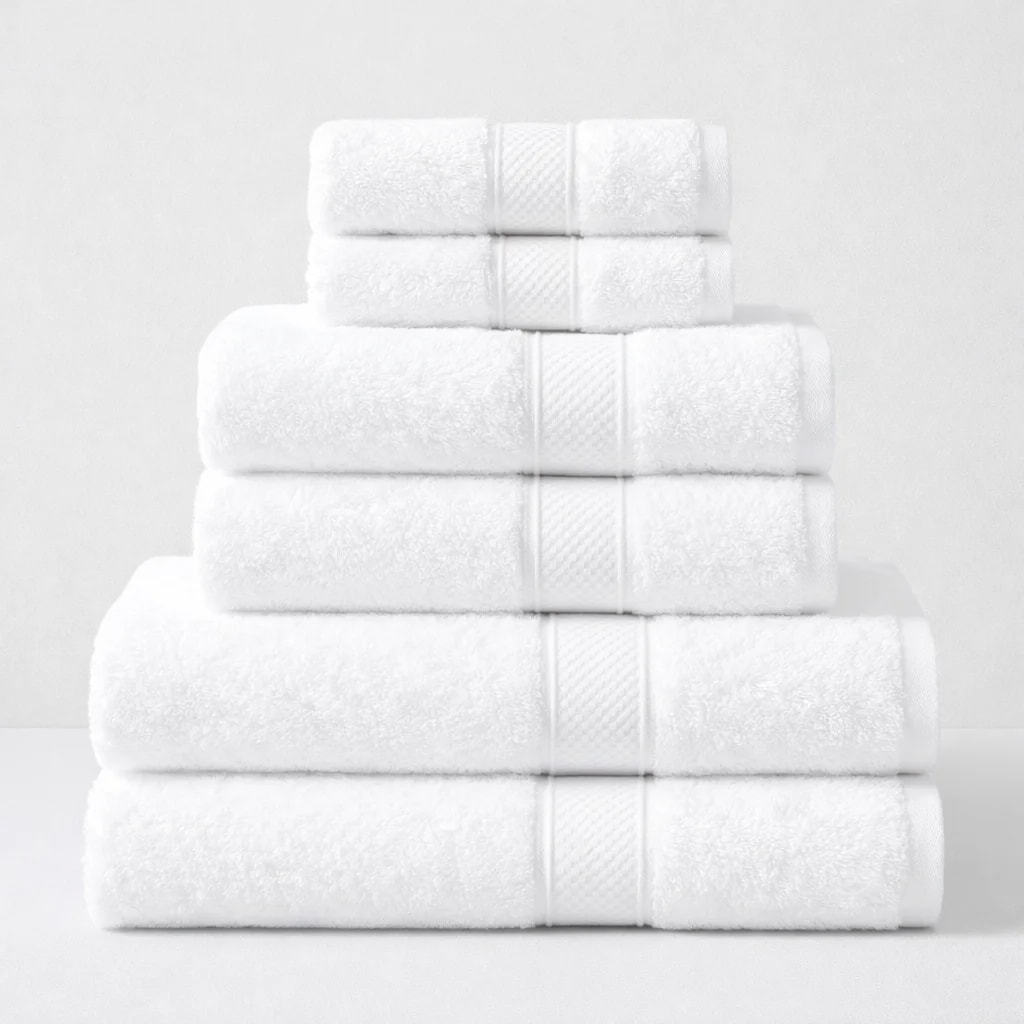
Kemet Cotton Egyptian Bath Towels
If plush is what you were actually shopping for, this is the set I'd point you to: zero-twist Giza cotton from the Nile Delta, soft from the first use, in everyday 600 GSM or spa-weight 800 GSM.
- 600 GSM Signature and 800 GSM Reserve weights
- Zero-twist Giza Egyptian cotton, Nile Delta sourced
- OEKO-TEX Standard 100 certified
- 30-day money-back guarantee
Sets from $79.95
Shop Kemet Towels →🏆 Want the full research on the plush pick? See: Kemet Cotton Towels Review →
Owning both is not an either-or indulgence, by the way. A pestemal for the beach bag and a proper heavyweight towel for the bathroom is the correct two-towel setup, the same way you would not wear flip-flops to the office or oxfords to the sand.
The Bottom Line
Are Sand Cloud towels worth it? For the job they were designed to do, yes, bought on discount. The company is legitimate, the Turkish cotton and OEKO-TEX claims hold up, the Shark Tank history is accurate down to the dollar figures, and the conservation program is real even if its accounting is unauditable and its foundation mythology has outrun the paperwork. The towel itself is a well-executed pestemal with a genuine anti-sand advantage and a brand premium attached.
Just be sure you are buying the towel that exists, not the towel in your head. Sand Cloud sells a thin, fast-drying, flat-woven travel and beach towel. If you walk in expecting that, you will probably be happy. If you walk in expecting plush, no discount code will fix it.
Related Reading
Get our reviews first on Google
Add Cotton With Love as a preferred source and Google will show you more of our towel and sheet reviews.
Add Cotton With Love as a preferred source on GoogleAdd us as a preferred source on Google
See more of our towel and sheet reviews in your Google results.
Frequently Asked Questions
Are Sand Cloud towels worth it?
For beach days, travel, and pool bags, yes, with one condition: never pay full price. Sand Cloud runs 20 to 40 percent off promotions almost continuously, so the real price of a $54 towel is closer to $43. The flat-woven Turkish cotton dries fast, shakes off sand, and packs small. If you expected a thick, plush towel, you will be disappointed. That thinness is the design, not a defect.
Is Sand Cloud legit?
Yes. Sand Cloud is a real San Diego company founded in 2014, it appeared on Shark Tank in 2017 and closed a $200,000 deal with Robert Herjavec, and its towels carry OEKO-TEX Standard 100 certification. The brand is honest about using Turkish cotton and makes no Egyptian cotton claims. The main complaints in customer reviews concern shipping speed and the thin feel, not authenticity.
Does Sand Cloud really donate to marine life?
The giving program is real but less precise than the marketing suggests. Sand Cloud pledges 10 percent of profits, not revenue, to roughly 18 partner nonprofits including the Surfrider Foundation and the Marine Conservation Institute. Partners have publicly confirmed the relationship. What Sand Cloud does not publish is a running total of donations, and because it is a private company, the profit figure behind that 10 percent cannot be independently audited.
Are Sand Cloud towels good for the bath?
Not if you want a plush bathroom towel. Sand Cloud's flat-woven pestemal construction is engineered for fast drying and portability, so it feels closer to a dense scarf than a fluffy terry towel. Sand Cloud does sell bath bundles now, around $80 for two bath and two hand towels, but they sit in a much lighter weight class than the 600 to 800 GSM Egyptian cotton towels most bathroom upgraders are picturing.
Why are Sand Cloud towels so thin?
Because they are pestemals, the traditional flat-woven Turkish towel style, not terry cloth. A pestemal has no pile loops, which removes most of the bulk. That is what lets it dry roughly three times faster than a terry towel, pack flat in a beach bag, and release sand with a shake. Robert Herjavec called the towel thin on Shark Tank in 2017, and he was right. It is meant to be.
How are Sand Cloud towels different from regular beach towels?
A standard beach towel is looped terry cloth, often 30 by 60 inches, and it holds sand and water in the pile. Sand Cloud towels are larger, with the regular size around 38 by 64 inches and XLs up to about 60 by 68 inches, and they use a flat weave, with some models pairing a flat face with a low terry side. They absorb less per pass but dry far faster and carry far lighter.
How much do Sand Cloud towels cost?
As of mid 2026, regular beach towels list at about $54, with large and XL prints running $68 to $78. Bath bundles with two bath and two hand towels run around $80. Sitewide discount codes of 20 percent and clearance events up to 40 percent off are near constant, so treat list prices as a starting point rather than what you should actually pay.
Did Sand Cloud really get a Shark Tank deal?
Yes. The founders pitched on Season 8 in February 2017 and took $200,000 for 15 percent from Robert Herjavec, choosing his offer over interest from Mark Cuban, Daymond John, and Kevin O'Leary. The deal was completed, and the company reported $2.7 million in sales within four months of the episode airing and roughly $20 million by 2018.